DbcultAccessing Vault...
6.9/10
Senior Film Conservator
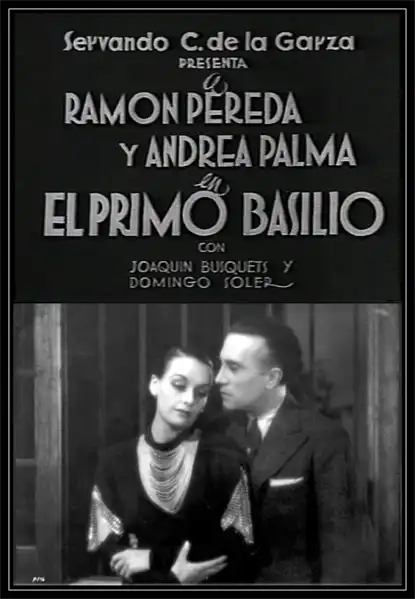
A definitive 6.9/10 rating for a film that redefined the boundaries of cult cinema. El primo Basilio remains a cornerstone of transgressive art.
Okay, so El primo Basilio. Is it worth a watch today? Yeah, but with a big 'if.' If you’re into those **slow-burn, deeply character-driven period dramas** that don't rush anything, this one’s definitely for you. Think grand old houses, lingering glances, and a lot of unspoken tension.
Folks who dig classic literature or early cinema will find plenty to chew on. But if you’re looking for explosions or fast-paced dialogue, you’ll probably find yourself checking your watch quite a bit. It’s a whole different pace, a whole different world.
The whole thing just *moves* with a kind of heavy, almost stifling grace. You feel the weight of those old houses, the heavy curtains in the drawing rooms. It's all very proper on the surface, but you just know there’s something bubbling underneath.
Luísa, played by Andrea Palma, she’s really the heart of it. You see her restlessness, her almost childish boredom when her husband, Jorge, is away. It’s not an excuse for what happens, but you *get* it. That scene where she's just staring out the window, sighing? **Man, that sigh says everything.**
And Basílio, Luis G. Roldán, he's got that easy charm, you know? The kind that makes you think, "Oh, he's trouble," but also, "I kinda see why she falls for it." It’s less about grand romance and more about a fleeting distraction that just… spirals.
But the real standout, the one who just seeps into your bones, is Consuelo Segarra as Juliana, the maid. She’s not flashy. She barely raises her voice. But every single look, every quiet task, it just drips with this **cold, calculated malice**. You see her watching Luísa, a tiny, almost invisible smirk playing on her lips, and you just *know* she’s storing it all up. She makes the air thick with dread.
There's this one shot, I distinctly remember, of Juliana folding laundry, and her eyes just dart up, catching Luísa's reflection in a mirror. It’s maybe two seconds long, but it says so much about her quiet surveillance. Gives me the creeps just thinking about it. 😬
The film does this great job of building tension not with loud music or jump scares, but with *silence*. Long stretches where you hear almost nothing but the rustle of a dress or the distant clatter from the street. It makes those secret letters, those hushed conversations, feel even more dangerous. Like the whole house is holding its breath.
There's this moment, I remember, where Luísa is waiting for a letter, and the camera just focuses on the door for what feels like ages. It's just a door. But you feel her anxiety, the way time just drags when you're desperate. That's good filmmaking, right there. Not flashy, just effective. 🕰️
Some of the acting might feel a bit stiff to modern eyes, especially in the early scenes. But it settles in, and you start to appreciate the more theatrical, expressive style. It’s less about subtle realism and more about *conveying* strong emotions, sometimes a bit overtly. But that’s part of its charm, I think.
The dialogue is often understated, too. People don’t always say what they mean, which is so true to life, especially in that era. It relies on small gestures, a sharp intake of breath, a sudden turn of the head.
It’s not a perfect movie, mind you. There are bits that drag, where you feel the story spinning its wheels a little. Like a carriage stuck in the mud. But then something happens, a cutting remark from Juliana, or a particularly desperate plea from Luísa, and you’re right back in it.
The ending, without giving anything away, it leaves you with this kind of heavy, unsettled feeling. Not a neat bow, but a lingering sense of… what now? It sticks with you, which is always a good sign. If you’ve got a quiet evening and a taste for old-world drama, give it a shot.
IMDb 7.6
1936
Community
Log in to comment.