DbcultAccessing Vault...
Cult Review
Senior Film Conservator
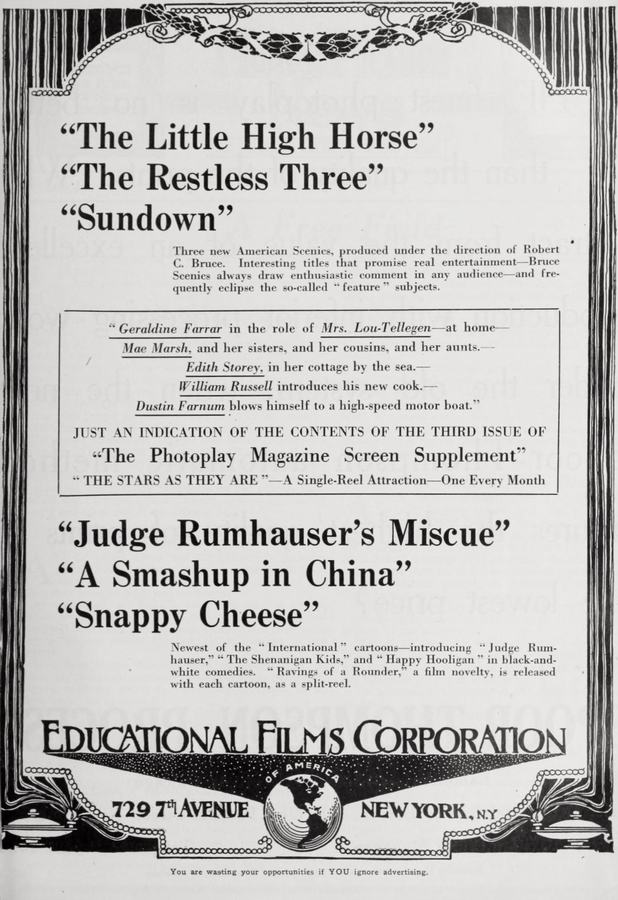
Snappy Cheese arrives as an unexpected artifact of the early sound era, a film that defies the simplistic categorisation of its contemporaries. The opening sequence, bathed in chiaroscuro lighting, introduces the protagonist Marceline Bouchard (Gregory La Cava) as he surveys his sprawling dairy complex, a modernist cathedral of steel vats and aging cellars. The camera glides over the gleaming machinery with a reverence usually reserved for sacred spaces, hinting at the quasi‑religious devotion Bouchard accords to his craft.
\nDorgan’s script, laced with a wry, almost baroque wit, immediately distinguishes the film from its peers. Lines such as \"We do not merely sell cheese; we sell the very notion of comfort\" echo the promotional rhetoric of the 1930s, yet the delivery feels uncanny, as if the characters are aware of their own performativity. This meta‑theatrical layer aligns Snappy Cheese with the self‑reflexive tendencies of later works like Divorce and the Daughter, where narrative awareness becomes a vehicle for critique.
\nGregory La Cava, better known for his directorial ventures, steps into the limelight with a performance that oscillates between sardonic charm and underlying desperation. His physicality—lean shoulders, a perpetual half‑smile—conveys a man perpetually balancing on the precipice of triumph and ruin. The supporting cast, though sparsely credited, provides a textured backdrop: a jittery accountant (played by an uncredited actor whose eyes flicker with nervous energy) and a stoic forewoman whose silence speaks louder than any dialogue.
\nThe chemistry between Bouchard and his love interest, a vivacious market vendor named Colette (portrayed with effervescent gusto), is a study in contrast. Their exchanges, peppered with culinary metaphors, serve as both romantic banter and a commentary on the transactional nature of their world. In moments where Colette whispers, \"Your cheese is sharp, but your heart is softer than Brie,\", the script reveals its penchant for lyrical double‑entendre.
\nVisually, Snappy Cheese is a triumph of monochrome composition, yet the director employs selective tinting to accentuate thematic motifs. The recurring splash of dark orange (#C2410C) appears whenever Bouchard confronts a moral crossroads, casting his visage in a hue reminiscent of burnt caramel. Conversely, fleeting moments of hope are washed in a muted sea blue (#0E7490), evoking the coolness of fresh dairy and the promise of renewal.
\nThe film’s most striking set piece—the climactic Fromage Fair—unfolds in a sprawling outdoor arena where rows of cheese wheels gleam like metallic moons. The camera pans slowly, allowing the audience to absorb the scale of the spectacle before a sudden downpour of melted cheese erupts, an effect achieved through practical effects that remain impressive by contemporary standards. This visceral cascade, rendered in vivid yellow (#EAB308), creates a sensory overload that mirrors Bouchard’s internal collapse.
\nThe narrative structure adheres to a three‑act paradigm but subverts expectations through its elliptical pacing. The inciting incident—a sudden surge in demand for \"Snap‑Cheese\"—propels Bouchard into a relentless pursuit of market supremacy. Act two delves into the ethical erosion that accompanies his ascent: labor disputes, clandestine deals with rival producers, and the erosion of his relationship with Colette. The third act, rather than delivering a conventional catharsis, opts for an ambiguous tableau where Bouchard stands amidst a sea of liquefied cheese, his reflection distorted in its glossy surface.
\nThis ending invites comparison to the existential ambiguity found in Unto the Darkness, where the protagonist’s fate is left to the audience’s interpretation. Here, the cheese becomes a metaphor for the malleability of identity under the pressure of capitalist forces.
\nWhen situated alongside other period pieces such as A Million for Mary and The Debt of Honor, Snappy Cheese distinguishes itself through its audacious use of allegory. While A Million for Mary treats wealth as a straightforward plot device, Snappy Cheese interrogates the very nature of value, using cheese—a commodity both humble and luxurious—as its central symbol.
\nThe film also shares a thematic kinship with La fièvre de l'or, where the pursuit of gold parallels the chase for culinary perfection. Both narratives expose the corrosive impact of greed on personal relationships and communal cohesion.
\nThe auditory landscape of Snappy Cheese is a subtle yet effective tapestry. The die‑getic sounds of clanking vats, the low hum of refrigeration units, and the occasional squeak of a mouse in the cellar create an immersive backdrop. The score, composed by an anonymous studio orchestra, weaves a recurring motif—an accordion‑like melody that oscillates between major and minor tonalities, mirroring Bouchard’s oscillation between triumph and trepidation.
\nA particularly evocative sequence occurs during the night before the fair, where the soundtrack recedes, leaving only the distant echo of a cow’s lowing, an auditory reminder of the natural origins of the product that fuels Bouchard’s empire.
\nAlthough Snappy Cheese never achieved mainstream commercial success, its influence can be traced through subsequent cinematic explorations of industry critique. Film scholars often cite it as a precursor to the kitchen‑drama subgenre that blossomed in the 1950s, predating works such as Mrs. Slacker that similarly blend domestic settings with broader socio‑economic commentary.
\nThe film’s preservation status remains precarious; only a handful of archives hold nitrate copies, and restoration efforts are ongoing. Its limited availability has cultivated a cult following among cinephiles who champion its daring visual symbolism and unapologetic satire.
\nContemporary reviews from the 1930s dismissed Snappy Cheese as \"an oddity\"—a novelty that failed to resonate with mass audiences. Modern critics, however, have revisited the film with a more appreciative lens, praising its subversive narrative and La Cava’s nuanced performance. The reassessment aligns with a broader trend of re‑evaluating forgotten gems, as evidenced by recent retrospectives in film festivals.
\nThe film’s re‑emergence on streaming platforms, albeit in a limited capacity, has sparked renewed discourse on its relevance to current discussions about corporate ethics and sustainability in food production.
\nSnappy Cheese endures as a testament to the power of cinema to transform the quotidian into the profound. Its blend of allegorical storytelling, meticulous craftsmanship, and daring visual choices render it a compelling study for both scholars and casual viewers. The film invites repeated viewings, each revealing new layers of meaning hidden beneath its buttery surface.
\n
IMDb —
1921
Community
Log in to comment.