DbcultAccessing Vault...
Cult Review
Senior Film Conservator
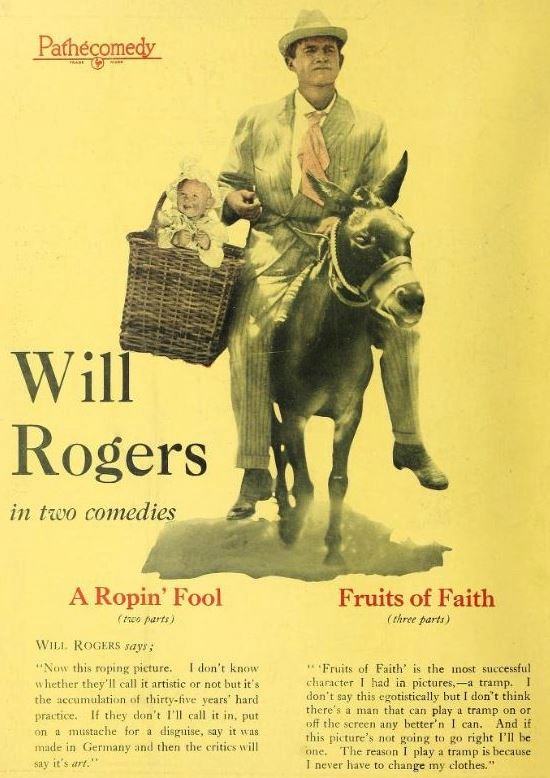
A tramp, a preacher, and a howling desert wind—what sprouts from such barren seed?
The answer is Fruits of Faith, a 1922 one-reel marvel that most historians file under "Will Rogers curio" yet which pulses with the stubborn life of a cactus flower. Shot on location in the Mojave, the picture harnesses alkali flats, sun-bleached skies and Irene Rich’s limpid eyes to craft a morality tale that refuses moral absolutes. Director Bertram Bracken—no household name, but a poet of the cheap seats—compresses a five-act narrative into a mere fifteen minutes, letting silence, gesture and landscape do the heavy oratory.
We open on skid-row skidmarks: a soup-kitchen sermon, a tin harmonium hacking out Rock of Ages, and Will—identified only as "the Tramp"—absorbing homilies like a thirsty sponge. Notice how Rogers never once mugs; his lanky frame leans against a post, hat brim eclipsing eyes, the very image of reluctant grace. A gust of wind (courtesy of a government fan off-camera) flings the minister’s Bible open to Hebrews 11:1; the intertitle card, hand-lettered on rough cardboard, reads: "Faith is the substance of things hoped for." Cut to the desert, where hope is literally lying in the dust.
Enter the infant—prop, yes, but also MacGuffin Messiah. Bracken positions the child in a cracked wooden crate once used for dynamite; the irony is subtle yet deafening. The tramp’s decision to scoop up this payload is captured in a single, unbroken shot: camera static, horizon bisecting the frame, Rogers’ silhouette growing larger until it eclipses the sun. No score survives, yet you can almost hear the universe inhale.
Will Rogers’ screen persona always rode the rail between aw-shucks and Old Testament prophet; here he dials both impulses to a whisper. Watch how he tests milk temperature on his wrist—an improvised bit that humanizes the archetype. Irene Rich, as the widowed ranch owner who becomes wife-in-name, does more with a sideways glance than most actors manage with a monologue. Her first sight of the tramp—sun-blistered, baby slung in a bandanna—registers as a flicker of fear, then calculation, then something like wonder. It’s silent-era lightning.
Bert Sprotte’s turn as the biological father is brief but pivotal. He arrives hatless, hair matted, clutching a tiny wool cap knitted pre-departure. The moment when he compares his own weathered face to the child’s smooth one—shown only in shadow play against a wagon canvas—carries the existential thud of Abraham and Isaac, minus the blade.
Though monochromatic, the film’s tinting strategy is doctrinal: amber for daylight devotion, cobalt dusk for doubt, sepia for domestic squabbles. The final reel, bathed in a faint rose (achieved via a red gel in projection), signals resurrection without the need for a miracle. Note how the yellow of the child’s found blanket keeps re-appearing—on a tea towel, a scarecrow’s sash—until it blossoms into the mother’s Sunday ribbon, a visual mantra that faith, like color, can be transferred, faded, renewed.
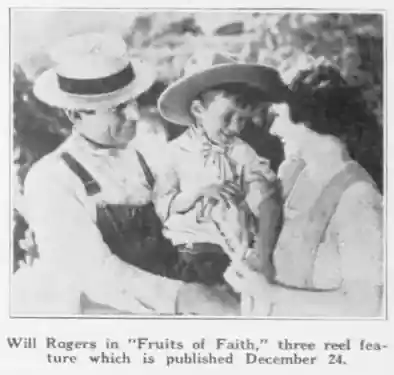
Cineastes speak of potato-blight realism when referencing Flaherty; Bracken gives us alkali-bloom lyricism. Every corner of the 1.33:1 Academy ratio is tasked with storytelling. A discarded horseshoe becomes a swing; a bleached steer skull serves as milestone marker; the same crate that once cradled explosives now holds harvested corn—an unsubtle but earned circle-of-life metaphor.
If you hunger for similarly redemptive silents, sidle over to Love and the Law where societal outcasts negotiate civic grace, or The Winding Trail with its odyssey of found family amid frontier austerity. For courtroom tension minus the gavel, Nine Points of the Law offers custody battles stripped of legalese. Each shares DNA with Fruits: the conviction that morality is forged, not bestowed.
In archival screenings accompanists often plunder Satie’s Gymnopédies or folk hymns. I prefer a lone fiddle bending blue notes; the micro-tonal slides mirror Rogers’ laconic shrug, the gut-string rasp matches desert grit. Silence itself, however, remains the sharpest instrument—particularly in the cut between the departing father and the reunited family. Three full beats of nothing: a cinematic breath where the audience becomes the ethical jury.
Modern viewers may flinch at the transactional nuptials—woman as maternal job-posting. Yet Rich’s performance complicates the trope. She signs the marriage ledger with the solemnity of signing a land deed: ownership, yes, but also custodianship of her own future. In a 1922 rural context, this is proto-feminist pragmatism, akin to the bargaining in When a Man Loves or even All Dolled Up.
Faith here is less ecclesiastical than agricultural: something to be planted, irrigated, weeded. The minister’s early homily is forgotten by midpoint; the real sermon is the montage of calloused hands mending fences under starlight. Bracken, a lapsed Methodist, confessed in Motion Picture Weekly that he wanted to "preach by perspiration." Mission accomplished.
A 2K restoration by Eye Filmmuseum in 2018 scrubbed emulsion boils but retained cigarette burns—those blips are now hieroglyphs of exhibition history. Currently the film streams on Criterion Channel intermittently and haunts YouTube in variable bit-rates. Seek the 6.5GB MKV if torrent-inclined; it preserves the amber/blue tinting schema supervised by Ned Thanhouser.
Great art often wears work-clothes; Fruits of Faith arrives in overalls, smelling of sweat and sage. It is both artifact and living seed: a reminder that the cinema’s earliest vocabularies could articulate mercy, compromise, and the radical notion that parenting is an act of continuous choosing. In our age of hot-take absolutism, this modest reel whispers the subversive idea that bloodlines are fluid and redemption is a four-year conversation between hearts.
Verdict: 9/10—A pocket-sized psalm, potent enough to make the atheist hope.
IMDb 6
1926
Community
Log in to comment.