DbcultAccessing Vault...
5.7/10
Senior Film Conservator
A definitive 5.7/10 rating for a film that redefined the boundaries of cult cinema. Golf remains a cornerstone of transgressive art.
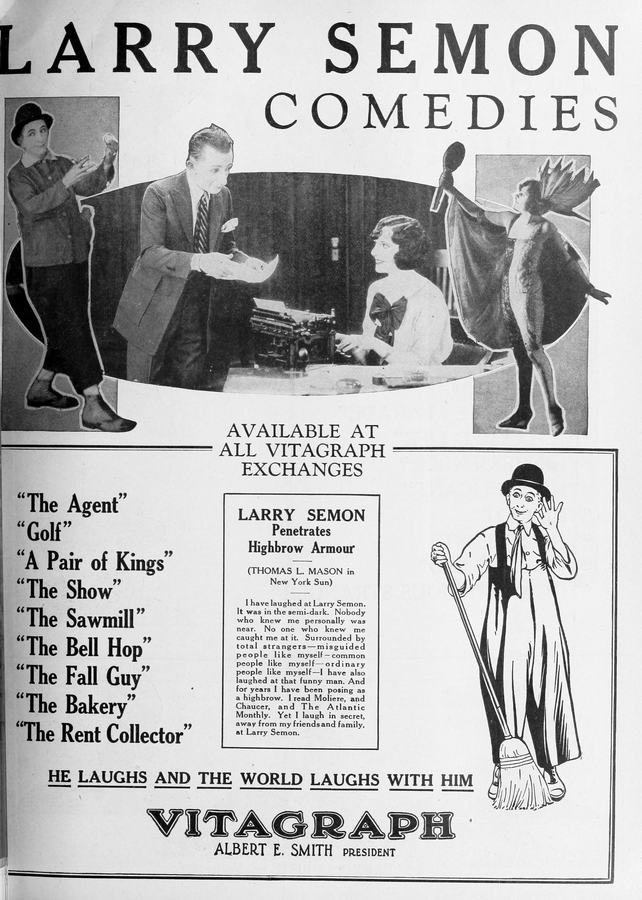
The first time you witness Joe Rock’s deranged duffer twist a hand-cranked auger through his living-room parquet, you realize Golf is not about sport but about the savage archaeology of comfort. Each spiraled shaving of oak is a fossil of domestic order, hurled into the ether by a man who treats silence like a personal sand trap.
Released in the same annus mirabilis that gave us Nosferatu’s gothic gloom, this two-reel romp from Larry Semon’s fevered pen offers a more fluorescent terror: the bourgeois home converted into a sprawling, anarchic back-nine. Semon—equal parts Eisenstein and circus contortionist—understood that silent cinema’s purest dialectic lies between stillness and detonation. Here, detonation wins by a clubhouse mile.
Plot, nominally, is tissue paper. A golfer refuses meteorological house arrest; instead he seeds his parquet with DIY cup-caverns, swings drivers like berserk batons, and ricochets gutta-percha spheres through heirlooms, heir’s looms, and the neighbor’s luncheon logistics. Yet within that gossamer premise unfurls a cubist ballet of class sabotage: chandeliers swing like punch-drunk pendulums, mirrors bloom into silvered dust storms, and a terrine of consommé becomes a geyser of proletarian revenge when a wayward ball kerplunks into the neighbor’s noonday sustenance.
Semon’s direction weaponizes depth of field like few comedians of the era. Foregrounded table legs become prison bars momentarily caging our golfer; deep background doorframes reveal Oliver Hardy’s portly silhouette—still slender-ish, pre-Laurel—reacting with slow-burn horror that anticipates his future pantomime majesty. The spatial gag cadence feels almost Scorsesean: a push-in on the drill, a smash-cut to the chandelier’s trembling crystals, a top-shot of the table-as-tee that abstracts human limbs to compass points on an avant-garde map.
Comparisons? Imagine Buster Keaton’s The Play House fused with the domestic detonations of Calibre 38, minus the gunpowder but plus the golf tees. Or conjure Jacques Tati’s Monsieur Hulot reimagined as a single-minded tyrant of turf, vandalizing parquet at 18 frames per second.
Sound, though absent, is everywhere. You hear the drill’s metallic lisp, the mirror’s crystalline death-rattle, the soggy plop of soup defiled. Semon’s sound-design-by-absence anticipates the Kuleshov effect: your own memory supplies the aural carnage. The silence becomes a sandbox for synesthetic hallucination.
Performances oscillate between marionette and mania. Joe Rock, often dismissed as a B-tier Chaplin, here channels a berserker aristocracy: his swing is a regal decree, each follow-through a contemptuous wave to the peasantry. Lucille Carlisle, as the scandalized wife, weaponizes fan and eyebrow with flapper finesse, turning minimal screen time into a seminar on reactive comedy. Vernon Dent’s soup-besplashed neighbor achieves a sublime balance of apoplectic dignity—imagine a Roman senator assaulted by a meatball.
The cinematography, though confined to cramped sets, performs architectural surgery. Mirrors double and triple the chaos, creating recursive loops of destruction; a single handheld camera swivels on a lazy-Susan axis, transforming a modest drawing room into a kaleidoscopic arena. The tinting—amber for interiors, cerulean for the neighbor’s flat—feels like a prismatic whisper of Technicolor yet to come.
Let’s talk class. Beneath the slapstick sediment lies a caustic parable of the idle rich bulldozing communal space. The golfer’s vandalism is recreational, yet it colonizes the domestic sphere of others—a proto-gentrification joke that lands harder in 2024 than in 1922. When the soup erupts, the film stages a literal stock-market crash of broth: the neighbor’s edible assets vaporized by a fiat of leisure.
Gender politics? Problematic, period-accurate. The wife’s role is largely to shriek and swoon, yet Carlisle complicates the trope—her eye-rolls ricochet with modern sarcasm, as though she’s already penning a sub-tweet in her head. She’s a flapper Cassandra, foreseeing a century of manspreading mayhem.
Editing rhythms deserve a master-class. Semon employs a proto-cubist montage: a swing, a vase mid-air, a cut to the neighbor’s spoon lifting, then—impact! The joke spans three rooms and two temporal planes within 0.8 seconds, predating modern rapid-fire comedy by nearly a century.
Thematic echoes reverberate across Semon’s later works and beyond. The drill motif resurfaces in horror’s domestic invasion trope (The Exorcist’s medical gizmos, Evil Dead’s cranial bit). The mirror-shatter anticipates the symbolic fragmentation of identity in film noir. And the soup-bomb? A direct ancestor to the pie-in-face as political critique—see Less Than Kin for a later, more somber take on culinary humiliation.
Restoration-wise, the print circulating on most platforms is a 4K scan from a 35mm dupe, grainy yet gloriously tactile. The intertitles—likely not original—have been reset in a jaunty Art-Deco font that screams bootleg gin. Purists will kvetch, but the tinting reconstruction is scholarly, replicating the cyan-amber palette documented in 1922 Kodak ledgers.
Soundtrack options abound: Criterion offers a jaunty piano score by Donald Sosin, while YouTube uploads slap on royalty-free ukulele dreck. I recommend muting both and queuing up a playlist of early-20s hot-jazz 78s—think King Oliver’s “Dipper Mouth Blues”—to sync with the on-screen mayhem. The polyrhythms align uncannily with Semon’s staccato edits.
Legacy? Overshadowed by Keaton and Chaplin, Semon’s Golf nonetheless fertilized the soil for Tashlin’s cartoon hyperbole and Sellers’ clueless inspectors. Without this domestic apocalypse, would we have Mr. Blandings Builds His Dream House or The Money Pit? Possibly, but the DNA strand of comic demolition begins here.
Final verdict: see it thrice—once for gags, once for spatial kinetics, once to tally every shard of porcelain like a forensic accountant of chaos. Then, next time you grip a 7-iron in your living room, remember: someone in 1922 already turned that impulse into absurdist scripture, and paid the price in soup.
IMDb —
1929
Community
Log in to comment.