DbcultAccessing Vault...
7.5/10
Senior Film Conservator
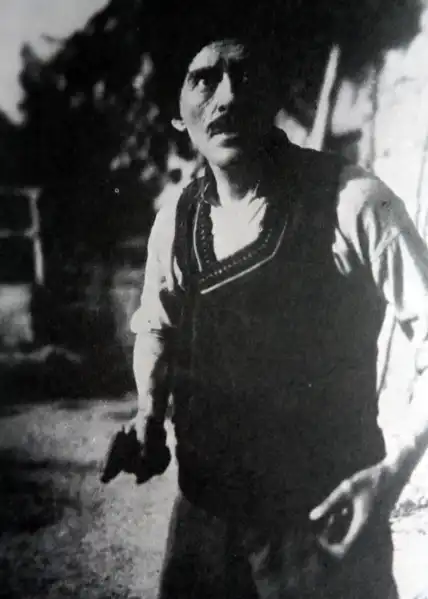
A definitive 7.5/10 rating for a film that redefined the boundaries of cult cinema. Buntat na robite remains a cornerstone of transgressive art.
If you are looking for a smooth, easy watch on a Sunday night, please stay away from Buntat na robite.
It is definitely for the people who enjoy digging up old, grainy relics or anyone who has a weirdly specific interest in Bulgarian history.
If you hate movies where people yell their lines and stare intensely at nothing, you are going to have a really bad time here.
Honestly, I wasn't expecting much from a movie made in 1933, especially since it was the first 'talkie' Bulgaria ever produced.
The sound is... well, it is pretty crunchy. 🔊
You can tell the filmmakers were just so excited to finally have microphones that they let everyone shout as loud as possible.
The story focuses on Vasil Levski, who is basically the biggest hero in Bulgarian history.
He arrives in a small town to set up a revolutionary committee, and the whole thing feels very secret and dangerous, even if the acting is a bit stiff.
There is this one scene where the Turkish authorities get wind of the meeting and everyone just scatters.
It almost looks like a silent comedy for a few seconds, with people jumping over things and running in circles.
Then we have Hristina, the schoolteacher who is in love with Levski.
Her face does about twelve different emotions in every single shot, which reminds me of the over-the-top energy in Draft 258.
The Turkish spies are also kind of hilarious to watch.
They skulk around corners in a way that makes them stand out more than if they were just walking normally down the street.
You would think a spy would try to be, you know, less noticeable.
But the movie takes a really dark turn once the police start arresting people.
The torture scenes are surprisingly mean for a movie this old.
They throw Levski’s mother into a well, and the camera just stays on the water for a beat too long.
It felt genuinely uncomfortable and a bit cruel.
Then there is the priest, Nikola, who gets blinded by the authorities.
Even after that, he just keeps on praying for everyone, which is supposed to be inspiring but mostly just feels sad.
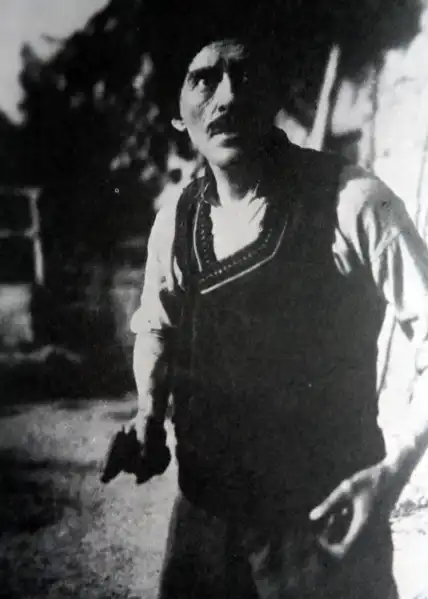
I noticed a guy in the background of one town square scene who was just staring directly into the camera lens.
He looked like he had never seen a movie camera before, and to be fair, in 1933 Bulgaria, he probably hadn't.
Levski spends a lot of time wearing different disguises to hide from the posse chasing him.
It is that classic movie logic where if you put on a slightly different hat, your own mother wouldn't recognize you.
There is a lot of tension when he is following the people who are actually trying to hunt him down.
I liked those moments, even if the film stock looks like it was dragged through a hedge and then left in the sun.
The ending gets into some supernatural territory with the church bells.
They start ringing all by themselves, which is the 'miracle' that tells everyone liberation is coming.
It is very patriotic and very loud, which I guess was exactly what the audience wanted back then.
It isn't nearly as polished as something like L'énigmatique Monsieur Parkes, but it has a lot of heart.
Sometimes the movie stops making sense for a minute or two while people just pose dramatically.
The pacing is a bit like a car that keeps stalling and then suddenly zooming forward.
I think I saw a stray dog wander through the back of one shot near the well, but I might have just imagined it because of the film grain.
Vassil Gendov, who directed and starred in it, clearly wanted this to be a masterpiece.
It isn't a masterpiece, but it is a very interesting failure in some parts and a success in others.
The way the priest continues to pray while the bells ring is actually a pretty strong image.
It makes you understand why people in the thirties would have been moved by this, even if we find it a bit cheesy now.
If you can handle the crackling audio and the fact that everyone looks like they are wearing five pounds of makeup, give it a try.
It is only about an hour long, so even if you hate it, you haven't lost much of your life.
Just don't expect it to look like a modern blockbuster. 🔔
It’s definitely better than some of the boring stuff like The Misleading Lady, mostly because of the high stakes.
Anyway, it's a weird piece of history. Watch it if you're bored of the usual stuff.
IMDb 4.7
1927
Community
Log in to comment.