DbcultAccessing Vault...
Cult Review
Senior Film Conservator
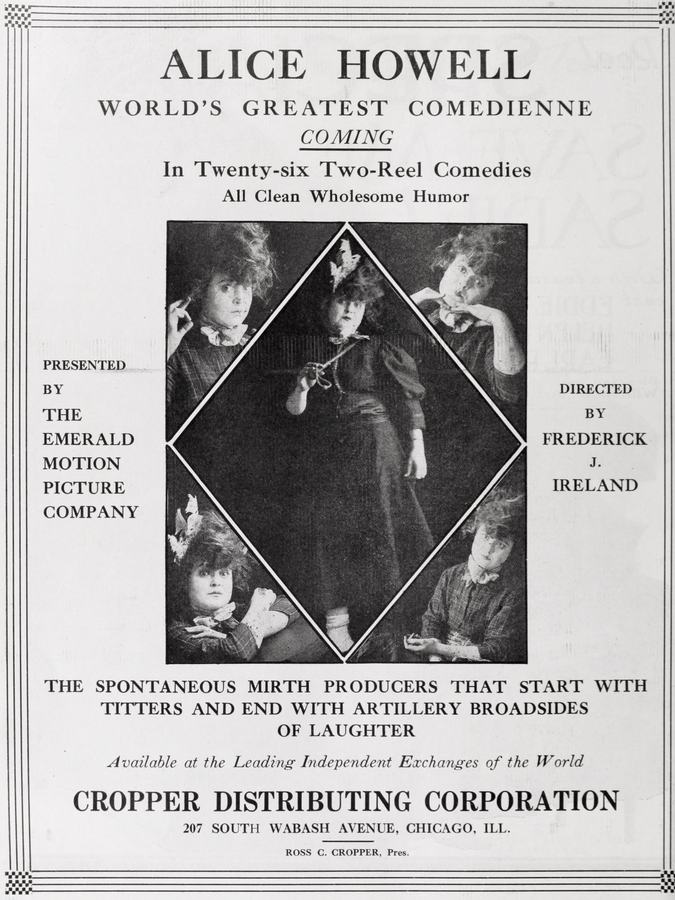
The first time I watched Her Bargain Day I swore I could smell coal smoke and bargain-bin talcum, as though the filmstrip itself had been fished out of a 1920 five-and-dime clearance box. Alice Howell—red-haired, pop-eyed, a wind-up toy of comic exasperation—charges through this one-reel contraption like a woman who’s memorized every markdown in the Sears catalogue. The plot, if you insist on calling it that, is a matrimonial ledger: kisses tallied, housekeeping points accrued, affection bartered for a new vacuum. Love, here, is a blue-light special; devotion gets the two-for-one treatment.
Howell’s nameless heroine—let’s dub her Mrs. Coupon—opens the picture by pinning a laundry list to the mantelpiece. Not garments, mind you, but expectations: husband must earn X dollars, bring Y bouquets, refrain from Z card nights. Hubby, a doughy dreamer with the waistcoat of a failed stockbroker, counters with his own promissory note: a single rose equals one home-cooked roast; a box of chocolates buys back his Sunday golf. The marriage becomes a swap-meet, each room of their clapboard house a different department: kitchenware of affection, haberdashery of resentment, basement of overdue apologies.
Cue the cascade of slapstick liquidation. A slippery cake of soap skids across the kitchen floor; Howell surf-boards it like a dime-store Buster Keaton, arms helicoptering, curlers springing from her scalp like released springs. The camera pirouettes to catch hubby slipping on the same soap seconds later—only he lands inside the coal scuttle, face blackened like a minstrel accidentally commenting on the film’s racial unconscious. Black-and-white images, yes, but the metaphor arrives in high-contrast charcoal: labor, race, and domestic toil all smudged together in one sooty punchline.
Director (name lost to a coffee stain on the negative) keeps the frame as crowded as a bargain bin. Furniture lunges into the mise-en-scène; doorframes constrict like corsets. Each cut feels clipped with pinking shears, abrupt and zig-zagged, as though the film itself is on sale—edges unfinished, plot threads fraying. Yet the disorder is weirdly euphoric: you sense that the characters enjoy the haggle, that romance without markdown is romance wasted. When Howell finally hurls a tin of flour skyward and it snows over hubby’s head like a cosmic clearance confetti, the marriage is momentarily reconciled under a fragile lacework of white. A truce bought at retail, destined to yellow.
Comparisons? You could double-feature this with Tangled Threads to watch matrimony unravel into criminal tapestry, or pair it with the jaundiced melodrama of Under Crimson Skies for a blood-orange look at vows corroded by greed. Yet Her Bargain Day is less noir, more neon—an electric flicker that laughs at the very idea of permanence. Even the intertitles, when they deign to appear, read like copy from a 1920 newspaper ad: “HUSBAND—SLIGHTLY USED—CHEAP FOR CASH.”
The final shot deserves its own entry in the ledger of cinematic enigmas. Howell stands at the doorway, suitcase in hand, apparently abandoning the marital bazaar. Hubby rushes in, slaps a new sticker—LOVE: FINAL MARKDOWN—onto her traveling coat, and the suitcase pops open to reveal… nothing. Empty. A void where expectation used to be. She stays. Not because the price is right, but because the game itself is the commodity. Fade-out on two silhouettes re-entering the cluttered house, ready to resume the eternal clearance of hearts.
If you listen with modern ears you’ll hear the echo of contemporary hustle culture: side-hustle marriages, spreadsheet intimacy, swipe-right bargains. A century later we still hawk affection in digital marketplaces, trading likes for dopamine, retweets for relevance. Howell’s harried housewife is the patron saint of today’s gig-economy romance—always be closing, even when the product is your own heartbeat.
Restoration-wise, the print I viewed—courtesy of an Italian archive with a penchant for mislabeling cans—was speckled like a leopard, nitrate decomposition nibbling the edges. Yet those scars only heighten the film’s thrift-store aura: every scratch a markdown, every missing frame a coupon clipped by time. The accompanying score, a new piano suite by Elena Marabini, pings like a cash register, all staccato quarters and tremolo dimes. Occasionally she slips in a tango motif, reminding us that tango is itself a transaction: one body negotiates space with another, price paid in sweat.
Gender scholars could feast here. Howell, often dismissed as a second-tier Mabel Normand, actually delivers a proto-feminist aria: she weaponizes domestic labor, converts patriarchal economics into slapstick sabotage. Every broken plate is a strike against the marital factory; every burnt roast, a tiny revolution. Yet the film refuses didacticism. It hurls pie-fisted anarchy, then shrugs: “What’s the retail on revolution?” The answer: two bits and a laugh.
Film stock from 1920 was itself a bargain, silver halide scraped thin by post-war scarcity. Thus the images seem starved, light sneaking through emaciated emulsion. That material frugality dovetails with thematic stinginess: nothing is plentiful except chaos. In that sense Her Bargain Day is a materialist document, a celluloid receipt for an era learning to equate happiness with acquisition.
I keep returning to the vacuum-cleaner gag—an unwieldy canister that Howell wrestles like a boa constrictor. It sucks up everything: drapes, dollars, dignity. Finally it ingests her wedding ring. The hose bulges, metallic glint traveling up the corrugated throat. She yanks the ring free, but the machine keeps roaring, insatiable. In 1920 that was slapstick. In 2024 it’s prophecy: consumer appetite swallowing the very symbol of eternal devotion, then coughing it back tarnished.
So yes, Her Bargain Day is a one-reel rummage sale, a nickelodeon coupon clipped from the Sunday paper of cinema history. But it’s also a pocket-sized economic treatise, a Marxist mime routine, a pre-Feminine Mystique mystic text. Watch it for Howell’s elastic face, stay for the existential audit. And when the lights come up, check your own ledger: what did you pay for love today, and did you get your money’s worth?
IMDb 6.9
1932
Community
Log in to comment.