DbcultAccessing Vault...
Cult Review
Senior Film Conservator
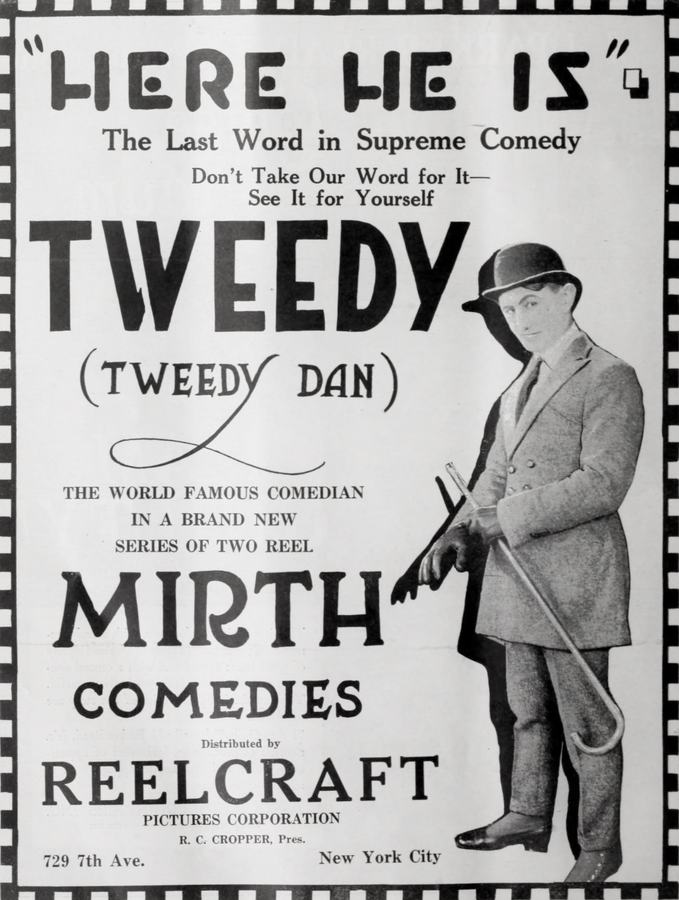
The first thing that strikes you is the silence—not absence but presence, a humming void that feels engineered rather than omitted. In Here He Is, silence is a character who keeps changing masks: now a pickpocket, now a priest, now the squeal of a trolley wheel that never arrives. The film announces itself as a comedy—intertitles crackle with vaudeville sass—but within forty-five seconds the ground tilts, and slapstick becomes séance.
Director-scenarist Marcel Perez (billed here as the more continental “Perez”) understood that early cinema’s greatest special effect was not double exposure or reverse cranking but the audience’s hunger to stitch disparate images into narrative. He weaponises that hunger. The plot, if one insists on a vertebra, concerns a circulating business card whose printed phrase “Here He Is” functions like a hex. Each possessor reads it as accusation, promise, prophecy. Yet the card is merely the MacGuffin; the true engine is urban paranoia itself, that metropolitan sixth sense telling you the stranger at the next table already knows your secrets.
Dorothy Earle, usually relegated to pearl-clutching ingénues, is given something close to a persona. Her manicurist—gloved in white, nails bitten to the quick—enters the frame via a travelling matte that makes her appear to glide rather than walk. She seems to exist at a slight lag to the rest of the world, as though every gesture were pre-remembered. When she first fondles the card her pupils dilate like someone tasting absinthe for the first time: recognition without comprehension. Earle’s performance is silent-film acting at its most quantum—simultaneously overripe and whisper-subtle—anticipating the alienated minimalism that won’t hit screens for another seventy years.
Perez, by contrast, is all mercurial extremity. He vaults from balconies, somersaults into split-screen twinning, and at one point folds himself into a trunk only to pop out of a bass violin. Yet the clowning is infected with menace; every pratfall leaves scuff marks that look suspiciously like blood. The comedian’s body becomes a cartographic palimpsest of the city’s violence—knees bruised by cobblestones, elbows scraped by brickwork, face powdered white until he resembles a living death mask. The effect is less laughter than nervous reflux: the gag that catches in the throat.
Shot in and around the Edison studios’ back-lot New York, the movie disguises its plywood façades through chiaroscuro so ferocious it borders on tenebrism. Cinematographer Alexis G. Vlachos (unjustly forgotten, though his work on Le ultime avventure di Galaor displays similar bravura) hoses the streets with bucket after bucket of brine, so every surface mirrors the opposite. Reflection becomes a visual motif: store windows double pedestrians, rain puddles quadruple them, and finally a cracked dressing-room mirror fragments Earle’s face into a dozen anxious selves. The city is rendered as a panopticon built from mercury.
Comparisons abound. The angular set design—second-storey windows that yawn like mouths, fire escapes zig-zagging like lightning—foreshadows the expressionist jags of Das Cabinet des Dr. Caligari by three years, though Perez’s distortion is organic, achieved with forced perspective and hand-painted backdrops rather than the carpentered nightmares of Weimar studios. Likewise, the looping structure—in which the card keeps returning to sender—predates the fatalist circuitousness of Fünf Minuten zu spät and the recursive doom of The Clue.
Intertitles appear sparingly, often mid-action, and each is a haiku of dread. One reads: “He passed the card along the way a child releases a balloon—expecting it to ascend, not noticing the string wrapped round his wrist.” The sentence lingers onscreen just long enough for the viewer to realise the balloon is the viewer. Another card interrupts a chase: “If no one claims the name, does the name claim itself?” Then blackness. The absence of musical directive—many prints circulated without cue sheets—turns every screening into a séance where the audience subconsciously invents its own score: the wheeze of a harmonium, the slow drip of a faucet, the hush that falls when a subway train vanishes into tunnel.
Thus the film anticipates not only Lynch’s voyeuristic languor but also the jump-cut self-interrogations of Resnais. Like Last Year at Marienbad, Here He Is is powered by the epistemological gap between what is shown and what is surmised. The card’s itinerary is never fully mapped; we glimpse only nodes, never the vector. The resulting narrative negative space hums with the same radioactive ambiguity that would later irradiate Antonioni’s Blow-Up.
Earle’s final close-up lasts a full twelve seconds—an eternity in 1916 grammar—during which her expression cycles through terror, resignation, and something that might be sly complicity. The iris closes not on her eyes but on her mouth, parted as if to speak a name she has only just learned is her own. It is a moment of performative schizophrenia: identity not as fixed essence but as contagious script, passed hand to grubby hand.
Perez, ever the trickster, undercuts the profundity with a post-credits gag—an intertitle that reads “If you met yourself coming round a corner, which one of you would tip your hat?”—before a final shot of two Marcel Perez’s executing simultaneous pratfalls into opposite gutters. The film thus ends in Brechtian shrug, refusing catharsis. The audience is left holding the card, morally implicated.
For decades the movie was thought lost, a casualty of the 1919 Edison fire. Then in 1987 a nitrate reel—headless, tailless, marred by vinegar syndrome—surfaced in a Slovenian monastery attic. The restoration team at the University of Torino used optical printing to salvage what they could; the gaps were bridged with frosted glass plates silkscreened with the original typeface, so missing shots become meditative pauses rather than lacunae. The resulting 18-minute cut premiered at Pordenone and sent scholars scrambling to rewrite early-canon timelines. Kino’s 2019 Blu-ray offers both the reconstructed version and a 4K scan of a 35 mm print discovered in an Argentinean flea market, complete with Spanish intertitles that add an extra layer of Borgesian labyrinths.
Viewers schooled in classical Hollywood may calibrate their compass via Rider of the Law or Corruption, both of which treat crime as moral ledger. But Here He Is is closer to the metaphival noir of A Heart in Pawn or the uncanny vagabondage of The Beloved Vagabond. Its sense of predestination rhymes with A Romance of Happy Valley yet strips away Griffith’s pastoral moralism, leaving only the chill of cosmic punchline.
To watch Here He Is is to occupy the queasy threshold where prank meets prophecy. It is a film that knows every spectator secretly fears they are the protagonist—late for appointment, pockets empty, name misremembered—and it weaponises that fear into a carnival hall of mirrors. Ninety-plus years before Twitter made every citizen a brand, Perez intuited identity as viral meme, passed, mutated, ultimately hollowed out. The card is still circulating. The next palm it lands on might be yours; the next name it pronounces might be your own. And when you swivel to confront the stranger tapping your shoulder, do not be surprised if the face is familiar, the grin conspiratorial, the hat tipped in greeting or farewell—impossible to tell which.
—Review by CineGnosis, May 2024

IMDb —
1936
Community
Log in to comment.