DbcultAccessing Vault...
Cult Review
Senior Film Conservator
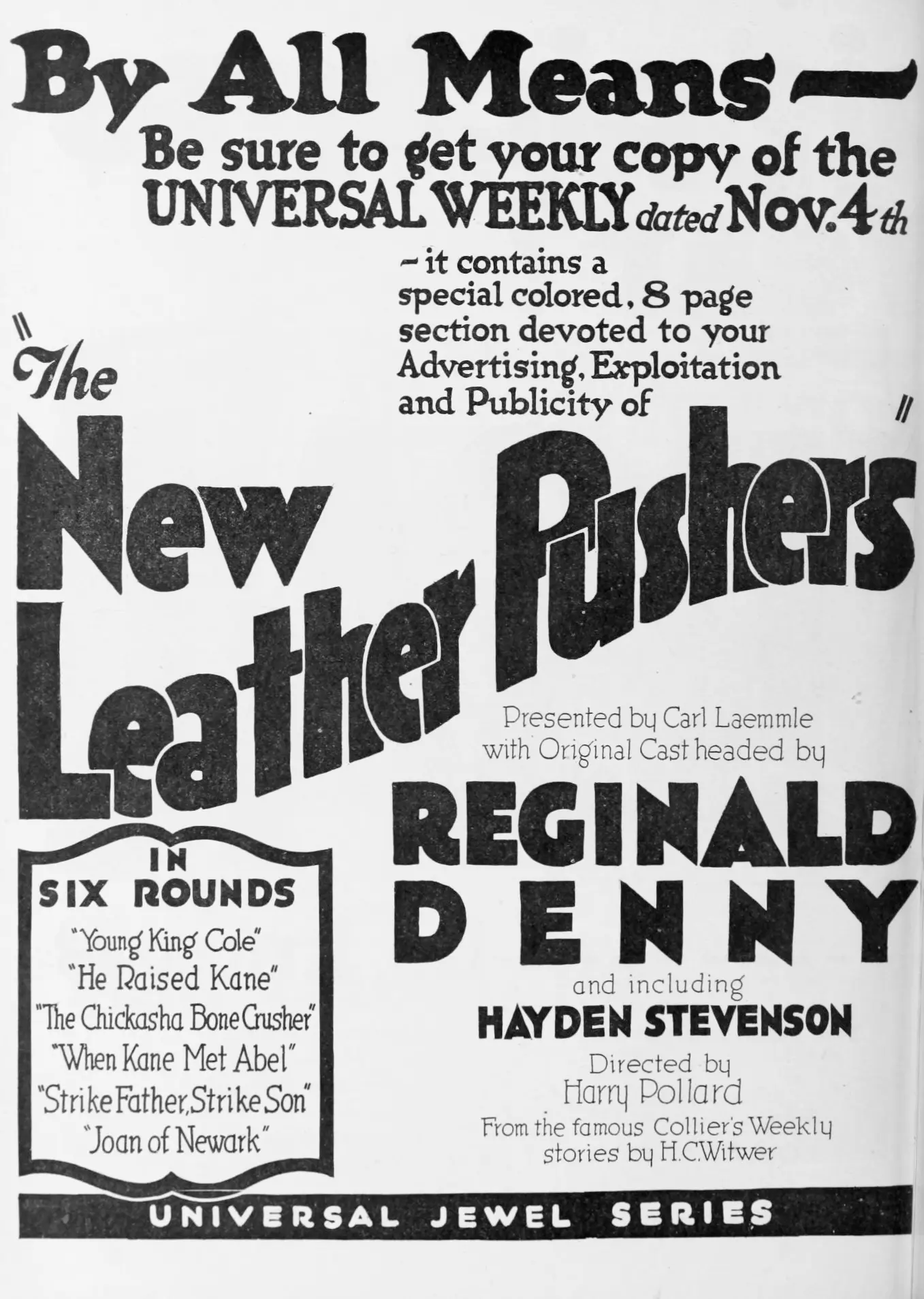
To witness When Kane Met Abel is to step into a bygone era where the celluloid medium was still grappling with its own capacity for deception. This isn't merely another entry in the 'Leather Pushers' cycle; it is a sophisticated, albeit gritty, interrogation of the ethics of the image. Directed with a keen eye for the claustrophobia of the studio setting, the film utilizes Reginald Denny’s imposing yet vulnerable presence to anchor a story that feels remarkably modern in its cynicism toward the industry.
The narrative architecture, penned by H.C. Witwer and Harvey F. Thew, functions as a hall of mirrors. We are presented with a 'film within a film,' a device that allows the creators to critique the burgeoning 'super-feature' trend of the early twenties. Unlike the more straightforward romantic tropes found in contemporary works like The ABC of Love, this production leans into the sweat and sawdust of the boxing ring. The 'Kid' is not just a fighter; he is a vessel for the director’s ambition, a pawn in a game of emotional manipulation that borders on the sadistic.
The brilliance of the screenplay lies in its understanding of masculine ego. By convincing the fighters that a 'double-cross' is imminent, the director bypasses the need for acting coaching. He goes straight for the jugular of their pride. This psychological warfare provides a stark contrast to the more traditional melodramatic conflicts seen in Ruined by Love. Here, the heartbreak isn't over a lost paramour, but over the perceived loss of professional honor among thieves—or in this case, athletes.
Reginald Denny delivers a performance that transcends the often-stilted pantomime of the silent era. His movements are fluid yet heavy, carrying the weight of a man who is beginning to realize that his reality is being curated by those behind the lens. There is a specific sequence where Denny prepares for the 'big scene' that rivals the tension found in the more exotic locales of The Planter. While the latter relies on sweeping landscapes to evoke scale, 'When Kane Met Abel' finds its enormity in the twitch of a facial muscle or the tightening of a glove.
Hayden Stevenson, playing the manipulative director, serves as the perfect foil. He represents the burgeoning power of the auteur—a figure who views human emotion as just another technical resource, like lighting or set design. This dynamic creates a tension that is far more palpable than the standard hero-villain archetypes found in Ghost of the Rancho. In this studio-bound purgatory, the villain is the camera itself, or rather, the eye that directs it.
When we look at the landscape of 1920s cinema, 'When Kane Met Abel' stands out for its lack of sentimentality. Where a film like Kisses might opt for a lighthearted romp through social graces, this film chooses the abrasive texture of the gymnasium. It shares a certain DNA with Fields of Honor in its exploration of duty and reputation, yet it subverts those themes by placing them within the context of a manufactured reality. Is it still 'honor' if the fight is staged? Is it still 'betrayal' if the director lied about the double-cross?
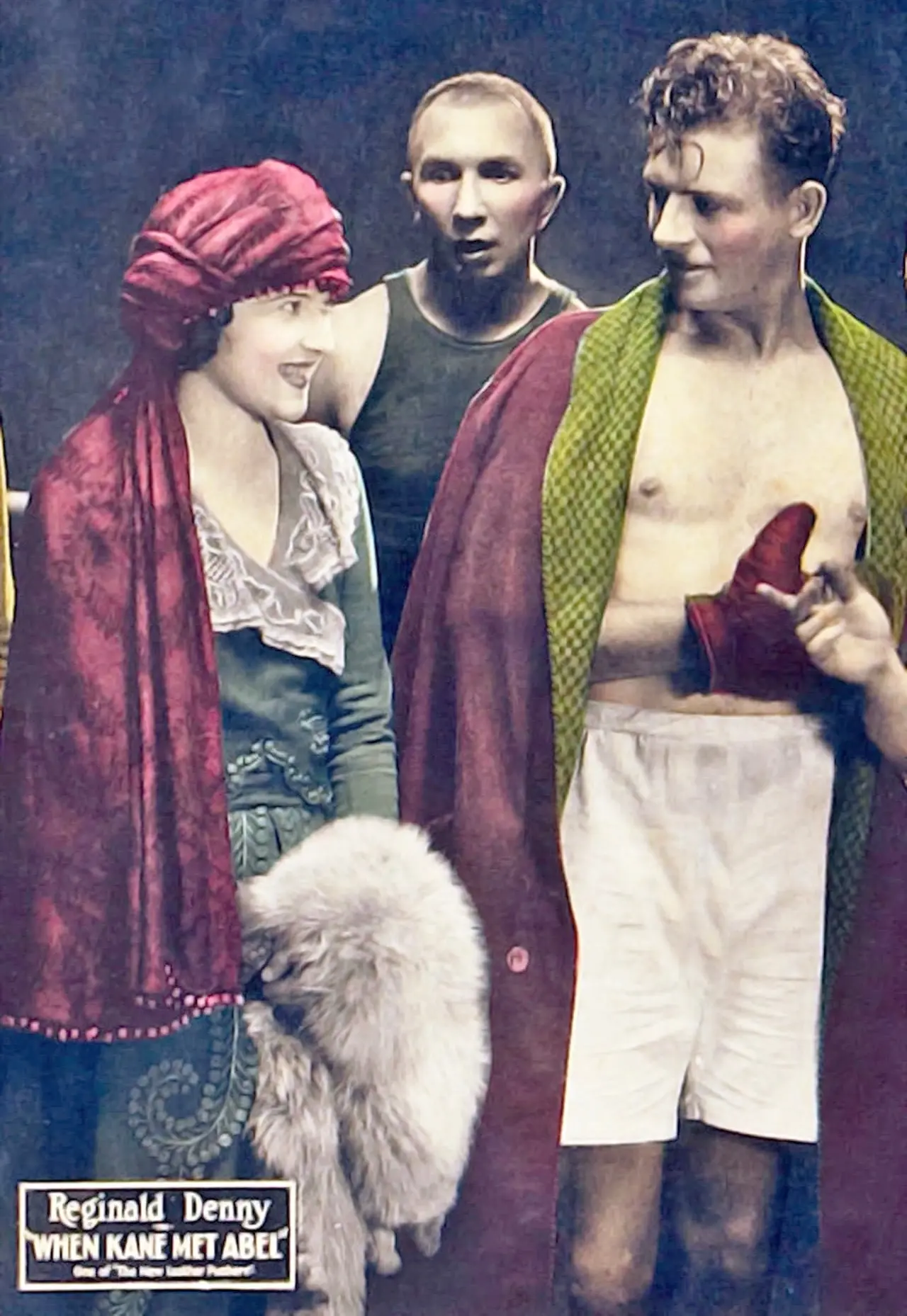
The supporting cast, including Elinor Field, provides the necessary emotional grounding. Field, in particular, manages to convey a sense of mounting dread as she watches the manipulation unfold. Her role is less subservient than the domestic archetypes in The Slavey; she acts as the conscience of the film, the only one aware that the 'snap' the director wants might actually break the men involved.
Visually, the film is a masterclass in using shadows to heighten paranoia. The cinematography captures the dust motes dancing in the studio lights, creating an atmosphere that feels both ethereal and suffocating. This aesthetic choice distinguishes it from the more brightly lit, almost theatrical presentations of Tonsorial Artists. The camera work here is restless, mimicking the agitation of the fighters as the 'big scene' approaches. It possesses a primal energy that one might expect from a film like The Cactus Kid, but channeled through a much more sophisticated urban sensibility.
The editing, too, deserves commendation. The cross-cutting between the director’s whispered lies and the fighters’ growing resentment builds a rhythmic intensity that is almost musical. It’s a far cry from the more leisurely pacing of Puppchen. Here, every cut is a jab, every transition a hook, leading toward a climax that feels inevitable yet shocking in its execution.
In the broader context of silent cinema, 'When Kane Met Abel' anticipates the self-reflexive turns of later decades. It shares a spiritual kinship with the European avant-garde, perhaps nodding toward the psychological depth of Erdgift or the haunting allure of Tigre reale. However, it remains firmly rooted in American grit. It doesn't need the gothic trappings of The Gilded Spider to create a sense of entrapment; the four ropes of the boxing ring are more than sufficient.
The film’s resolution—or lack thereof—leaves the viewer questioning the cost of entertainment. When the 'Kid' finally delivers that 'extra snap,' is he winning the fight, or is he losing his soul to the production? This ambiguity is what elevates the film above its peers. It isn't a simple story of triumph like Strike Father, Strike Son. It is a cautionary tale about the power of the director to reshape reality to fit the frame.
Ultimately, 'When Kane Met Abel' is a visceral reminder that cinema has always been a dangerous game of manipulation. It captures a moment in time when the industry was discovering its teeth, and Reginald Denny was the perfect subject to feel the bite. For any student of film history or lover of raw, psychological drama, this is an essential piece of the puzzle, standing tall among the giants of the silent era like a bruised but unbowed champion.
IMDb 4.7
1937
Community
Log in to comment.