DbcultAccessing Vault...
7.1/10
Senior Film Conservator
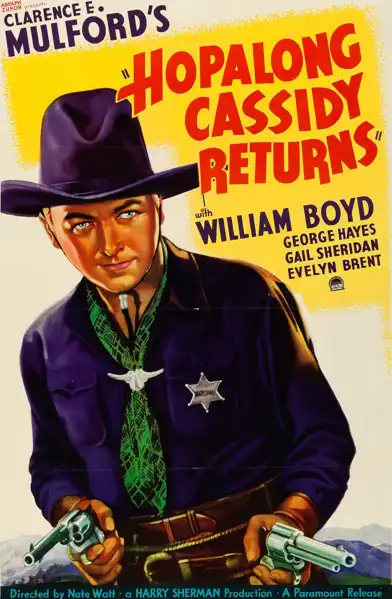
A definitive 7.1/10 rating for a film that redefined the boundaries of cult cinema. Hopalong Cassidy Returns remains a cornerstone of transgressive art.
Okay, so "Hopalong Cassidy Returns"… is it worth your time today? Hmm. If you’re a big fan of classic B-westerns, especially ones from the 1930s, then yeah, probably. It’s got all the dusty charm and simple heroics you’d expect.
Anyone looking for deep character studies or flashy modern action? You'll probably be bored stiff. This is for folks who appreciate a slower pace and clear-cut good guys.
The movie kicks off with a newspaper editor, Jim Meeker, in a town called Corson. He's trying to clean things up, but the bad guys run the place. Miners are getting fleeced, and folks are getting murdered.
Meeker, bless his heart, sends for his old friend, Hopalong Cassidy. Hoppy arrives, all in black, looking like he means business.
William Boyd as Hoppy is the main draw, of course. He’s got that quiet, steady presence. He doesn't rush anything.
There's a scene where he just sits and listens to the local doctor, Dr. Bentley, talk about the town's troubles. It goes on a bit, but it helps set the mood. You see Hoppy thinking, not just reacting.
His sidekicks are there too. Especially Gabby Hayes, playing Windy. Gabby's always good for a laugh, grumbling and fussing. He’s the comic relief, but he never feels out of place.
He’s just… Windy. There’s a moment when he’s trying to fix something, and he nearly drops it. It's a small thing, but it feels real.
The plot is pretty standard for a Western. Bad guys trying to take over, good guy comes to stop them. Here, it’s a gang led by a fellow named Buck Peters. He’s got the whole town scared.
The newspaper editor, Meeker, tries to stand up to him, but gets roughed up. Hoppy steps in as marshal.
What I noticed is how Hoppy handles things. He’s not super aggressive right off the bat. He observes. He rides around. He gathers information. He makes a point of talking to the regular townsfolk.
It feels less like a big shootout spectacle and more like detective work. For a 1930s film, that's kinda neat.
There’s a part where Hoppy talks to a young woman, Mary, who is worried about her brother. Her brother, Harry, is involved with the bad crowd, but he's not truly evil. It’s one of those bits where the movie tries to show some nuance.
Mary’s desperation feels genuine.
The action scenes are, well, of their time. Horses gallop, fists fly, and guns go off with visible smoke. Don't expect fancy choreography.
The fights are quick, a bit clunky, but effective enough to move the story along. One guy gets punched, and he just falls. No theatrics.
I found myself watching the backgrounds a lot. The dusty streets, the simple saloon sets. It’s all very functional.
You get a sense of the era, the lack of resources. The film doesn't try to make the West look glamorous; it just is.
There's a specific scene where Hoppy and Windy are tracking some bad guys. Windy complains about the heat, the dust, everything. Hoppy just gives him a look. No words needed. It really tells you about their relationship. That unspoken understanding.
The movie gets noticeably better once Hoppy really starts putting the pieces together. He exposes the main villain behind Buck Peters. It's not a huge twist, but it works. The climax feels earned, even if it's not a huge spectacle.
It’s not perfect, though. Some of the dialogue is a little stiff, even for a Western. And some of the side characters feel a bit underdeveloped. You can almost feel the movie trying to rush through certain explanations to get to the next plot point.
But for what it is—a straightforward Western starring a beloved hero—it holds up okay. It’s a comfortable watch, like an old friend. You know what you're getting, and it delivers on that promise. It's not trying to reinvent the wheel, and that's fine. 🐎
IMDb 7.2
1921
Community
Log in to comment.