DbcultAccessing Vault...
7.2/10
Senior Film Conservator
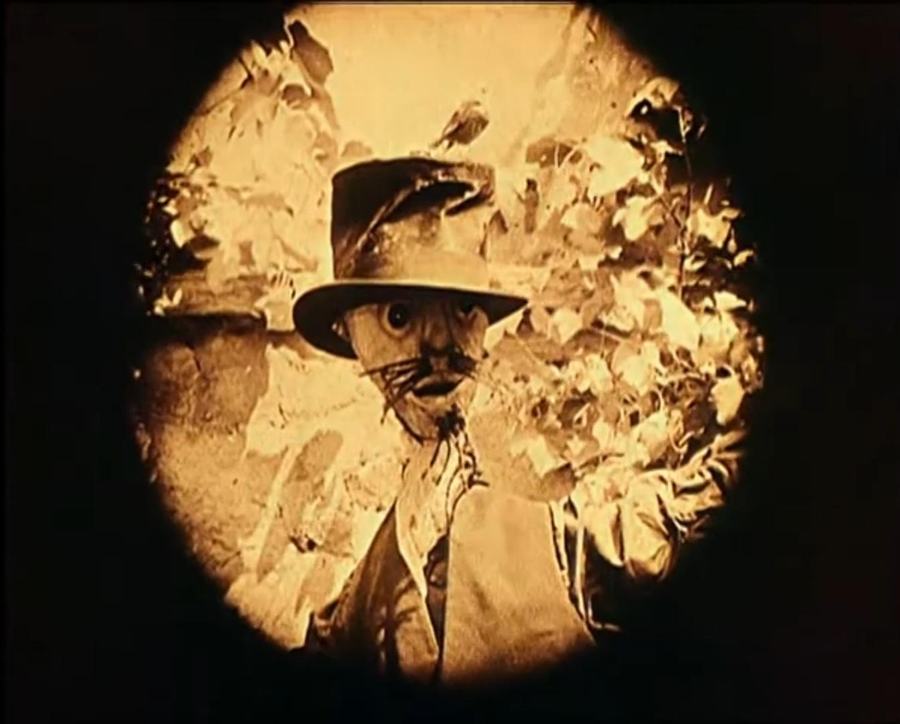
A definitive 7.2/10 rating for a film that redefined the boundaries of cult cinema. The Scarecrow remains a cornerstone of transgressive art.
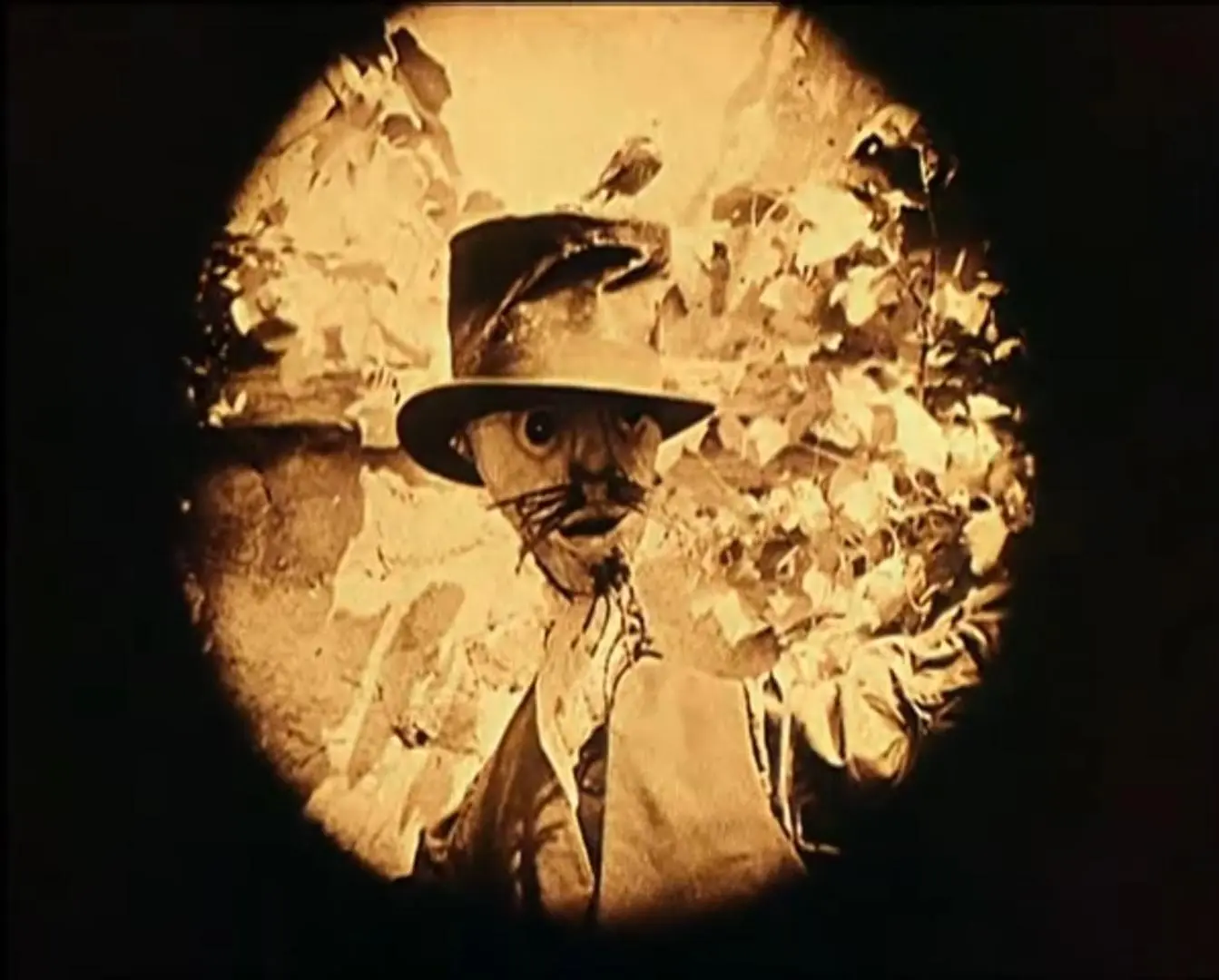
There’s a moment—three reels in, just after the gardener spills his last drop of moonshine—when the barn floor tilts like a funhouse trap and the camera itself seems to hiccup. It’s 1921, and celluloid is still learning to breathe; yet here comes Wladyslaw Starewicz, coaxing puppets to sweat, blush, beg for mercy. The scarecrow, straw-stuffed and stitched with a turnip grin, becomes our mute chorus, arms akimbo against a sky bruised violet by dawn. The film’s genius lies in refusing to separate rustic farce from cosmic dread; every pratfall rings like a cathedral bell in a plague town.
Starewicz didn’t merely animate beetles; he resurrected them. Their elytra click like typewriter keys spelling out damnation. In The Scarecrow he graduates to human figurines whose porcelain faces carry hairline cracks—tiny fault lines where the soul might leak. Watch the gardener’s pupils dilate: two inkwells overflowing with terror and cheap gin. Frame by frame, the devil’s agents rearrange the barn into a Möbius strip; the exit door re-enters as the entrance to Hell, and the rooster’s crow becomes a backwards scream.
Forget Miltonic majesty—this underworld runs on ledgers and carbon paper. Imps wear visors, punch timecards, grumble about overtime. Satan, rotund and pomaded, dictates quotas: “Seven lusts before breakfast, twelve envies by elevenses.” The satire stings because it anticipates our own open-plan purgatories. When the gardener is hustled into a waiting room, the sequence plays like Kafka with a kazoo soundtrack; every bureaucratic stamp lands with a rubbery squeak that’s both hilarious and existentially nauseating.
Back on the surface, dew beads on cabbage leaves like sweat on a gambler’s brow. The film cross-cuts between the gardener’s torment and the Devil’s envoys sprouting in village life: a fresh bottle of plum brandy appears on a windowsill, a lottery ticket flutters from a Bible. Each temptation is shot with the voluptuous patience of still-life painting, yet the edges shimmer—heat-haze of the netherworld bleeding through. You can almost smell the sulfur under the lilacs.
Credited actress Nina Star never appears in the flesh; instead she voices the wind, the creak of hinges, the soft thud of the gardener’s heart. Her performance is a grammar of rustles, an audio ghost that seeps through the orchestra’s sawdust waltz. Critics of the era dismissed it as “novelty”; today we’d call it ASMR from the astral plane. Without her, the film would merely be clever; with her, it vibrates like a tuning rod struck against bone.
Where A Message from Mars moralizes its cosmic visitor into a Sunday-school homily, The Scarecrow keeps its theology tipsy, off-balance. Erotikon may titillate the bourgeoisie, but Starewicz seduces the compost heap. Even Martin Eden’s class rage feels polite beside the sight of a beetle in a top hat dealing Texas hold ’em for mortal souls.
Though shot in monochrome, the film implants color in your synapses: the barn’s green felt becomes an emerald inferno; the scarecrow’s burlap glows dark orange like a dying star. Starewicz achieved this through tinting, yes, but also through pacing—your retina retains the afterimage of a sulphur-yellow moon long after the scene fades. Contemporary viewers reported dreams painted in ochre and bruised teal, as if the screen had siphoned pigments directly from their sleeping brains.
The original score, lost in a Leningrad flood, survives only in rumor: a barrel-organ wheeze punctuated by pistol shots. Modern restorations pair it with hauntological electronics—sub-bass thuds that mimic the gardener’s stagger. Either way, the absence of dialogue amplifies ambient noise: the creak of a puppet’s armature becomes a confession; the flutter of a moth against lens glass sounds like a verdict being torn from the Book of Life.
Without this 38-minute whirlwind, would Lynch’s red-room curtains billow? Would Švankmajer’s meat puppets dance? The genealogy is unmistakable: the scarecrow’s stitched grin reincarnates as the Mystery Man’s smirk in Lost Highway; the bureaucratic devils foreshadow the pencil-pushers of Brazil. Starewicz planted seeds of uncanny dread inside a children’s fable, proving that the most potent horror arrives wearing overalls and smelling of fertilizer.
By the time the end card flickers, the gardener’s soul isn’t won or lost—it’s composted, returned to the loam to sprout next season’s temptations. The scarecrow remains, arms wide, cruciform against the sunrise, a god that feeds on crows and forgotten prayers. You walk away tasting iron, as if you’d chewed on a nail wrapped in a love letter. And that aftertaste, dear reader, is the surest sign that a film has not merely screened, but has taken root.
IMDb 3
1914
Community
Log in to comment.