DbcultAccessing Vault...
5.9/10
Senior Film Conservator
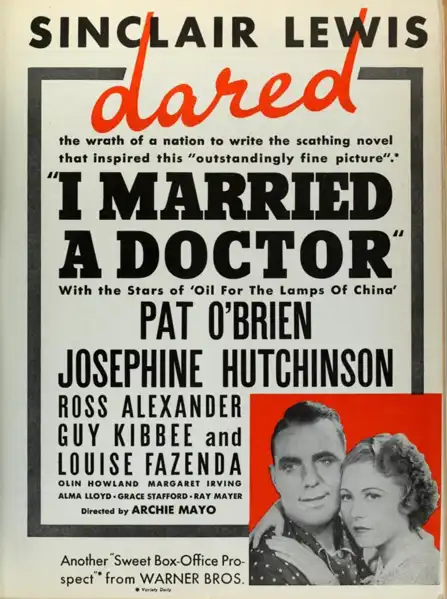
A definitive 5.9/10 rating for a film that redefined the boundaries of cult cinema. I Married a Doctor remains a cornerstone of transgressive art.
Alright, so 'I Married a Doctor' from 1937. Is this one worth digging up today? Maybe, if you’re someone who genuinely enjoys old movies that wrestle with social dynamics, especially the often brutal way small towns can treat outsiders. It’s certainly not for everyone, though. If you want something with quick pacing or a perfectly satisfying, modern resolution, you’ll probably find this a bit too slow and, well, *depressing* at times.
This movie puts Carol, a woman from the big city, smack-dab into this tiny rural place after she marries Dr. Will Kennicott. And from the jump, you just know it's not going to be easy for her. The town's women, in particular, eye her with this blend of curiosity and outright suspicion. They don't like her trying to make friends, especially with the menfolk. It's a classic setup, really.
What struck me was how Carol kept trying. Like, she really, genuinely wanted to be a part of things. She'd suggest small changes for the town – things that, honestly, sounded pretty reasonable. But the townsfolk? Oh, they loved their town just the way it was. Her suggestions for a park or maybe cleaning up the square felt like a personal insult to them. You could almost *feel* the resistance radiating off the screen during those town meetings.
There's this young artist, Erik Valborg, who Carol takes under her wing. She sees his talent, tells him to leave the farm, go study architecture. A kind gesture, right? Except the town twists it immediately. His parents are convinced she's trying to seduce him. And Erik himself, bless his naive heart, actually *believes* Carol is in love with him. He tells Will this, all serious. That whole scene, it’s just so awkward you almost want to shout at the screen.
Will, her husband, is trying his best, but he's sort of stuck between his wife and his patients. He suggests Erik ask Carol if she’ll leave with him, just to clear things up. Which, okay, might not have been the best idea. When Erik does, Carol is absolutely floored. She tells him she only sees him as a friend. You see her face there, it’s like she’s just been slapped with a wet fish. 🐟
Things spiral fast after that. Erik gets drunk, gets into a car crash, and dies. And instantly, the town's whisper campaign turns into a full-blown roar. It’s all Carol’s fault. Every single person seems to point a finger at her. She tried so hard, and it just blew up in her face. It’s a pretty brutal portrayal of how quickly a community can turn on someone.
She decides to leave. And honestly, who could blame her? She couldn't win. Will begs her to stay, but she's just had enough. She gets on the train, and the camera lingers on her leaving. It's a moment that felt really earned, her giving up on a place that clearly didn't want her.
Then comes the ending, which is… well, it's 1937. After Carol leaves, the townspeople suddenly start missing her. The same folks who ran her out of town are now saying how much they liked her. It's almost hypocritical in a way that feels a little too real sometimes. Will, bless his optimistic soul, waits at the train station every single day, convinced she'll come back.
And she does. She learns that 'small minds' are everywhere, not just in this one town. And that her love for Will is what matters. It’s a conclusion that feels a little too neat after all the mess that happened, a bit like the studio saying, "Okay, let's tie this up with a bow." But you can sort of see the sentiment they were going for, even if it feels a little less *punchy* than the earlier parts of the film.
It makes you wonder, did she really learn that, or was she just tired of being alone? 🤔
This film is a bit of a slow burn, for sure. But it does offer a stark look at how communities can resist change, and the price paid by those who dare to be different. It’s not flashy, but it sticks with you, like a stubborn small-town rumor.
IMDb —
1932
Community
Log in to comment.