DbcultAccessing Vault...
6.9/10
Senior Film Conservator
A definitive 6.9/10 rating for a film that redefined the boundaries of cult cinema. Khabarda remains a cornerstone of transgressive art.
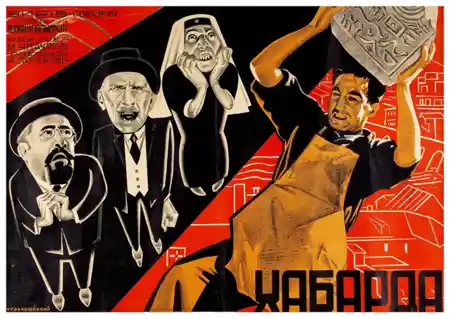
Okay, so Khabarda. If you're into those old, really *old* films, the kind that feel like a window into another time, then yeah, give it a shot. This one's for film history buffs or anyone curious about early Soviet propaganda dressed up as drama. But if you want fast plots or pretty pictures, honestly, you'll probably bounce off it pretty quick. 🤷♀️
The whole setup is pretty straightforward: communists want to spruce up the city, right? Make it all modern. Problem is, there's this church, kinda sitting right where they want to build. So, naturally, the folks who see it as holy ground decide they're not letting that happen.
That church, man. It almost feels like a character itself. You see the *texture* of the stone, the way it's just sat there for ages. The camera, it just kinda _lingers_ on the bricks for a bit, like it's taking its own measure of the situation. It’s not just a building; it's _everything_ to these people.
And the officials, you see them with their blueprints, all confident. They look at the church like it's just another obstacle, a really inconvenient pile of rocks. They seem so sure their vision is the only one that matters.
But then you cut to the townsfolk, especially the older women. Their faces tell a whole story. There’s one shot of S. Vachnadze, I think it was her, and her eyes just cut right through you. No yelling, just this quiet, *firm* refusal. Powerful stuff, really.
The crowd scenes are interesting. Sometimes they feel a bit… staged, you know? Like everyone knows their mark. But then you get these flashes, these quick cuts to individual faces in the crowd, and for a second, it feels incredibly real. Like you’re right there, breathing the same dusty air. The collective unease is palpable, even if the acting is sometimes a bit broad.
The actual attempts to get rid of the church, they’re not super dramatic. It’s more about the tension building up. There’s this one crane, for a while it just sits there, looming over the roof. It’s kinda menacing, just waiting. And the villagers, they just *stand* there, blocking the path. It's a very quiet form of protest, but loud in its own way.
I kept wondering if that one guy in the background, with the slightly too-big hat, was just an extra or if he was supposed to be someone important. Never really found out. He just kept popping up, a silent witness.
The lighting in some of the indoor shots, especially inside the church, is kinda murky. It adds to this sacred, almost forgotten feeling. Or maybe it was just hard to light back then. Either way, it works.
The dialogue, when it's there, is pretty direct. No flowery speeches. People say what they mean. But a lot of the story is told through glances and gestures, which is common for films of this era. It makes you pay attention to the little things.
The pacing is definitely _deliberate_. Things move, but not quickly. You feel the weight of each decision, each standoff. It's not a popcorn movie, that's for sure. It asks you to lean in and watch.
And the ending, it just kind of… *ends*. It doesn't give you a neat little bow. It just leaves this feeling hanging in the air, you know? Like the conflict isn't truly resolved, just paused. It makes you think about bigger questions, about progress versus tradition, and if there's ever a true winner.
This movie is definitely more of a historical document than pure entertainment. It gives a glimpse into a very particular kind of social friction, framed through the eyes of its time. For that, it’s worth seeing, even if it feels a little rough around the edges sometimes. It's a _moment_, captured. ✨
IMDb 7
1931
Community
Log in to comment.