DbcultAccessing Vault...
7.2/10
Senior Film Conservator
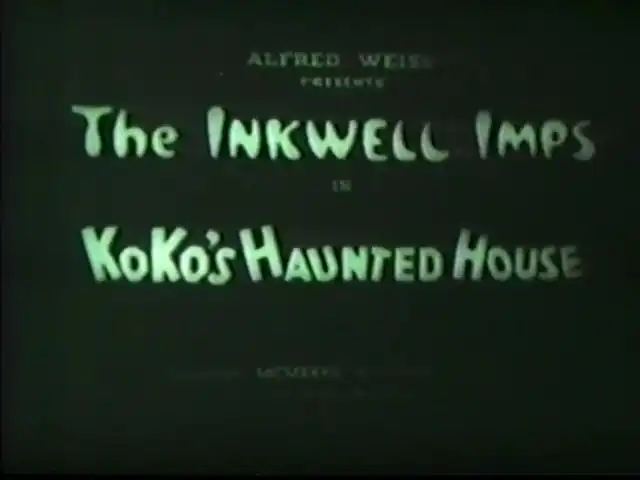
A definitive 7.2/10 rating for a film that redefined the boundaries of cult cinema. Ko-Ko's Haunted House remains a cornerstone of transgressive art.
If you have six minutes to spare and an appetite for that specific kind of 1920s ink-blot logic, Ko-Ko’s Haunted House is worth the watch. It’s perfect for anyone who likes seeing the strings—literally, in this case—of how early animation worked. If you’re the type who needs a cohesive plot or finds silent-era slapstick grating, you’ll probably just see this as a flickering relic. But for the rest of us, there’s something deeply satisfying about how tactile and mean-spirited it feels.
The setup is classic Fleischer. Max Fleischer is at his drawing board, but instead of just sketching, he’s finishing a physical model of a haunted house. It looks like something a very talented child made out of shoeboxes and glue. There’s a real sense of weight to the model. When Max’s giant hand reaches into the frame to adjust a door or poke a chimney, the scale shift is jarring in a way that modern green-screen stuff never quite manages. You can see the grain in the wood and the slight imperfections in the cardboard.
Then he drops Ko-Ko and Fitz the dog into the scene. The way they transition from the flat world of the inkwell into this 3D model house is still one of the coolest things about these old "Out of the Inkwell" shorts. They don’t quite fit the perspective of the house, and that’s why it works. They look like intruders in a physical space.
Fitz the dog is, as usual, the highlight for me. He has this perpetually worried expression, and his movements are so fluid they almost feel oily. There’s a moment early on where he’s trying to hide, and his whole body just sort of deflates. It’s not "realistic," obviously, but it captures the feeling of pure cowardice better than a high-budget CGI dog ever could. He and Ko-Ko have this frantic chemistry where they’re constantly getting in each other's way, similar to the chaotic energy you see in something like A Crazy Night.
The "haunted" elements are where the Fleischer brothers' weirdness really shines. The ghosts are basically just white blobs with eyes, but they move with a jerky, unpredictable rhythm. There’s a skeleton that shows up, and it’s not just a skeleton—it’s a collection of vibrating bones. When it falls apart, the bones don't just sit there; they keep twitching on the floor like they’re trying to find their way back to each other. It’s a bit unsettling if you think about it too long. The animation on the skeleton is incredibly dense for 1928. You can tell someone spent a lot of late nights at a desk making sure every rib bone had its own little personality.
Max Fleischer’s "acting" in the live-action segments is pretty funny. He’s not an actor, and he knows it. He just sits there with this half-smirk, poking at his characters with a fountain pen like a kid tormenting ants with a stick. It gives the whole film this slightly sadistic edge. He’s not a benevolent creator; he’s an antagonist. He’s deliberately making their lives miserable for the sake of a gag. It’s a much darker vibe than you’d get from the Disney shorts of the same era, which usually felt a bit more wholesome, even the ones like Don't Weaken! that leaned into physical struggle.
There’s a specific shot where Ko-Ko is looking through a window, and the camera is positioned inside the model house. The lighting is surprisingly moody. It’s all high-contrast blacks and whites, and the way Ko-Ko’s white face pops against the dark interior of the model is genuinely striking. It’s a reminder that these guys weren’t just gag-men; they understood how to compose a frame that felt atmospheric, even when the subject matter was a clown being chased by a bedsheet.
The pacing is breathless. It’s one room after another, one door after another. A ghost behind every door. It starts to feel a bit repetitive around the four-minute mark, but just as you’re starting to get tired of the "open door, see ghost, run away" loop, the movie shifts gears. Ko-Ko gets fed up. He realizes he’s being messed with by the guy with the pen.
The ending is the best part. Ko-Ko doesn't just escape the house; he attacks the creator. He grabs the pen and starts drawing his own obstacles, eventually dragging Max himself into the inkwell. There’s a shot of Max’s face as he’s being "pulled" into the drawing that is just wonderfully awkward. It’s a great bit of meta-commentary that feels fresh even a century later. It turns the whole movie from a simple spooky short into a little rebellion. Ko-Ko isn't just a drawing; he’s a character with a grudge.
It’s a messy, flickering, slightly blurry experience if you’re watching a bad print, but that adds to it. The scratches on the film almost look like they belong there, like extra ghosts haunting the frames. It’s not a masterpiece, but it’s a very honest piece of work. You can feel the ink on the fingers of the people who made it. It’s a short that knows exactly what it is: a quick, slightly mean, very creative way to spend six minutes in the dark.
IMDb —
1924
Community
Log in to comment.