
DbcultAccessing Vault...
Cult Review
Senior Film Conservator
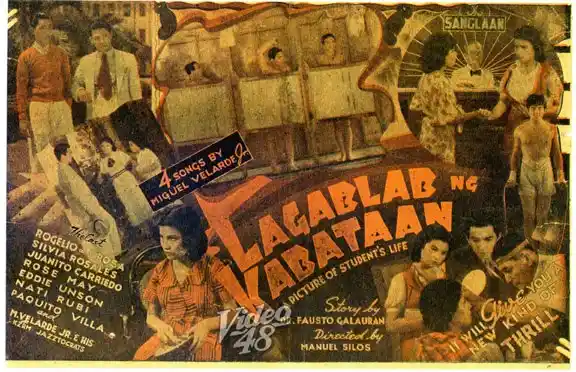
If you like movies that feel like a dusty stage play brought to life, you might get a kick out of Lagablab ng kabataan. It’s for the folks who enjoy seeing classic Filipino cinema stars doing their thing with that specific, heightened intensity of the era. If you’re looking for subtle, naturalistic acting or snappy pacing, you will probably hate it. It moves at its own stubborn speed, and it doesn't care if you're keeping up.
Rogelio de la Rosa is the main reason to watch this. He has this way of commanding a room even when the dialogue is being a bit melodramatic. There’s a scene where he’s just standing by a window, and the way he holds his jaw—it’s so old-fashioned but strangely captivating.
The pacing is… well, it’s not exactly a race. Some moments linger for what feels like an eternity. Sometimes a character will walk across a room, stop, think about walking further, and then keep walking. It’s funny if you stop expecting it to move fast.
I couldn't help but compare the vibe to Soul of the Slums. Both films have that same earnest, almost desperate need to show you exactly how hard life is. But where that one felt like it had dirt under its fingernails, this one feels like it’s wearing a tuxedo it hasn't quite grown into yet.
There's a sequence in the middle involving a misunderstanding at a garden party that goes on way too long. The silence in the room gets so heavy it feels like the furniture is judging the characters. You can almost feel the director nudging the actors to look more devastated, and they definitely oblige. It’s campy, but in a way that feels honest to the time it was made.
It’s not a masterpiece. It’s not even a particularly tight story. But there’s a flicker of something real in the way the actors look at each other, like they’re trying to find the truth in a script that’s a little too stiff. Sometimes that’s enough to keep you watching until the credits roll. 🎞️

IMDb 5.1
1935