DbcultAccessing Vault...
6.2/10
Senior Film Conservator
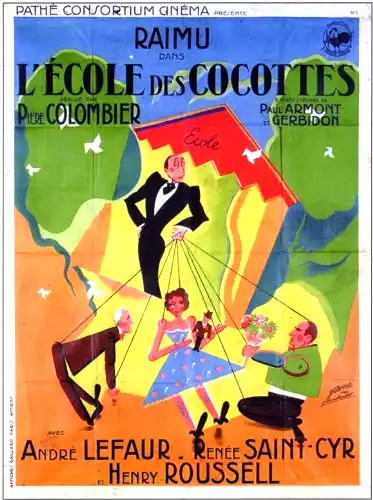
A definitive 6.2/10 rating for a film that redefined the boundaries of cult cinema. L'École des cocottes remains a cornerstone of transgressive art.
Alright, so L'École des cocottes, or 'The School for Coquettes,' is definitely one of those movies you watch for a glimpse into another time. If you’re into early French cinema, or just curious about how stories were told back then, you’ll probably find some quiet enjoyment here. But if you’re looking for a fast-paced plot or modern sensibilities, you might find yourself checking your watch. It’s a slow burn, for sure, but with a certain kind of charm.
The film kicks off with Ginette, a seamstress. She’s living this really simple, kinda sweet life with her musician guy. Their apartment is small, a bit cluttered, but it feels lived-in and happy. You know, the kind of happiness that’s not about having a lot of stuff, but just being content. There’s a scene where they’re just giggling over something small, and it feels very genuine. 💖
Then along comes Count la Ferronnière. He’s all smooth talk and expensive suits. He spots Ginette and decides he’s going to 'educate' her. It’s a whole thing, teaching her how to walk, how to talk, how to hold her fork at a fancy dinner. And Ginette, she’s not stupid. She sees the opportunity, right? The chance to step out of her tiny apartment and into this big, shiny world.
The transformation is really the core of it. We see her moving from these plain, practical dresses to elaborate gowns. Her hair gets done up. There’s a moment where she tries on a fur coat for the first time, and her eyes just widen a little. It’s not just about the clothes, though. It’s how she starts carrying herself. A bit stiffer, maybe, less spontaneous. The Count, played by André Lefaur, has this almost *smug* look when she starts to 'blossom' under his guidance. You can almost feel the movie saying, is this really a good thing?
Her old life, it kinda just… fades. Her musician lover is left behind, bewildered. There's a scene where he tries to visit her in her new, grander digs, and the contrast is pretty stark. He looks out of place, uncomfortable. And Ginette? She’s polite, but there’s this distance in her eyes. It’s a little heartbreaking, actually. 💔
The film isn't trying to be subtle about its message. It’s pretty clear Ginette is choosing wealth over love. And honestly, who could blame her? The allure of luxury is powerful. But the film also hints at the emptiness that might come with it. You see her at these fancy parties, surrounded by people, but sometimes she looks a bit lost, or just… performing.
There’s a small, almost throwaway scene with Raimu, who plays a waiter or something similar. He only has a few lines, but he just has this *presence*. Even in a small role, his timing is just a little bit different, a bit more natural than some of the other actors. It makes you notice him, even if he’s just delivering a plate.
Watching it, you get a real sense of the era's acting style. Lots of grand gestures, very theatrical. Sometimes the dialogue feels a little stilted, like they’re reading from a play. But then you get these moments, like Ginette’s quiet glance at a street vendor, that feel surprisingly modern and relatable. The sound quality, too, it's a bit rough around the edges, but that just adds to the vintage vibe, I think.
The pacing, as mentioned, is deliberate. It lets moments breathe, sometimes a little *too* much. There’s a long shot of Ginette walking through a park, just walking. No dramatic music, no quick cuts. Just her. It gives you time to think about her journey, I guess. Or maybe just to wonder what’s for dinner. 😉
It’s not a film that’s going to change your life, or even stay with you for weeks. But it’s a sweet, simple story with a clear point of view. It makes you think a bit about what we value, and what we give up for it. For fans of classic French cinema, it’s a neat little piece of history.
IMDb 5.5
1933
Community
Log in to comment.