DbcultAccessing Vault...
8.1/10
Senior Film Conservator
A definitive 8.1/10 rating for a film that redefined the boundaries of cult cinema. The Lure of Crooning Water remains a cornerstone of transgressive art.
A hush as thick as Dorset fog settles over Guy Newall’s 1920 curio The Lure of Crooning Water, a picture that masquerades as a sanatorium idyll before slitting its own wrists with a shard of obsidian betrayal.
Shot on location when the British countryside still exhaled pre-war innocence, the film feels like a hand-tinted postcard left too long in the sun: colors bleed, edges blister, and the pastoral bliss reveals septic bruises. Newall—triple-hyphenate as co-writer, director, and male lead—engineers a moral fever dream that anticipates Prestuplenie i nakazanie’s psychological flaying by several seasons, yet anchors its transgressions in hedgerow realism rather than Dostoevskian abysses.
Hester Grey’s collapse under the proscenium arch is rendered in an unbroken tableau: footlights carve amber halos around her collapsing silhouette, while the auditorium’s velvet drapes absorb sound so voraciously that her thud lands with the intimacy of a heartbeat inside one’s own chest. It’s an origin wound that justifies the ensuing pastoral exile, but it also slyly foreshadows the performative roles she will reprise amid cows and cider-presses.
Once transplanted, the film’s visual lexicon pivots from urban chiaroscuro to aqueous pastoralism. Cinematographer Bert Ford—unjustly forgotten—bathes dawn sequences in mercury blues that recall the fjordic melancholy of Det blaa vidunder but swaps Nordic angst for a very English repression. Reeds quiver like harp strings; lily-pads become green coins spent by some riverine deity. The titular croon is not mere onomatopoeia but an omnipresent susurration, a liquid lullaby that seduces Hester into mistaking lust for convalescence.
Mary Dibley’s Hester navigates a razor-edge between neurasthenic fragility and feral appetite. Watch her fingers drum against a pewter mug: the tempo accelerates in stealthy synchrony with her rising pulse, until Ambrose’s weather-chapped hand covers hers—an electrical jolt that the camera registers in a microscopic quiver of her nostril. Silent-era acting often gestured toward hieroglyphic broadness; Dibley opts for haiku, compressing whole sonnets of longing into the downward glance of a single eyelash.
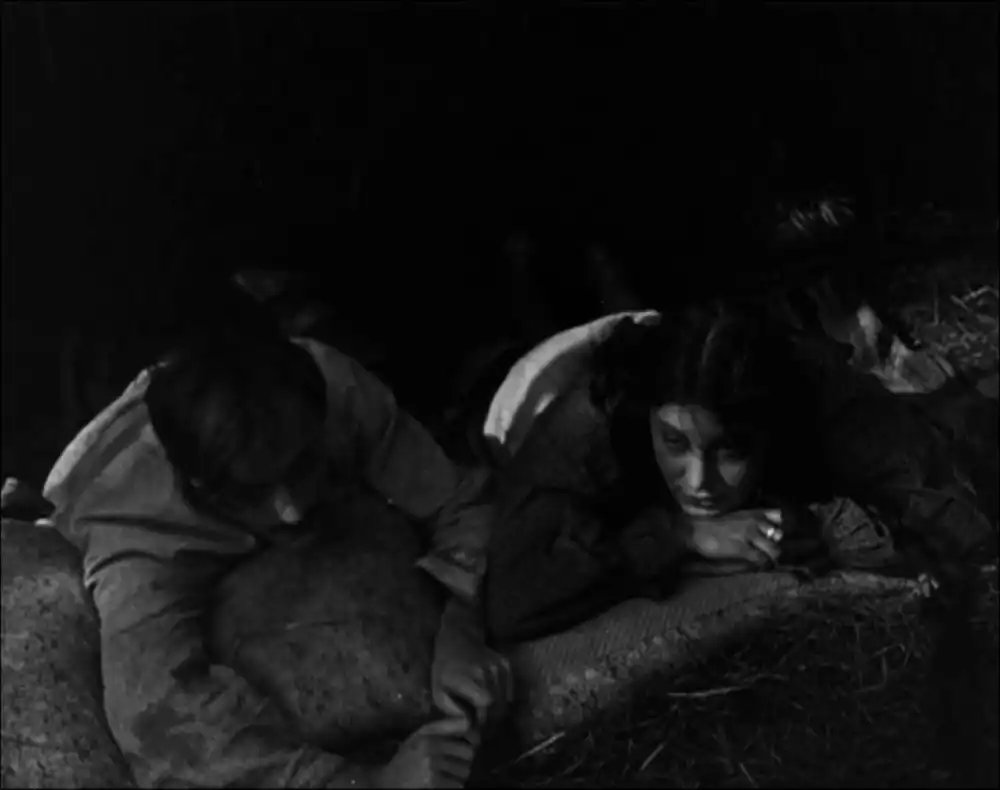
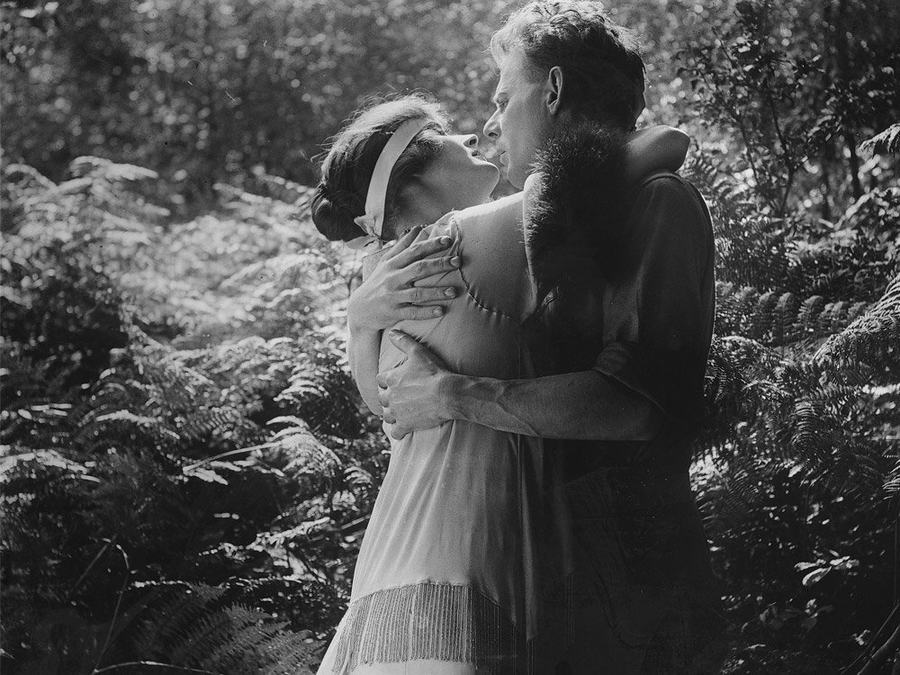
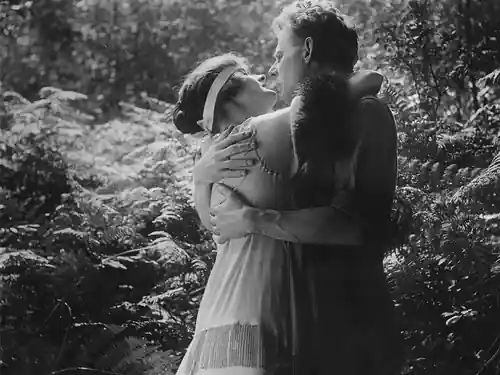
Guy Newall’s Ambrose is a study in contradictions: shoulders built for hay-bale hoisting, yet eyes that flicker with a schoolboy’s terror of damnation. His flirtation technique consists of reciting rainfall statistics—an aphrodisiac for a woman starved of city chatter—and the erotic charge crackles precisely because courtship is disguised as agronomic data. When he finally seizes Hester among the chaff, the moment is shot through with Calvinist guilt; his kiss lands like a punch to his own conscience.
Ivy Duke’s Martha has the film’s most thankless role—stoic wife, cipher of injured virtue—yet she weaponizes stillness. In a late-night kitchen scene, she sits darning socks while Hester and Ambrose exchange furtive glances over cold mutton. The only sound is the shh-shh of thread through cotton, but Duke’s fingers tighten imperceptibly, each stab of the needle a proxy for the throat-cutting she cannot commit. The sock becomes a voodoo doll; every darned hole anticipates the marital wound.
Hill and Newall’s intertitles dispense with the Victorian throat-clearing typical of 1920 British silent cinema. Instead, we get haiku-like fragments: "The river remembers what we forget" or "A gate unlatched is an invitation to the devil." Such gnomic compression invites the viewer to inhabit negative space, to project private transgressions onto the pastoral hush. Dialogue cards arrive sparingly; when they do, white letters quiver against black velvet as though ashamed to speak aloud.
Compare this reticence to the logorrhea of Everybody’s Doing It, where intertitles crowd the frame like auctioneers. The laconic approach here intensifies the unsaid: every rustle of wheat, every creak of a rope swing becomes potential evidence of adultery. When Martha finally confronts Hester, words are redundant; the shot-reverse-shot sequence lingers on pupils dilating, jaw muscles clenching, beads of sweat irrigating upper lips. Silence itself becomes an interrogation lamp.
Props mutate into moral barometers. A tin bathtub—initially a vessel for Hester’s therapeutic soak—reappears crusted with pig’s blood after lambing season, baptizing her from convalescent to accomplice. A cracked mirror in the attic reflects only half of Hester’s face, as though she were already fractured before sin ever touched her. Even the eponymous river changes personality: early on it glistens like a trail of strewn guineas, but by the climax it swells, brown and thick as gravy, ready to swallow a body that may or may not surface downstream.
Color tinting—amber for interiors, cobalt for dusk, sickly green for nightmare inserts—operates like emotional subtitles. The transition from canary-yellow lamplight to indigo moonshine during the first kiss externalizes the shift from playful flirtation to something darker, more irrevocable. Contemporary viewers accustomed to monochrome silents may be startled by the symphonic deployment of hue; it anticipates the expressionist palettes of War As It Really Is yet retains a British restraint, never sliding into Teutonic hysteria.
The first act’s city scenes are cut with a metronomic briskness—carriages clatter, stagehands scurry—mirroring Hester’s tachycardic lifestyle. Once in Dorset, shot duration elongates; entire afternoons unfold in a single take as clouds pass overhead like grand dames lifting hems. This deceleration risks viewer impatience, yet it stealthily entraps us in the same narcotic rhythm that seduces Hester. When the editing finally quickens—during a thunderstorm that collapses the hay-barn—the jolt feels physical, as though someone has yanked the crucifix from a sinner’s clutch.
Crosscutting between Martha’s chapel vigil and the lovers’ barn consummation generates a moral echo chamber. Each thrust of the pitchfork into hay is intercut with Martha’s needle piercing cloth, forming a dialectic of creation and betrayal. The montage anticipates Eisensteinian juxtaposition yet remains rooted in emotional, not ideological, collision.
Archival evidence suggests the original exhibition score instructed accompanists to weave Debussy’s "Clair de Lune" into scenes of riverine languor, then pivot to dissonant Saint-Saëns during moment of trespass. Modern restorations often substitute a pastoral pastiche, but the true frisson emerges when the melody fractures: a harp glissando descending into unresolved diminished chords as Hester’s dressing-gown slips from her shoulder. If you procure the 2018 BFI restoration, ensure your venue employs a live trio; the tremolo of a cello bow can vibrate your ribcage like the lowing of Ambrose’s most prized Guernsey.
Post-#MeToo readings might damn the film as patriarchal cautionary tale: city woman as serpent, rural man as gullible Adam, stoic wife as redemptive angel. Yet such reduction flattens the film’s richer palimpsest. Hester’s agency—though ultimately punished—shatters the myth of pastoral innocence; she arrives fractured but not tamed, and her erotic awakening is portrayed with sensuous complicity rather than Victorian shame. Ambrose, too, is no simple rube; his guilt is Protestant, but his desire is pagan, and the collision topples both into tragic parity.
Martha’s final gesture—closing the gate on the departing Hester but refusing to meet her gaze—carries the stoic dignity of Antigone. She neither forgives nor condemns; she simply reinstates the boundary that lust dissolved. In that moment, the film sides less with patriarchal order than with the cyclical ruthlessness of nature itself, indifferent to who sowed or who strayed.
If you seek a lighter pastoral romp, consult Some Boy, where haystack flirtation ends in matrimony, not moral blight. Conversely, for a more nihilistic countryside descent, The Golden West offers Manifest-Destiny savagery. Crooning Water occupies the liminal glade between bucolic escapism and naturalistic doom, aligning it tonally with And the Children Pay—both films posit that adult transgressions metastasize upon the bodies of the innocent.
The sole extant 35 mm nitrate print—rescued from a Devon barn in 1978—resides at the BFI National Archive. A 2K scan circulates among private torrent trackers, but colors are bleached to cadaverous grey. Cinephiles should lobby streaming services for the 2018 restoration; until then, regional cinematheques occasionally project the print with live accompaniment—catch it at the Barbican this November if London’s autumn fog cooperates.
Great art seduces, then implicates. The Lure of Crooning Water lures us with sylvan balm, only to expose the worm rot beneath every leaf. Long after the projector’s carbon arc dims, the river’s croon persists—a lullaby that has learned to lie. View it not as relic but as warning: wherever we flee to mend our nerves, the bloodstream carries its own dissonant score.

IMDb 6.7
1937
Community
Log in to comment.