DbcultAccessing Vault...
Cult Review
Senior Film Conservator
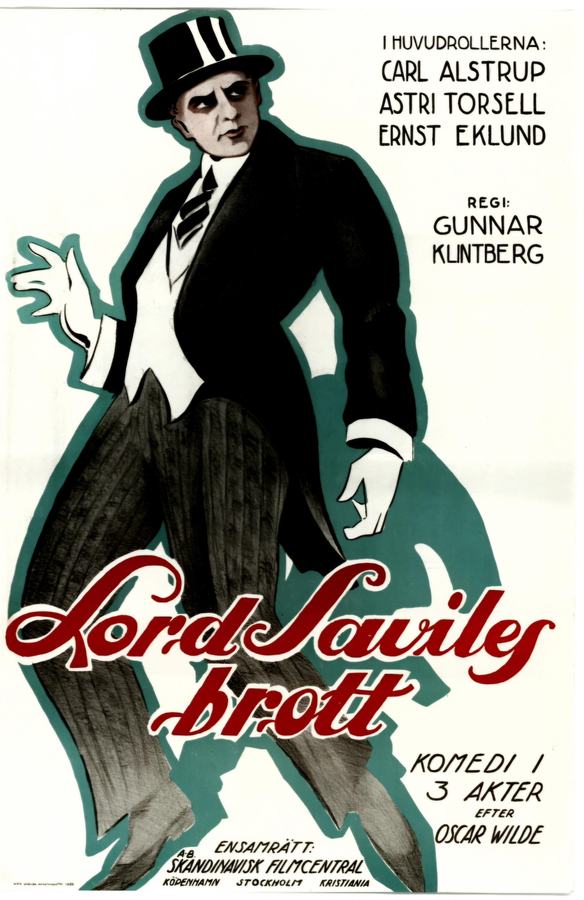
Stockholm, winter of 1922: while Europe still coughs up the ashes of war, a small Scandinavian studio bets its last kronor on a drawing-room trifle about a reluctant killer. The wager pays off in spades. Lord Saviles brott emerges less like a quaint curio than a shard of onyx lodged in the snow—gleaming, jagged, and unexpectedly lethal.
Director Ivar Kåge—doubling as the pallid, velvet-voiced Podgers—understands that Wilde’s comedy of manners is, at its marrow, a séance with the repressed. He shoots the opening prophecy in a single, unblinking take: the camera circles the card table like a vulture, candle-flame trembling across the players’ eyes until the lens itself seems to inhale the fatal verdict. The effect is less silent cinema than conjuring rite; you half expect the celluloid to bleed.
Engagement season blooms in Grosvenor Square. Lord Arthur, gamboling fiancé and collector of rare editions, is the embodiment of privilege that has never required a conscience. Enter Podgers, a palmist whose shabby coat belies the omniscience of a Greek chorus compressed into one nicotine-stained forefinger. In the privacy of a rose-papered salon he traces the marquessian lifeline and whispers the appalling proviso: marriage will remain elusive until Arthur has “paid his debt to nature”—a euphemism so decorous it could adorn a dinner invitation.
What distinguishes this adaptation from prior Anglophone versions is the Nordic refusal to treat the premise as boulevard farce. Screenwriter Ernst Eklund excises half of Wilde’s epigrams and replaces them with glances sharp enough to slice herring. The remaining witticisms land like icicles: beautiful, suspended, then suddenly plummeting with murderous weight.
Astri Torsell’s Sybil Merton is no ingénue waiting to be rescued by narrative fiat. She glides through ballrooms with the preoccupied grace of someone already rehearsing widowhood. Watch her eyes when Arthur improvises excuses for missed appointments: a flicker of disappointment calcifies into something adamantine, as though she suspects the cosmos has assigned her a role she intends to rewrite.
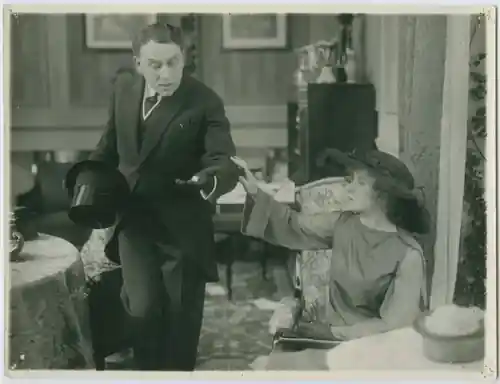
As the reluctant regicide, Carl Alstrup offers a study in aristocratic disintegration. His shoulders, initially squared like a guardsman’s at parade, gradually slope inward until the starched collar seems to garrote him. Alstrup never begs sympathy; instead he weaponizes entitlement, turning every polite hesitation into an indictment of caste morality. You laugh, then feel the laugh metastasize in your throat.
Meanwhile Ernst Eklund—moonlighting as the bomb-making anarchist—affects the cheery nihilism of a man who has read Schopenhauer by candlelight and mistaken pessimism for vocation. His workshop, all brass tubes and mercury vials, gleams like a cathedral desecrated by alchemists. When he demonstrates detonation timing with the jauntiness of a croupier, the film tips its hat to later Hitchcockian gallows humor.
Cinematographer Henrik Jaenzon shoots Stockholm’s stand-in London through a perpetual twilight, coaxing silver from shadows as if moonlight were a negotiable currency. Interiors smolder with umber gaslight; exteriors exhale pewter fog. Note the sequence where Arthur stalks his intended victim along the Thames embankment: the river swells like a black lung beneath sodium lamps, and every cobblestone appears to sweat anticipation.
Intertitles—often a stumbling block in Scandinavian silents—here become miniature prose poems. When Sybil pens a letter dissolving the engagement, her words blossom across the screen in crimson tint: “I release you, not from love, but from the scaffolding of a future already collapsed.” One suspects Wilde himself might have applauded through a veil of tears.
The absence of synchronized dialogue amplifies ambient tactility: the hush before a pistol clicks, the rasp of a match against sandpaper, the satin sigh of a glove peeled off finger by finger. Composer Armas Järnefelt supplies a score that veers from Viennese waltz to funeral march without warning, as though the orchestra itself were improvising alibis.
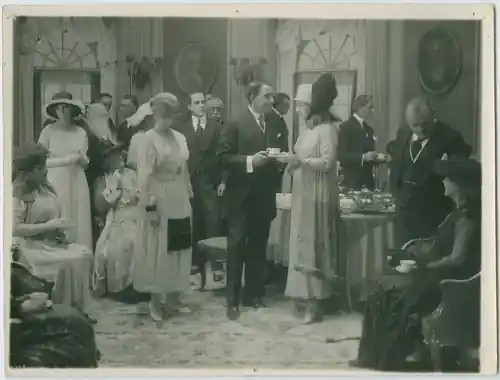
Listen for the leitmotif that accompanies Podgers: a warped music-box melody played in reverse, suggesting fate rewinding its own tape. The motif recurs during each botched assassination attempt, a sly reminder that destiny, like a bad magician, may flub the trick yet still demand applause.
Where The Adventures of Sherlock Holmes treats homicide as a chess problem solvable by logic, Lord Saviles brott insists murder is less a riddle than a social ritual—an initiation fee for entry into connubial Valhalla. The tonal overlap with Off His Trolley is instructive: both films stage chaos beneath bowler hats, yet whereas Trolley descends into slapstick anarchy, Savile retains the cold etiquette of a duel.
Curiously, the film’s moral calculus anticipates the ethical quicksand of Warning! The S.O.S. Call of Humanity. Each narrative asks: how civilized can we claim to be once survival mandates blood? The difference is that Savile answers with a shrug and a wedding ring.
Modern viewers may bristle at Sybil’s apparent passivity, yet Torsell’s performance smuggles insurgency into every demure curtsy. Notice how she commandeers the final reel: rather than await absolution, she engineers her own fate with the serene authority of a chess grandmaster toppling the board. The camera, once complicit in surveilling her as decorative object, now bends to her perspective, framing Arthur within the gilt confines he forged for others.
In this pivot, the film anticipates the proto-feminist bite of A Doll’s House. Both heroines stride into uncertainty, but Sybil does so while clutching a bouquet of white lilies—an emblem of purity weaponized into provocation.
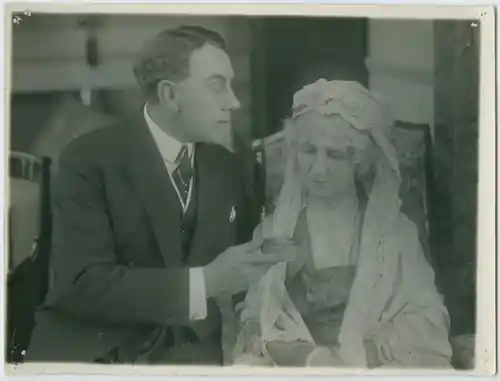
For decades Lord Saviles brott languished in archival purgatory, misfiled under “comedy short.” Restoration came in 2018 when Stockholm’s Cinematek unearthed a nitrate print flecked with fungal blossoms. Digital sorcery removed mildew yet preserved the ghostly flicker, yielding an image that feels perpetually about to combust—a fitting metaphor for a narrative predicated on explosions that refuse to detonate on schedule.
Contemporary directors name-check it in hushed tones. Bong Joon-ho cited its class critique while prepping Parasite; Yorgos Lanthimos keeps a framed still of Podgers smirking above his editing bay. The film’s DNA strands coil through The Favourite and Kind Hearts and Coronets, proving that cynicism ages like mead—sweetening as it darkens.
As of this writing, the remaster streams on Criterion Channel with optional English subtitles and a commentary by film scholar Dr. Lisbeth Larsson, who excavates Swedish production logs laced with Wildean marginalia. Blu-ray extras include a 25-minute comparison with Dante’s Inferno, highlighting how both films weaponize moral anxiety through expressionist set design.
Pay heed to the tinting scheme: poison-green for Podgers’ parlour, livid amber for the Savile townhouse, cadaverous blue for the Thames at midnight. Each hue operates like a silent verdict, heralding shifts in fortune before plot verbalizes them.
To label Lord Saviles brott a quaint artifact is to mistake a rapier for a butter knife. Beneath its lace-cuffed exterior beats a heart as black as the river that swallows Arthur’s contraband bomb. The film seduces you with etiquette, then leaves you holding the shrapnel of your own laughter. Watch it once for the plot, twice for the poison, thrice because you realize the joke is on every viewer who believes himself above the crime.
And remember: if the palmist ever offers to read your hand, keep your gloves on—some fates are best left untraced until after the honeymoon.
IMDb 4.8
1927
Community
Log in to comment.