DbcultAccessing Vault...
Cult Review
Senior Film Conservator
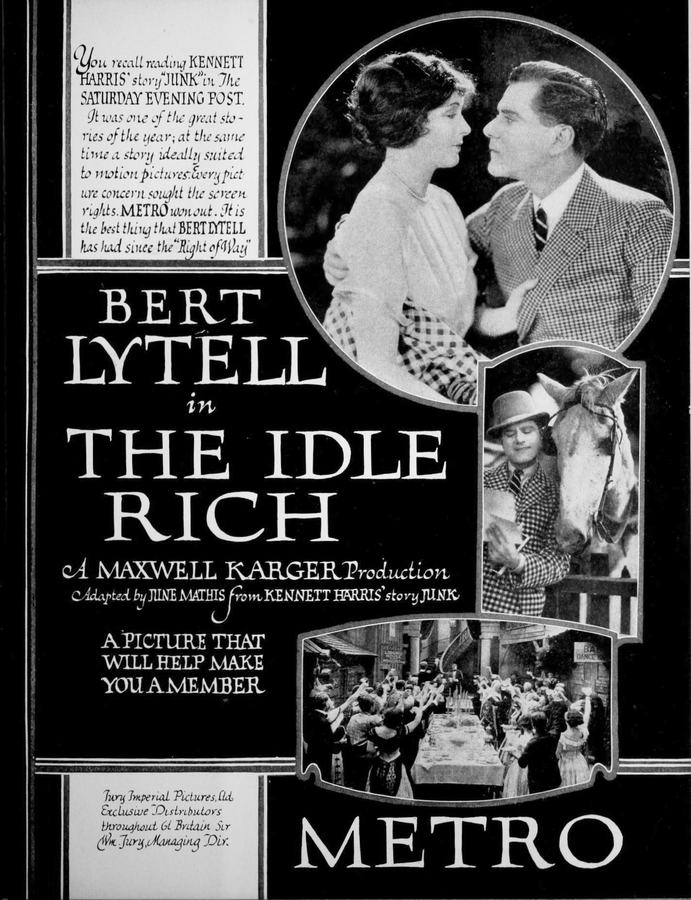
Stepping back into the golden age of silent cinema, one encounters narratives that, despite the absence of spoken dialogue, resonate with an astonishing clarity and timeless relevance. Joseph Harrington's 1921 vehicle, The Idle Rich, stands as a prime example, a cinematic parable of fortune's fickle nature and the profound alchemy of self-reinvention. It’s a film that, even a century later, speaks volumes about the human spirit’s capacity to adapt, to innovate, and to redefine success when the rug is pulled from beneath one's feet. This isn't just a quaint relic; it's a vibrant social commentary wrapped in a compelling personal drama.
At the heart of this narrative tempest is young Sam Weatherbee, portrayed with a nuanced blend of initial indolence and burgeoning grit by Joseph Harrington. We first encounter Sam ensconced in the plush comfort of inherited wealth, his days a leisurely procession devoid of genuine toil or ambition. He is, in essence, the titular 'idle rich,' a product of circumstance rather than achievement. This idyllic, albeit unearned, existence is abruptly shattered by a terse telegram, a harbinger of financial ruin. His executor's speculative misadventures have vaporized his fortune, leaving him with little more than the clothes on his back and a rather inconveniently located, dilapidated house in Los Angeles.
The sudden plunge from opulence to destitution is a classic narrative trope, yet The Idle Rich handles it with a refreshing lack of melodrama, focusing instead on the character's bewildered, then determined, response. Sam's initial bewilderment quickly gives way to a pragmatic, if somewhat desperate, ingenuity. He finds himself in the unenviable position of having to 'make do' – a concept utterly alien to his former life. This journey of forced self-sufficiency is where the film truly shines, illustrating how adversity can be the most potent catalyst for growth. It reminds one of the stark realities faced by characters in films like The Drifters, who, though from different social strata, also grapple with being untethered and forced to forge new paths in an unforgiving world.
Sam's financial downfall is compounded by a romantic setback that cuts deeper than any monetary loss. His sweetheart, Mattie Walling, a woman of apparent practicality and perhaps a latent desire for stability, rejects him in favor of the ostensibly more industrious Dillingham Coolidge. Leigh Wyant imbues Mattie with a compelling blend of initial societal pragmatism and evolving moral conviction. Her decision, while seemingly harsh, isn't portrayed as purely mercenary. Instead, it highlights the societal values of the era, where hard work and visible ambition were often prized above inherited status, especially in a burgeoning nation like America. Dillingham, played by Bert Lytell, embodies the superficial charm of the 'self-made man' archetype, a stark contrast to Sam's initial inherited ease.
The romantic triangle serves as a crucial mirror to Sam's internal and external struggles. Mattie's initial rejection acts as a powerful motivator, challenging Sam not just to regain his fortune, but to earn his worth. Her eventual return, however, is not simply a capitulation to renewed wealth. It's a recognition of Sam's transformed character, his genuine effort, and his resilience in the face of Dillingham's increasingly transparent attempts to undermine him. This moral awakening in Mattie elevates the love story beyond mere romantic convenience, grounding it in a deeper appreciation for character and integrity, a theme that echoes the journey of self-discovery seen in films like She Couldn't Grow Up, where characters mature through challenging experiences.
Sam's last remaining asset, the old Los Angeles house, becomes both his refuge and his crucible. It's not just a dwelling; it's a repository of forgotten things, a veritable museum of 'junk' from his eccentric aunt's past. Presiding over this domain are the charmingly idiosyncratic Judge O'Reilly and his wife, played by Thomas Jefferson and Victory Bateman respectively. Their presence adds a delightful dash of comedic relief and grounded reality to Sam's otherwise dramatic predicament. It's within these cluttered confines that Sam has his epiphany: the 'junk' isn't worthless; it's uncatalogued capital. He conceives the audacious idea of bartering these forgotten treasures for food, and from this humble, desperate beginning, a new enterprise is born.
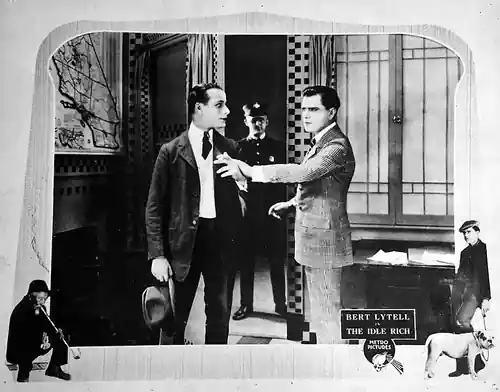
His transformation into a junk dealer is nothing short of inspiring. It's a testament to the idea that true wealth lies not in what one possesses, but in one's capacity to create value. Sam, once a consumer of inherited luxury, becomes a creator of new opportunities, literally turning trash into treasure. This entrepreneurial spirit, born of necessity, is a powerful endorsement of the American Dream, albeit one forged in the crucible of loss rather than inherited advantage. The film vividly portrays the grit and ingenuity required to start from scratch, echoing the rugged individualism found in early Westerns like Straight Shooting, where characters carve out their destinies through sheer force of will.
Predictably, Sam's former society friends greet his new profession with a mixture of ridicule and disdain. Their reactions underscore the film's incisive social commentary: true value, in their eyes, is tied to status and inherited wealth, not honest labor. They are unable to see beyond the superficiality of his new occupation, failing to grasp the profound integrity and resilience it represents. This societal scorn, however, only serves to sharpen Sam's resolve. His journey isn't just about financial recovery; it's about reclaiming his dignity and proving his worth, not to his former peers, but to himself and to Mattie.
The eventual vindication, when Mattie returns to him, is all the more satisfying because it is earned. It's not the return of the 'idle rich' heir, but the triumph of the self-made man. Dillingham Coolidge's attempts to sabotage Sam's burgeoning success only highlight his own moral bankruptcy, making Mattie's choice clear and unambiguous. The film subtly argues that true character is revealed not in prosperity, but in adversity, and that genuine love recognizes and values that inner strength. This exploration of moral fortitude in the face of external pressures resonates with the ethical dilemmas explored in films such as The Clients of Aaron Green, where business dealings often test the integrity of individuals.
In the silent era, the burden of conveying emotion and narrative nuance fell squarely on the actors' physical expressiveness and the director's visual storytelling. Joseph Harrington, as Sam Weatherbee, delivers a performance that masterfully navigates the character's arc from privileged naiveté to hardened entrepreneur. His transformation is credible, his struggles palpable, and his eventual triumph genuinely moving. Leigh Wyant, as Mattie, portrays a woman caught between societal expectations and burgeoning personal conviction, her changing expressions conveying a complex internal struggle. Bert Lytell as Dillingham Coolidge, though a more straightforward antagonist, effectively embodies the superficiality and underhandedness necessary for the plot.
The supporting cast, particularly Thomas Jefferson and Victory Bateman as the O'Reillys, inject much-needed warmth and humor. Their interactions with Sam provide moments of genuine human connection and offer a different perspective on wealth – that of community and simple living. John Davidson and Max Davidson, along with Virginia Valli, round out a cast that collectively brings Kenneth Harris and June Mathis's script to vivid, wordless life. The direction, while not overtly flashy, is effective in its clarity and pacing, allowing the audience to fully grasp the emotional beats and narrative progression without the need for extensive intertitles.
Writers Kenneth Harris and June Mathis craft a narrative that, while rooted in the social dynamics of the 1920s, transcends its specific historical context. The themes explored—the precariousness of inherited wealth, the dignity of labor, the superficiality of social standing, and the redemptive power of self-reliance—are universal and timeless. It’s a story that challenges the very definition of 'rich,' suggesting that true affluence lies not in bank accounts, but in character, ingenuity, and the capacity to overcome adversity. In an age where economic disparities and the pursuit of 'easy money' remain prevalent societal concerns, The Idle Rich serves as a poignant reminder of the enduring value of hard work and integrity.
The film’s quiet wisdom lies in its refusal to romanticize poverty or demonize wealth entirely. Instead, it advocates for a balanced perspective, where personal effort and genuine contribution are celebrated above mere inheritance. It's a message that could resonate with anyone feeling like a 'chechako'—a newcomer or outsider—in a challenging environment, much like the protagonists in The Chechako. Ultimately, The Idle Rich is more than just a silent film; it’s a compelling cinematic essay on resilience, character, and the profound satisfaction that comes from building one's own destiny, piece by hard-won piece. It's a film that deserves to be rediscovered, not just for its historical significance, but for its timeless and deeply human message.

IMDb 6
1933
Community
Log in to comment.