DbcultAccessing Vault...
Cult Review
Senior Film Conservator
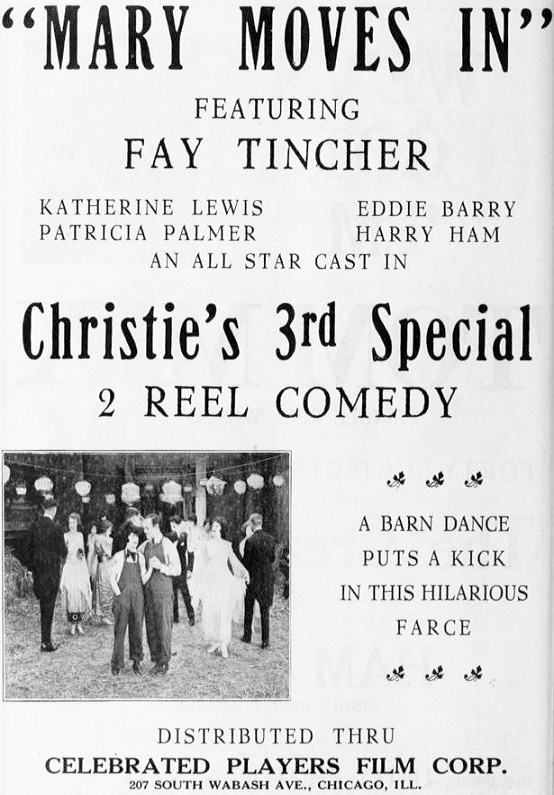
In the annals of early cinema, where narratives often relied on bold gestures and clear-cut motivations to transcend the absence of spoken dialogue, a film like Mary Moves In emerges as a fascinating, albeit perhaps understated, artifact. Penned by the prolific Scott Darling, this 1918 production delves into themes of familial obligation, nascent marital aspirations, and the sometimes-pecuniary foundations of domestic bliss. It’s a snapshot of an era, a glimpse into societal expectations, and a testament to the power of a simple premise to convey complex human desires.
The film’s central conceit is elegantly straightforward, yet pregnant with implication: a newlywed, Mary, finds her dreams of furnishing a city flat dramatically realized through the sheer force of her father’s financial promise. A hefty $10,000 check, earmarked for the happy couple, acts as the catalyst, prompting a veritable armada of furniture to arrive at her doorstep. This isn't merely a plot point; it's a profound statement on the transactional undercurrents that often accompanied matrimony in that period, where a father's beneficence could literally construct the physical framework of a new life. The arrival of the furniture, a tangible manifestation of this paternal pledge, is more than just a logistical event; it's the symbolic commencement of Mary's independent, albeit financially underpinned, journey into conjugal domesticity.
The narrative pivot of Mary Moves In hinges squarely on a father's financial commitment, a generous $10,000 dowry that serves as both a blessing and, implicitly, a subtle form of control. This sum, considerable for its time, isn't just a gift; it's an investment in a daughter’s future, a paternal stamp of approval, and a practical means to establish the young couple. For Mary, this promise translates directly into the materialization of her dreams: a city flat, adorned with the very furnishings she desires. The truckload of furniture that arrives is not merely household goods; it represents the tangible embodiment of security, aspiration, and the societal pressures placed upon young couples to establish a respectable home.
In this context, the film implicitly explores the societal norms of the early 20th century, where marriage was often a strategic alliance as much as a romantic union. Financial backing from the bride's family was not uncommon, providing a foundation for the new household and easing the transition into married life. This dynamic is strikingly similar to themes explored in films like His Only Father, where parental influence, often through financial leverage or emotional manipulation, significantly shapes the trajectory of a child's life. While the father in Mary Moves In appears benevolent, the sheer scale of his gift underscores the power he wields, making Mary's new life inextricably linked to his generosity.
The film, through its silent narrative, invites viewers to ponder the psychological weight of such a promise. Does Mary feel truly free in her choices, or is her happiness subtly tethered to the expectation of a substantial inheritance? The arrival of the furniture, while fulfilling a desire, also marks the onset of a new reality, one shaped by external factors. It’s a compelling, if understated, examination of how financial considerations can intertwine with personal happiness, forging a path that might be comfortable but perhaps not entirely self-directed.
Mary, as the newlywed at the heart of this narrative, embodies the aspirations of countless young women of her era. Her desire to furnish a city flat is more than a superficial wish for material possessions; it represents a profound yearning for agency, for the creation of her own domestic sanctuary. The city flat itself is symbolic—a departure from perhaps a more rural or familial home, a step towards an independent, modern existence. The furniture, therefore, isn't just wood and fabric; it's the physical manifestation of her dreams, the building blocks of a new identity as a wife and homemaker.
The silent screen, with its reliance on visual storytelling, would have emphasized Mary's expressions of delight, perhaps a touch of anxious excitement, as the truckload of furniture arrives. We can imagine her carefully surveying each piece, mentally placing it within her envisioned space, transforming an empty shell into a vibrant home. This act of furnishing is a powerful expression of her desire to nest, to cultivate an environment that reflects her taste and provides comfort for her new husband and, presumably, a future family. It speaks to a universal human need to create and control one's immediate environment, particularly in the context of starting a new life chapter.
Her journey, though seemingly simple, touches upon the broader societal expectations for women in marriage during the early 20th century. The home was often considered the woman’s domain, and her ability to manage and beautify it was a measure of her success. In this sense, Mary's aspirations align with the prevailing cultural narrative, yet within that framework, she seeks to imbue her space with her own personality. This delicate balance between societal expectation and personal expression is a theme that echoes in other silent era dramas concerning women's roles, such as The Changing Woman, which explored shifts in female identity and autonomy within a changing world.
While detailed individual performances from this era are often lost to the mists of time or limited surviving prints, the cast of Mary Moves In undoubtedly contributed to its narrative charm. The roster includes familiar names from the silent era, actors who honed their craft in a medium where facial expression, body language, and carefully choreographed movements were paramount to conveying emotion and advancing the plot. Ward Caulfield, Al Haynes, Eddie Barry, George B. French, Patricia Palmer, Fay Tincher, Edith Clark, Katherine Lewis, and Harry Ham—each would have brought a distinct presence to the screen, whether in leading roles or as essential supporting players who fleshed out Mary's world.
Patricia Palmer, likely in the titular role of Mary, would have been tasked with embodying the youthful optimism and perhaps the underlying anxieties of a new bride. Silent film acting demanded an exaggerated yet nuanced approach; emotions had to be legible from a distance, without the benefit of dialogue. Her portrayal of Mary's joy upon seeing the furniture, or any subsequent challenges she might face, would have been crucial to the film's emotional resonance. Similarly, the actor playing her father would have needed to convey both his paternal affection and the subtle authority inherent in his financial gesture. The ensemble, as a whole, would have worked to create a believable microcosm of early 20th-century urban life, using their physical presence to tell a story that words could not.
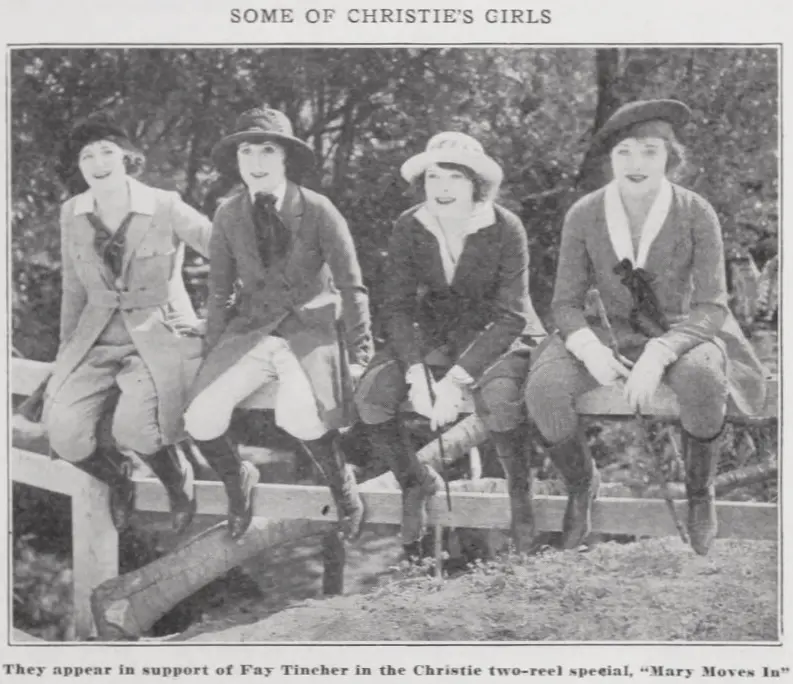
The effectiveness of such a cast lay in their collective ability to create a sense of authenticity, to make the viewer invest in the characters' fates without hearing a single line of dialogue. This collective artistry, a hallmark of silent cinema, is what allowed audiences to connect with stories that, on paper, might seem simplistic. The nuanced interplay of their expressions and gestures would have painted a vivid picture of the domestic drama unfolding, making the arrival of the furniture a truly significant event in Mary's life.
The screenplay for Mary Moves In, crafted by Scott Darling, showcases the unique challenges and triumphs of silent film writing. Darling, a prolific writer with numerous credits from the era, understood that a silent narrative demanded clarity, visual impact, and a strong emotional core. His task was to transform a relatively simple premise—a father's promise, a bride's desire for a furnished home—into a compelling story that could sustain audience interest for its runtime, relying primarily on action, character expression, and the occasional intertitle for exposition.
A silent film script is less about witty banter and more about scene construction. Darling would have meticulously outlined sequences that visually communicated Mary's excitement, her father's generosity, and the sheer scale of the furniture's arrival. The drama, however subtle, would have stemmed from the implications of the father's promise. Does the money come with strings attached? What if the marriage faces challenges? These unspoken questions, inherent in the premise, are what elevate it beyond a mere domestic chronicle.
Darling's skill would have been in creating situations where character motivations were clear through their actions, and emotional arcs were conveyed through their reactions. The film, in its essence, is a character study framed by a significant life event. The writer's ability to imbue the physical act of moving furniture with deeper meaning—representing the establishment of a new life, the weight of expectation, and the tangible outcome of a financial agreement—is where the true artistry lies. This approach to storytelling, where every visual detail carries narrative weight, is reminiscent of the narrative economy found in other silent dramas like Fedora, which also relied on visual cues and character actions to unfold its intricate plot.
The direction of Mary Moves In, while uncredited in the provided details, would have been crucial in translating Scott Darling's script into a cohesive visual experience. Silent film direction was an art form unto itself, demanding a keen eye for composition, pacing, and the evocative power of imagery. Without dialogue, every frame, every gesture, every set piece had to contribute to the narrative and emotional landscape of the film.
The arrival of the furniture, for instance, would have been meticulously staged. The director would have orchestrated the truck's approach, the careful (or perhaps comically clumsy) unloading of the various items, and Mary's reactions to each piece. Close-ups on her face might have conveyed excitement, trepidation, or even a moment of quiet reflection on the magnitude of her new life. The empty city flat, initially stark and uninviting, would gradually transform, piece by piece, into a warm, lived-in space, the visual progression mirroring Mary's own journey into domesticity.
Set design and cinematography, though perhaps rudimentary by today's standards, played an indispensable role. The choice of furniture, its arrangement, and the overall aesthetic of the flat would have communicated social status, character personality, and the prevailing tastes of the era. Lighting, too, would have been used to create mood, perhaps brighter and more optimistic during moments of joy, or subtly shadowed during periods of uncertainty. The rhythm of the film, dictated by the editing and the tempo of the actors' movements, would have guided the audience through Mary's experience, making the simple act of furnishing a home feel like a momentous undertaking. This deliberate use of visual storytelling to convey internal states and external events is a hallmark of the finest silent films, creating a universal language that transcends time.
Mary Moves In, despite its seemingly modest premise, is rich with thematic undertones that speak volumes about the socio-cultural landscape of the early 20th century. At its core, the film explores the intricate dance between love, financial security, and familial legacy, particularly as it pertains to nascent marriages.
The most prominent theme is arguably the transactional aspect of marriage. The father's $10,000 promise isn't merely a gift; it's a dowry, a financial incentive that underpins the establishment of the new household. This reflects a historical reality where marriages, particularly among the middle and upper classes, often involved significant financial considerations. Love might have been the ideal, but practicalities—security, social standing, and the ability to maintain a certain lifestyle—were equally, if not more, important. The film subtly asks: how much does this financial bedrock influence the nascent love between Mary and her groom? Is their happiness contingent on this external support?
The father's role is pivotal. His promise sets the entire plot in motion, making him a powerful, albeit unseen, hand guiding his daughter's new life. This theme of paternal influence, and sometimes subtle control, over a child's destiny is a recurring motif in early cinema. It’s a narrative device that resonates with films like His Only Father, where parental expectations and decisions directly impact the protagonist's choices and happiness. In Mary Moves In, the furniture itself becomes a symbol of this legacy—a material inheritance that binds Mary to her familial past even as she embarks on her independent future.
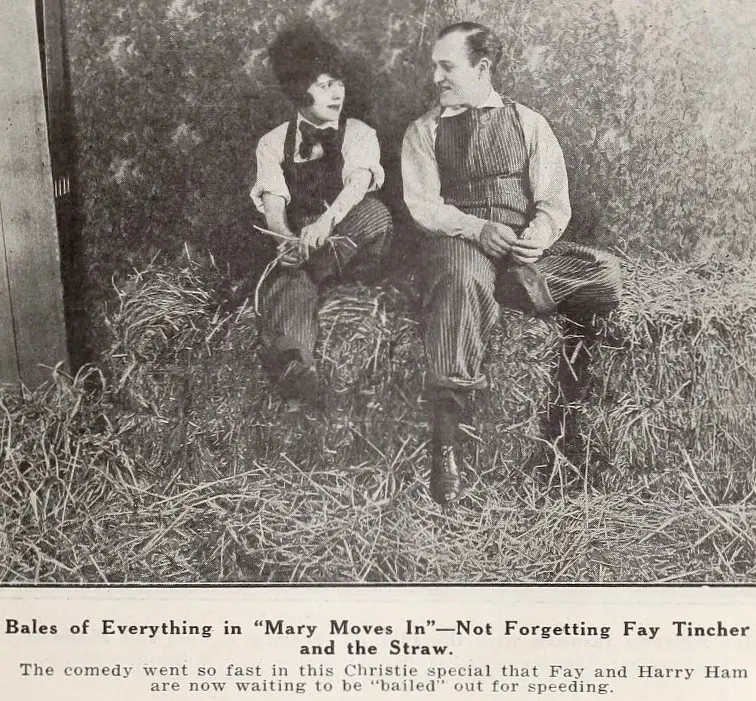
Mary's desire to furnish her city flat speaks volumes about the importance of the domestic sphere for women of her generation. The home was not just a dwelling; it was a canvas for self-expression, a haven, and a symbol of a woman's success as a homemaker. The arrival of the furniture is the tangible act of creation, transforming an empty space into a personal sanctuary. This theme subtly touches upon the societal expectations placed on women to manage and beautify the home, a role that, while seemingly restrictive by modern standards, also offered a degree of autonomy and creative outlet within the marital framework.
Mary's journey is also a quiet exploration of a woman's aspirations within the confines of early 20th-century society. While her choices are influenced by her father's generosity, her desire for a specific kind of home reflects her individuality. This nuanced portrayal of female agency within societal constraints is a theme often explored in silent dramas, akin to the societal pressures and personal transformations depicted in The Changing Woman or the more overt struggles against societal expectations seen in Beauty in Chains. Mary, in her own way, is navigating the path between dutiful daughter, loving wife, and an individual with her own desires for domestic fulfillment.
To watch Mary Moves In today is to engage in an act of cinematic archaeology, uncovering layers of historical context and social commentary embedded within its simple narrative. The film, released in 1918, stands at a fascinating juncture in history: the tail end of World War I, the cusp of the Roaring Twenties, and a period of profound social change. It reflects a society still grappling with traditional values while slowly inching towards modernity.
The emphasis on a father's financial provision for his daughter's marriage, for instance, speaks to an economic reality that has largely faded in many parts of the world, though the concept of familial support for young couples remains. The film offers a window into the urban aspirations of the time—the desire for a 'city flat' symbolizing a break from rural traditions and an embrace of a more cosmopolitan lifestyle. This subtle shift from agrarian roots to urban domesticity is a significant historical echo captured by the film.
While the specific circumstances of Mary's plot might seem quaint, the underlying human desires resonate even today. The longing for a home, the excitement of starting a new life chapter, the complexities of familial relationships, and the intricate interplay of love and money are timeless themes. Modern audiences, though accustomed to dialogue and elaborate special effects, can still connect with the universal emotions conveyed through the silent performances and visual storytelling. The film, therefore, serves not only as a historical document of early cinema but also as a reminder of enduring human experiences that transcend technological advancements in filmmaking.
Its relevance lies in its ability to transport us to a different era, allowing us to understand the concerns, dreams, and societal structures that shaped the lives of people a century ago. It encourages reflection on how much has changed and, perhaps more profoundly, how much has remained constant in the human condition, particularly concerning the establishment of family and home.
Mary Moves In, while perhaps not as widely recognized as some of its more epic silent counterparts, occupies an important, if modest, place within the sprawling canon of early American cinema. It represents the everyday narratives that formed the backbone of the industry, offering audiences relatable stories grounded in domestic life and personal aspirations. Its legacy isn't built on groundbreaking special effects or revolutionary narrative structures, but rather on its ability to capture a slice of life from a bygone era with sincerity and charm.
The film's strength lies in its simplicity and its focus on character-driven motivations. It contributes to our understanding of how silent filmmakers and writers, like Scott Darling, honed their craft, learning to convey complex emotional states and narrative developments through purely visual means. It stands as an example of the efficiency and evocative power of early cinematic storytelling, where a single truckload of furniture could symbolize an entire future.
Comparing it to other silent films of the period, such as the more dramatic La Belle Russe, Mary Moves In might appear less grand in scope. However, its intimate scale allows for a different kind of engagement, a focus on the personal rather than the sensational. It reminds us that the silent era was not solely defined by melodramas and slapstick comedies, but also by thoughtful, understated character pieces that explored the nuances of human experience.
Ultimately, Mary Moves In serves as a valuable historical artifact, shedding light on the social customs, material culture, and cinematic techniques of its time. It invites contemporary viewers to appreciate the artistry involved in silent film production and to reflect on the enduring themes that connect us across generations. It’s a testament to the fact that even the most unassuming narratives can offer profound insights into the human condition, making it a quiet gem worthy of rediscovery and thoughtful consideration.
IMDb 7.5
1929
Community
Log in to comment.