DbcultAccessing Vault...
Cult Review
Senior Film Conservator
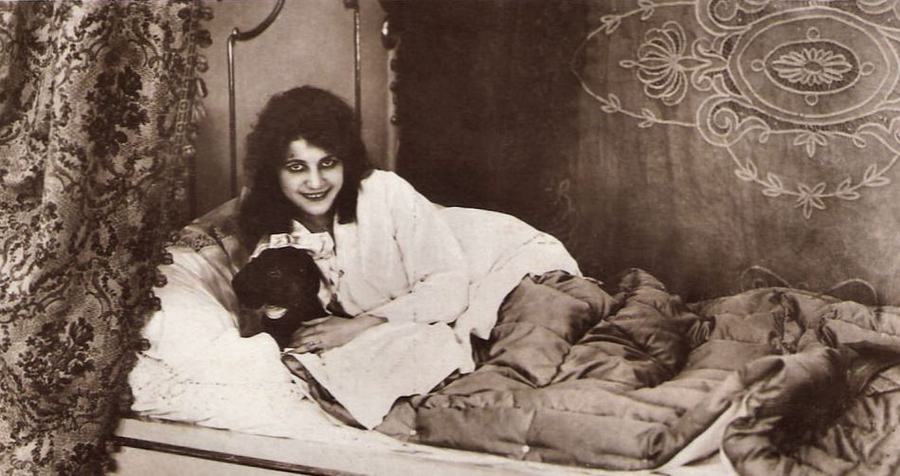
To witness Baronin Kammerjungfer in its native habitat—the flickering, nitrate-scented shadows of 1918—is to engage with a cinema that was rapidly outgrowing its infancy. Directed by the polymathic Leo Peukert, the film serves as a bridge between the simplistic slapstick of the early decade and the sophisticated social satires that would eventually define the Weimar era. It is a work of profound levity, if such a paradox can be permitted, utilizing the trope of the 'switched identity' to probe the calcified structures of German society at the close of the Great War. While contemporaneous works like Az utolsó éjszaka delved into the darker recesses of the human psyche, Peukert opted for a luminous, almost effervescent approach to the existential crisis of the bourgeoisie.
At the heart of this kinetic narrative is Hilde Woerner, an actress whose physiognomy was uniquely suited to the demands of silent cinema. In her dual capacity—or rather, her singular capacity to play a woman playing another—she exhibits a range that transcends the era's penchant for over-the-top histrionics. There is a subtlety to her transition from the Baroness to the chambermaid; it is found in the loosening of the shoulders, the shift in the gaze, and the rhythmic timing of her gestures. Unlike the more rigid performances found in The Lash, Woerner’s work here feels remarkably modern, anticipating the screwball sensibilities that would dominate Hollywood a decade later. She captures the inherent absurdity of her situation without ever descending into caricature, a feat that ensures the film’s emotional core remains intact despite its farcical scaffolding.
The cinematography in Baronin Kammerjungfer functions as more than a mere recording device; it is an active participant in the deception. The use of deep space and architectural framing creates a visual metaphor for the social barriers being transgressed. When compared to the atmospheric density of Ein seltsames Gemälde, Peukert’s visual style is cleaner, more focused on the geometry of the drawing room and the kitchen. This clarity is essential. For the audience to track the shifting identities, the space must be clearly defined, only to be subverted by the movement of the actors. The lighting, while perhaps not as experimental as the shadows found in Das Todesgeheimnis, provides a high-key brilliance that underscores the film's comedic intent, casting a literal and metaphorical light on the pretenses of its characters.
"The film functions as a cinematic petri dish, observing what happens when the catalyst of class-inversion is introduced to the stable compounds of European nobility."
When we place Baronin Kammerjungfer alongside its peers, its unique frequency becomes even more apparent. While Telegramtyvene utilized the medium to explore the mechanics of suspense and crime, Peukert’s film is preoccupied with the mechanics of the soul—or at least the social soul. It shares a certain DNA with The Secretary of Frivolous Affairs, particularly in its fascination with the 'working woman' as a figure of agency and disruption. However, where the latter often resolves its tensions through traditional romantic union, Baronin Kammerjungfer leaves the viewer with a lingering sense of the arbitrary nature of status. If a chambermaid can so effortlessly inhabit the role of a Baroness, then the very concept of 'noble blood' is exposed as a theatrical construct. This subversive undercurrent is what elevates the film above standard period fluff like Up Romance Road.
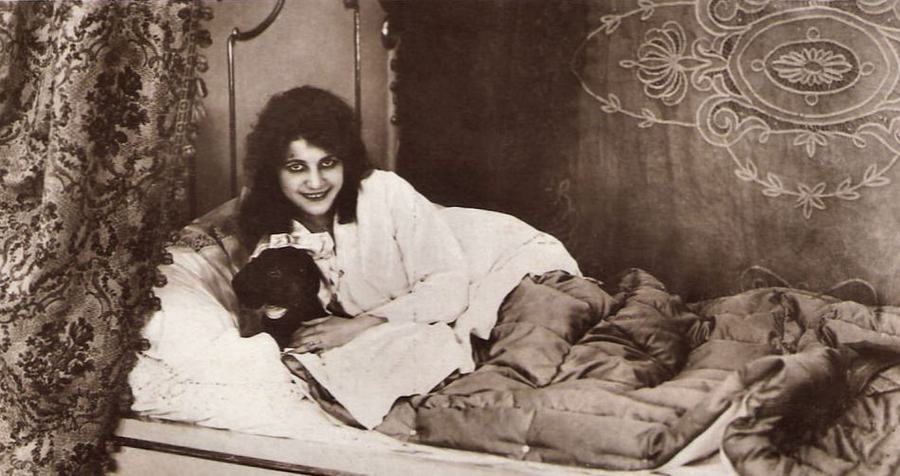
One cannot ignore the historical gravity pressing against the edges of the frame. 1918 was a year of collapse and rebirth for Germany. In this context, a film about a Baroness losing her identity—even voluntarily—carries a weight that its creators might have only subconsciously intended. Unlike the overt propaganda or documentary-style realism of America's Answer, this film offers a form of escapism that is deeply rooted in the anxieties of its time. It is a playful mourning for an old world order that was already dead, even if the characters on screen hadn't realized it yet. The film’s levity is a shield against the encroaching chaos, much like the narrative structure of One Day attempts to find meaning in the fleeting nature of time.
Leo Peukert’s presence both behind and in front of the camera provides the film with a cohesive vision that was often lacking in early collaborative efforts. His comedic timing is impeccable, often acting as the 'straight man' to the chaos unfolding around him. There is a specific rhythm to his editing—a staccato pace during the moments of highest confusion, followed by long, observational takes that allow the humor to breathe. This technique is far more sophisticated than the workmanlike direction of The Medicine Man. Peukert understands that comedy is a matter of precision, not volume. His interaction with Ortrud Wagner adds another layer of complexity to the ensemble, creating a tripartite dynamic that keeps the plot moving with the efficiency of a well-oiled machine.
The film also participates in a broader cinematic conversation about female reputation and autonomy. Much like the provocative Men Who Have Made Love to Me, Baronin Kammerjungfer explores the power dynamics inherent in the male gaze. The Baroness is only able to truly see her world when she is 'unseen' as herself. By adopting the persona of the chambermaid, she gains a voyeuristic vantage point that allows her to critique the very men who claim to adore her. This theme of 'stolen' or 'borrowed' honor resonates with the narrative arcs of Stolen Honor and Idols, yet Peukert keeps the tone firmly within the realm of the comedic, refusing to let the social critique overwhelm the entertainment value.
Technically, the film is a marvel of its era. The set design is lavish, capturing the fading opulence of the Wilhelmine period with a detail that rivals the historical reconstructions in David Garrick. Every prop, from the ornate tea sets to the starched uniforms of the staff, serves to reinforce the central conflict of the film. The restoration of such works is vital, as they provide a ledger of the visual language that would eventually be codified into the global cinematic grammar. While it may lack the brooding intensity of Das Tagebuch des Dr. Hart, its contribution to the evolution of the filmic comedy cannot be overstated.
In the final analysis, Baronin Kammerjungfer is a testament to the enduring power of the masquerade. It is a film that delights in the fluidity of the self, suggesting that we are all merely actors in a grand, often nonsensical, social play. Leo Peukert and Hilde Woerner have crafted a work that is as intellectually stimulating as it is charming. It avoids the pitfalls of didacticism, choosing instead to lead the audience through a maze of mirrors where the only truth is the laughter found in the reflection. For the modern viewer, it offers a rare glimpse into a pivotal moment in film history—a moment where the screen began to reflect not just the world as it was, but the world as it might be if we only had the courage to change our clothes and our names.

IMDb —
1921
Community
Log in to comment.