DbcultAccessing Vault...
Cult Review
Senior Film Conservator
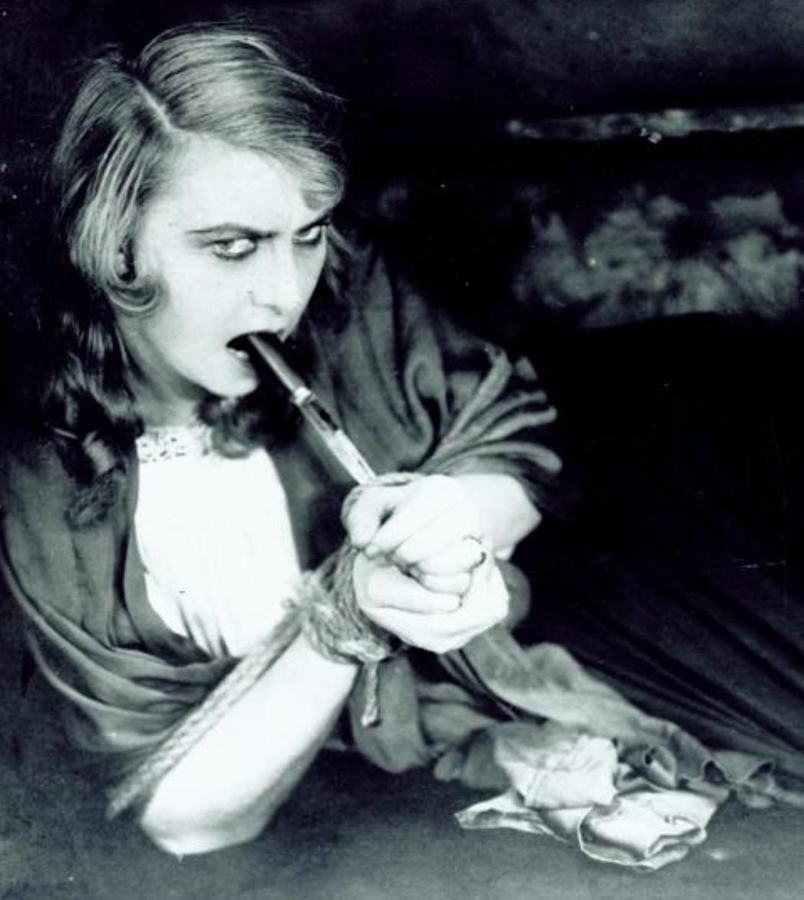
In the annals of early cinema, where archetypes were often rigidly cast and gender roles firmly delineated, Panopta I emerges as a cinematic trailblazer, introducing a protagonist so profoundly ahead of her time that her very existence on screen feels like an audacious challenge to prevailing norms. We are presented with Panopta, a young female detective whose defining characteristic—an utter absence of fear—isn't merely a plot device, but the very bedrock of her compelling persona. This isn't a story where a woman stumbles into heroism; it's a meticulously crafted narrative detailing a woman’s deliberate, unyielding pursuit of justice in a world that would rather she remain in the shadows.
The film, a testament to the visionary writing of Zilva Bébé and Richard Lund, doesn't shy away from depicting the harsh realities of crime and the intricate web of human deceit. Panopta, brought to life with an arresting gravitas by the ensemble, including notable turns from William Jensen, Viggo Larsen, and the remarkable Emilie Sannom, navigates this treacherous landscape with an almost preternatural calm. Her fearlessness isn't a bravado, but an intrinsic quality, a quiet resolve that resonates through every frame. One witnesses her confront hardened criminals, infiltrate dangerous locales, and face down the insidious machinations of powerful adversaries, all without a tremor of hesitation. This unwavering fortitude sets her apart, not just from her cinematic contemporaries, but from many characters even decades her senior.
The narrative structure of Panopta I is a masterclass in suspense, building its tension not through cheap jump scares, but through the slow, meticulous unraveling of complex mysteries. Each clue is a thread, expertly pulled by Panopta, leading her deeper into a labyrinth of secrets. The writers, Bébé and Lund, understand that a detective's true power lies not just in brawn, but in intellect, and Panopta's deductive reasoning is consistently portrayed as her sharpest weapon. She possesses an uncanny ability to read people, to discern lies from truths, and to anticipate the moves of her opponents, often placing her several steps ahead. This intellectual prowess, combined with her physical courage, creates a truly formidable heroine.
Consider the visual storytelling, which, for its era, is remarkably sophisticated. The director (though unnamed in this context, their vision is palpable) employs shadow and light with a painterly precision, creating an atmosphere that is both noirish and deeply immersive. The dimly lit alleyways, the opulent yet sinister drawing rooms, the clandestine meetings—all are rendered with a stark beauty that underscores the moral ambiguity of the world Panopta inhabits. The camera often lingers on Panopta's face, allowing the audience to witness the subtle shifts in her expression, the focused intensity of her gaze, and the profound intelligence that defines her character. The performances by the entire cast, including Aage Hyllested, Victor Montell, and Hertha Rindom, contribute significantly to this rich tapestry, each actor inhabiting their roles with a conviction that elevates the material beyond mere melodrama.
The thematic undercurrents of Panopta I are particularly resonant. Beyond the immediate thrill of the chase and the satisfaction of a mystery solved, the film explores themes of societal corruption, the abuse of power, and the struggle for individual agency. Panopta's journey is not just about bringing criminals to justice; it's about challenging the very structures that allow crime to fester. Her fearlessness is not an absence of emotion, but a conscious choice to overcome it in the face of injustice. This moral clarity, juxtaposed with the murky ethics of the world she navigates, makes her a beacon of hope, a symbol of unwavering integrity.
In terms of cinematic lineage, Panopta I stands proudly alongside films that dared to push boundaries. One cannot help but draw parallels between Panopta's resolute independence and the formidable female characters found in features like The Tiger Woman. Both films present women who operate outside the conventional strictures of their societies, defying expectations and asserting their own power, albeit in vastly different contexts. Where the latter might explore a more overtly dangerous or alluring femininity, Panopta's strength is rooted in her intellect and moral compass, making her a different, yet equally compelling, icon of female empowerment.
Furthermore, the depiction of urban shadows and hidden agendas in Panopta I evokes the same kind of atmospheric tension found in classics like Shadows of the Moulin Rouge. Both films plunge their audiences into a world where secrets lurk behind every ornate facade and danger is a constant companion. Panopta's ability to navigate these treacherous environments, to extract truth from the most guarded corners of society, is a testament to her unique skill set. The film's commitment to portraying the grittier aspects of its setting, without ever descending into gratuitousness, is commendable and adds a layer of realism that grounds the more extraordinary elements of Panopta's character.
The struggle Panopta endures, the constant battle against a seemingly insurmountable tide of corruption, finds a thematic echo in films exploring persistent conflict, such as The Eternal Strife. While the nature of the strife may differ, the underlying message of unwavering perseverance in the face of overwhelming odds is strikingly similar. Panopta’s journey is one of endurance, a testament to the human spirit’s capacity to fight for what is right, even when the personal cost is immense. Her resilience is not just admirable; it's inspirational, a quiet defiance that resonates with anyone who has ever felt overwhelmed by the forces of injustice.
The intricate plotting, often revolving around secret agreements and betrayals, also brings to mind the narrative complexity of Their Compact. The writers, Bébé and Lund, excel at weaving a dense web of interconnected relationships and hidden motives, ensuring that the audience is constantly engaged in the process of discovery alongside Panopta. Every character, from the seemingly innocuous bystander to the most menacing antagonist, feels integral to the unfolding mystery, each harboring their own secrets and motivations that Panopta must painstakingly uncover.
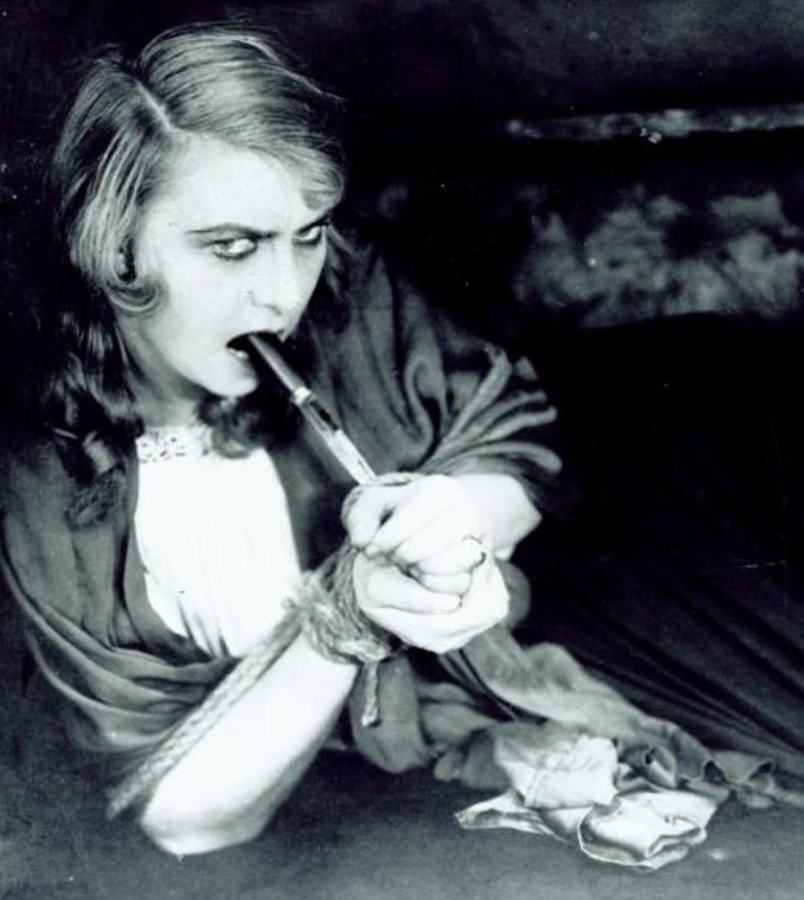
Moreover, the sheer patience and methodical approach Panopta employs in her investigations can be likened to the virtues extolled in The Reward of Patience. Detective work, as depicted in Panopta I, is rarely a series of dramatic revelations, but rather a painstaking process of gathering evidence, piecing together fragments of information, and waiting for the opportune moment to strike. Panopta embodies this patient persistence, understanding that truth often reveals itself not in a flash of insight, but through diligent, relentless effort. This portrayal adds a layer of authenticity to her character, making her all the more believable and admirable.
The film’s exploration of moral decay within society, particularly amongst those who wield power or influence, also hints at the societal critiques present in films like A Rich Man's Plaything. Panopta often finds herself confronting the venality and moral compromises of the privileged, exposing how wealth and status can often be used to shield illicit activities. Her unwavering commitment to justice, regardless of the social standing of the perpetrator, is a powerful statement against systemic corruption and a testament to the film's progressive leanings. The casual arrogance of some of the film's antagonists, often portrayed with chilling realism by actors like William Jensen and Viggo Larsen, provides a stark contrast to Panopta's principled stance.
While Panopta's focus is squarely on justice, the film doesn't ignore the inherent human drama of her encounters. There are moments of quiet reflection, glimpses into the toll her demanding profession takes, yet these are never allowed to diminish her core strength. Her interactions, particularly with the more volatile characters, demonstrate a keen understanding of human psychology, allowing her to manipulate situations and extract information where others might fail. The nuanced performances, especially from Emilie Sannom, who embodies Panopta with such conviction, ensure that the character remains deeply human despite her extraordinary qualities.
The legacy of Panopta I lies not just in its engaging plot or its innovative character, but in its profound impact on the portrayal of women in cinema. It presented a vision of female strength that was neither reliant on romantic entanglements nor confined by traditional domesticity. Panopta is a professional, driven by a powerful moral imperative, and her adventures are compelling precisely because her agency is absolute. The film dared to imagine a woman who could stand toe-to-toe with the darkest elements of society, not as a victim or a sidekick, but as the central, indispensable force for good.
In an era where cinema was still finding its voice, Panopta I spoke volumes. It championed intellect, courage, and an unwavering commitment to truth, all embodied in a character who defied the expectations of her time. It’s a film that demands to be rediscovered, appreciated not just as a historical artifact, but as a vibrant, thrilling piece of storytelling that continues to inspire. The intricate plotting by Zilva Bébé and Richard Lund, coupled with the compelling performances of its cast, renders Panopta I a timeless testament to the power of a truly fearless spirit. It reminds us that true heroism knows no gender, no boundaries, only an unyielding will to prevail against the encroaching darkness.
The film’s enduring appeal lies in its refusal to compromise on its vision of Panopta. She is not softened by sentimentality; her vulnerabilities, if they exist, are kept deeply guarded, serving only to underscore the immense strength required to maintain her facade of invincibility. This portrayal is refreshingly honest, acknowledging the demanding nature of her work without resorting to clichés. The subtle nuances in the performances by Aage Hyllested and Victor Montell, often playing characters who initially underestimate Panopta, highlight the societal prejudices she constantly battles and ultimately overcomes through sheer competence.
Furthermore, the visual language of Panopta I is a study in efficient storytelling. Every shot seems deliberate, every scene contributing to the larger tapestry of the mystery. There’s a particular shot, where Panopta stands silhouetted against a menacing urban skyline, that perfectly encapsulates her solitary, yet powerful, struggle. It’s a moment that speaks volumes without a single word, a hallmark of excellent silent-era filmmaking. The integration of the various cast members, including Hertha Rindom, in these visually striking compositions adds depth and realism to the unfolding drama, making the world of Panopta I feel palpably real despite its fantastical elements of a truly indomitable hero.
The lasting impact of Panopta I on subsequent detective stories, especially those featuring female leads, is undeniable. It laid crucial groundwork, demonstrating that audiences were ready for complex, capable women who were not defined by their relationships to men. This film carved out a space for a new kind of heroine, one whose bravery was inherent, whose intelligence was paramount, and whose presence commanded respect. It’s a foundational text for anyone interested in the evolution of the female protagonist in cinema, offering a powerful, early example of a character who truly owns her narrative. The meticulous screenplay by Zilva Bébé and Richard Lund ensures that Panopta's actions are always justified, her motivations clear, and her impact profound.
Ultimately, Panopta I is more than just a detective film; it’s a statement. A statement about courage, resilience, and the enduring power of a single individual to make a difference. It’s a film that, even today, decades after its initial release, continues to captivate and inspire, proving that true fearlessness is a quality that transcends time and genre. Its vivid characters, intricate plot, and pioneering spirit solidify its place as an essential watch for any cinephile, offering a glimpse into a revolutionary moment in cinematic history. The performances, particularly the collective strength of William Jensen, Viggo Larsen, Aage Hyllested, Victor Montell, Hertha Rindom, and Emilie Sannom, etch this narrative into the memory, making Panopta I an unforgettable experience.
IMDb 6.3
1934
Community
Log in to comment.