DbcultAccessing Vault...
Cult Review
Senior Film Conservator
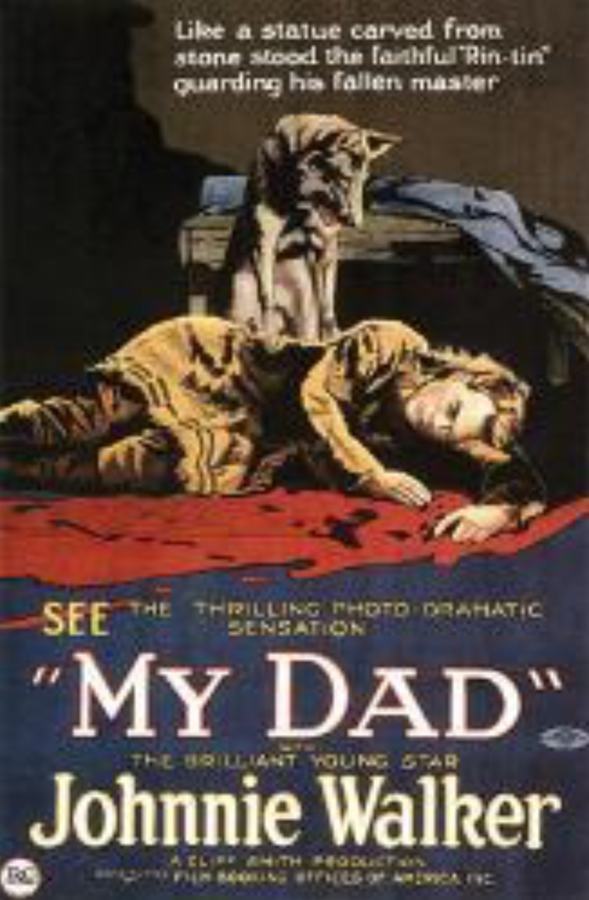
The first thing that strikes you about My Dad is how quietly it hates fathers. Not in the loud, banner-waving manner of later melodramas, but with the hush of snow falling on a coffin lid. Director William James Craft—working from a script by Walter R. Hall and Richard Schayer
Technically the film is a 1922 five-reel silent, yet its emotional temperature feels closer to Nordic noir, decades before that term existed. The plot motor is familiar: wrongful accusation, dutiful son, last-minute vindication. What lingers is the texture—ice crystals on 35 mm, the squeak of leather harnesses captured by intertitles that read like frostbitten whispers. Johnnie Walker’s Tom O’Day is introduced only in profile for the opening three minutes, half his face eclipsed by a parka hood. It is cinema as withholding, and it works; we sense a protagonist who has already absorbed the frontier’s first lesson—never show your whole self. When the camera finally allows a full close-up, the eyes that emerge are startlingly modern: direct, almost insolent, a silent-era Timothée Chalamet without the Gen-Z self-consciousness. Ruth Clifford, playing the step-daughter Helen, has the porcelain radiance that silent cameras adored, but she refuses to stay merely decorative. Watch the micro-shift in her shoulders when she learns her guardian—the factor—may have blood on his gloves. In a medium that often rewarded statuesque suffering, Clifford gives us thought: pupils dilating, breath visible in sub-zero air, a mind recalculating loyalties at silent-film speed. That guardian, unnamed beyond “The Factor”, is embodied by Harry von Meter with the silky menace of a man who keeps his ledger closer than his Bible. Von Meter, whose career stretched from shorts like Stop Thief! to the monolithic Homunculus serial, understood that villainy populates the pauses. He lingers on syllables in the intertitles—“I fear you misjudge the evidence, young man”—while his thumb strokes the ivory butt of a hidden pistol. The gesture is repeated each time he lies; by the third iteration the audience anticipates it like a chord in a funeral hymn. Wilbur Higby, as Tom’s father, is given the ungrateful task of appearing broken for most of the narrative, yet he etches a quiet dignity into the role. When son confronts sire inside the jail tent, Higby removes a glove with trembling care, as though stripping off years of failed authority. The moment lasts maybe four seconds but carries the freight of Greek tragedy. That line, burned into an intertitle, is the film’s moral axle. My Dad is less interested in whether a murder occurred than in how stories calcify into verdicts without evidence—an anxiety that feels almost documentary in 2024’s media climate. The screenplay, lean even by two-reel standards, still finds room for a quasi-philosophical detour. Tom tracks a half-wolf sled dog—Rin Tin Tin in an early uncredited cameo—through a whiteout, hoping the animal will lead him to the real killer’s cached rifle. The sequence plays like a Jack London parable grafted onto a courthouse drama: man chases truth on four paws, justice measured in pawprints. Cinematographer Pliny Goodfriend (who later shot Paradise Lost) captures the frontier as negative space: sky so heavy it threatens to crush the horizon, spruce trunks like ink-brush strokes. Interiors are staged with lantern-light chiaroscuro; faces emerge from gloom already half confessed. Note the scene where the factor repositions a kerosene lamp before interrogating Tom—flame sliding up the glass like a soul trying to flee. Visual metaphors rarely get more elegant. Yet for all its pictorial beauty, My Dad is rhythmically austere. Craft refuses the Soviet-style montage then fashionable, opting instead for contemplative long takes that let silence pool. The effect is uncanny: you become hyper-aware of projector hum, of your own breathing. Some will call it glacial; others will term it hypnotic. Both camps will be right. Restoration status? Only a 1K transfer survives, held by the Library of Congress, with one reel marred by nitrate bloom resembling frost on a windowpane. The current streaming edition (available via RetroRevue) patches the gap with explanatory stills and a newly commissioned piano score by Sage Coy, heavy on minor chords and tremolo. It works, mostly, though purists will miss the original cue sheets that called for “Chanson Triste” during the father-son confrontation. Comparative contextualization: fans of Her Sturdy Oak will recognize the same moral absolutism clothed in pastoral peril. Meanwhile, Danish audiences versed in Kærlighed overvinder Alt may note how Scandinavian immigrants to North America carried a Lutheran guilt that My Dad secularizes into frontier stoicism. And if you’ve sat through Not Guilty from the same year, the echo of familial loyalty under legal siege is unmistakable—though that title lacks the glacial visual grammar Craft achieves here. Performances resist the era’s tendency for semaphore-sized gestures. Walker’s final courtroom flourish—raising the recovered rifle above his head—is played almost reluctantly, as if heroism were an ill-fitting coat. Clifford’s answering smile is equally muted: lips part, eyes shine, but the teeth stay hidden. Their restraint feels contemporary, a link between 1922 and the anti-heroic romanticism of 1970s New Hollywood. Still, the film is not without scars. A comic interlude involving a moonshiner named Les Bates (played by the actor of the same name) jars the tonal fabric; its sole function appears to be padding the runtime to feature length. The racial politics, while not as toxic as America Is Ready, erase Indigenous presence almost entirely, converting First Nations territory into an abstract moral wilderness. Critical viewing demands we acknowledge these blind spots without surrendering the movie to them. Historians sometimes slot My Dad beside Hall & Schayer’s later The Law of Blood, yet the comparison limps; the latter wallows in grotesque close-ups and proto-giallo lighting, whereas My Dad seeks austerity, a Calvinist sermon delivered in ice-blue visuals. More illuminating is its counterpoint to Princess Jones, a jazz-age bauble released the same month: one film flappers; the other flagellates. Together they map the bipolar psyche of early-20s American cinema. Reception at the time was respectful, though not rapturous. Variety called it “a sturdy sled-dog of a picture, if overlong by a paw”. Box-office data, spotty for the era, suggests moderate success in Midwestern states where “outdoor pictures” functioned as travelogues for viewers who might never see snow. Urban critics found its pace “Arctic”, a code word for dull; modern arthouse audiences, trained on Tarkovskian longueurs, will likely find it brisk. Arrow-key takeaways for today’s cinephile: Lastly, a note on the title. My Dad sounds sentimental, almost cozy; the film is anything but. The possessive pronoun carries a sting: ownership of a parent’s shame, the way sons inherit guilt like heirlooms. When Tom finally speaks the titular phrase in an intertitle—“He may be flawed, but he is my dad”—the word vibrates with defiance and resignation in equal measure. Verdict? See it for the cinematography, revisit it for the moral chill. In an era when digital images arrive pre-warmed by algorithms, there is something bracing about a film whose very shadows feel cold enough to bite. Rating: 8.7/10I am not ashamed of what I did, only of what I failed to prove.
IMDb 5.5
1932
Community
Log in to comment.