DbcultAccessing Vault...
6.9/10
Senior Film Conservator
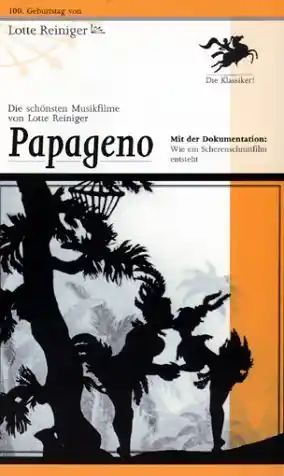
A definitive 6.9/10 rating for a film that redefined the boundaries of cult cinema. Papageno remains a cornerstone of transgressive art.
If you have eleven minutes to spare today, you should probably spend them watching this. It’s for anyone who likes things that look handmade and maybe a little bit spooky.
People who need 4K explosions or hate old-timey music will probably find it boring. Honestly, that's their loss.
Lotte Reiniger is doing something here with scissors that I can't even do with a pen. It’s 1935 and she’s basically playing with shadows to tell a story about a guy who really, really likes birds.
Papageno is the bird-catcher from Mozart’s opera, and in this version, he’s just wandering through these paper-thin landscapes. The animation is all silhouette, which means everything is a black cutout against a light background.
But the way they move? It’s disturbingly smooth.
You’d think paper would look stiff, but these characters have more personality than most actors in a Marvel movie. Papageno himself looks like a chaotic uncle who has spent way too much time in the woods.
I kept thinking about Smile, Brother, Smile while the birds were on screen. Both have that early 20th-century charm where you can feel the person behind the camera trying to figure out what’s possible.
There is this one moment where Papageno plays his pan flute and his tiny paper fingers actually move to the notes. That is the kind of detail that makes my head hurt.
The music is obviously great because, well, it’s Mozart. But Reiniger makes the silhouettes dance to the rhythm in a way that feels like the music is actually creating the movement.
It doesn't feel like a cartoon. It feels like a puppet show that came to life when you weren't looking. 🦢
Some of the background shapes—the mountains and the weird trees—are so delicate. I can only imagine Reiniger holding her breath while cutting these out so she wouldn't ruin the whole thing with one sneeze.
The plot is pretty thin, but who cares? He catches birds, he gets lonely, he finds a girl (Papagena), and they dance.
It’s simple, but the visual style makes it feel like you’re looking into a different dimension. A dimension made of cardstock and magic.
I wonder if audiences in 1935 were as mesmerized by the feathers as I am. Probably. Or maybe they were just distracted by the fact that the world was falling apart outside the theater.
The ending is a bit rushed, I guess. They just kind of find each other and it’s over.
But for a short film, it does exactly what it needs to do and then leaves. It reminds me a bit of the vibe in A Girl Named Mary, just in terms of that old-world storytelling pace.
Is it high art? I don't know, and I don't really care about the label.
It’s just neat. It’s a vibe. It’s a very 1930s German shadow-puppet fever dream that still works perfectly today.
If you're tired of seeing the same CGI faces everywhere, this is a great palate cleanser. It’s tactile. You can almost feel the edges of the paper through the screen. 🎶
Go find it on YouTube or an archive site. It’s better than scrolling through your phone for the same amount of time.
IMDb —
1930
Community
Log in to comment.