DbcultAccessing Vault...
7/10
Senior Film Conservator
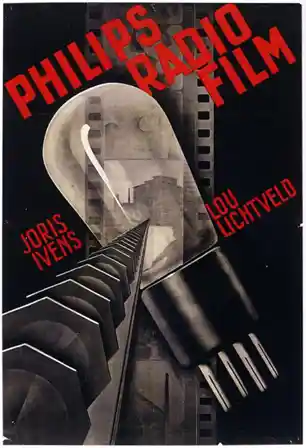
A definitive 7/10 rating for a film that redefined the boundaries of cult cinema. Philips-Radio remains a cornerstone of transgressive art.
"Philips-Radio" isn't exactly Saturday night popcorn fare, let's be clear. If you're into film history, especially early documentary or industrial art, this little 1931 gem by Joris Ivens is absolutely worth a peek. Anyone expecting a plot, dialogue, or even character arcs will probably be bored stiff, but for those curious about how things were made and how film captured it, it's pretty neat. 🧐
It kicks off with this really busy feel, almost a blur of hands and machines. They're making glass bulbs, and the speed is just wild to watch. You see glassblowers, these incredibly focused people, puffing away, shaping molten glass like it's play-doh. Then the machinery takes over, and it's this rhythmic dance of automation. It’s kinda mesmerizing, actually.
One guy, a "virtuoso" glassblower they call him, gets a special close-up. He’s working on a tube for radio broadcasting, something way more intricate. The way he turns and fires and sculpts, it's less like factory work and more like a craftsman in a silent, smoky studio. You really get a sense of skill there, the kind that probably isn't around anymore.
Then the film shifts to the assembly line. Conveyors just keep chugging along, carrying bits and pieces. Hands appear, do their thing, and vanish. It’s all very precise, everyone doing their tiny specific job. They build the cases, assemble the wires, even make the loudspeakers. It’s like watching a giant, complicated clock come together.
What struck me was the silence, really. No voiceover explaining everything, just the clatter of the factory floor, which we don't even hear, of course. It makes you lean in more. The camera often just sits and watches, letting the process speak. There's a shot of these women, I think, carefully weaving wire harnesses, and their movements are so practiced, almost artistic in themselves.
The radios get tested near the end. A whole room of them, sitting there, glowing faintly. It's like a hospital ward for electronics, waiting for their check-up. And then you see the engineers and draughtsmen, all serious faces, sketching out the future. It’s a quiet moment, a different kind of industry at play, the thinking part.
But the absolute highlight, the thing that sticks with you, is the very end. This short stop-motion sequence where the loudspeakers... they dance! 🕺 Like little marching soldiers, then spinning and turning. It’s completely unexpected, almost playful, especially after all the serious industrial work. It feels like a little wink from Ivens, a moment of pure joy or maybe just showing off what film can do. It reminds me a bit of some early animation experiments, really cool stuff.
It’s not a film you "enjoy" in the usual way. It's more about appreciation. Appreciation for the intricate mechanics, the human touch in an industrial setting, and the early filmmaker's eye. It’s a snapshot, a time capsule of a specific moment in manufacturing. It feels real, you know? Not staged in a fake way.
You can almost feel the air in the factory, dusty and humming. One detail I keep thinking about is the way the light catches the glass as it's being worked on; it just glows. And the repetitive motions of the workers, almost hypnotic after a while. It’s easy to overlook these small things, but they build up this really immersive sense of place.
If you ever stumble upon it, give it a shot. It's short, maybe not for everyone, but it’s a neat little piece of cinematic history. And that dancing loudspeaker bit? Totally worth the wait.
IMDb —
1930
Community
Log in to comment.