
DbcultAccessing Vault...
5.3/10
Senior Film Conservator
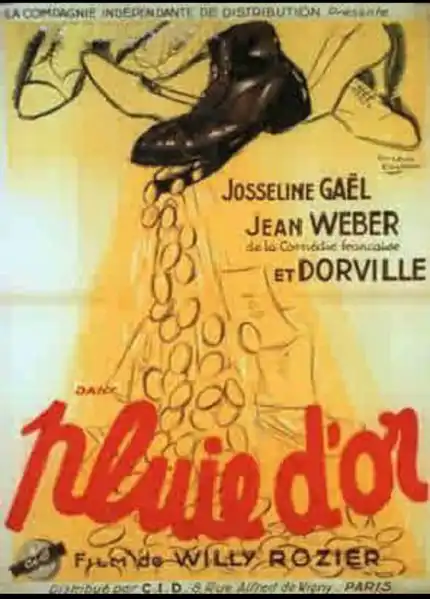
A definitive 5.3/10 rating for a film that redefined the boundaries of cult cinema. Pluie d'or remains a cornerstone of transgressive art.
Honestly, you probably already know if you’re the type of person who digs this. If you enjoy watching mid-century French actors navigate social traps in black and white, jump right in. If you need a fast plot or modern pacing, stay far away. You’ll be bored to tears by the second act.
Watching Pluie d'or is like stumbling into a party where you don't know anyone, but the host is insistent that you stay for another drink. It’s not necessarily a good party, but there’s a certain vibe to the room that keeps you glued to your chair.
The movie moves at its own pace. Sometimes it’s a sprint, but most of the time it’s just shuffling along in slippers. There’s a scene involving a conversation about money that lasts at least five minutes too long. You can practically hear the clock ticking on the wall while the actors wait for their next line.
The dialogue has this sharp, biting quality that feels like it’s trying to be cleverer than it actually is. Sometimes it lands. Other times, it just hits the floor with a thud.
It’s funny how this makes me think of The Old Man, mostly because both films seem to care more about the atmosphere of the room than the people standing in it. It’s less chaotic than George White's Scandals, which is probably for the best. Pluie d'or stays in its lane.
There’s a weird, lingering shot near the end where someone just looks out a window. It’s meant to be heavy with regret or something, I guess. It mostly just felt like the director wasn't sure how to transition to the next scene. But I didn't hate it. There’s something honest about that kind of awkwardness.
It’s not a masterpiece. It’s not even a particularly good film by modern standards. But there’s a flicker of life here that makes it worth checking out if you’ve got a rainy afternoon and a lack of better things to do. 🌧️