DbcultAccessing Vault...
Cult Review
Senior Film Conservator
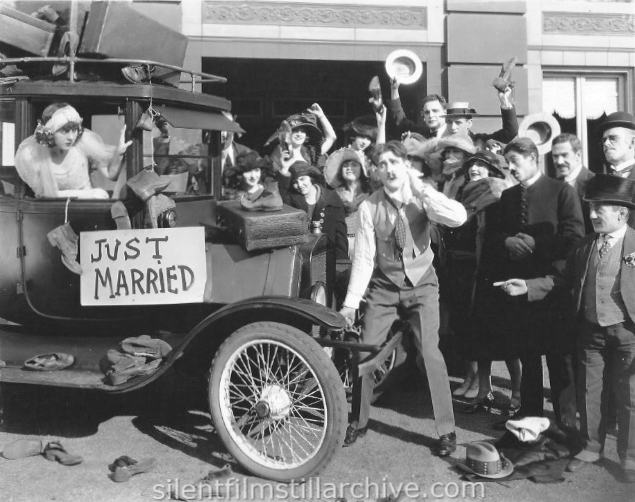
In the pantheon of early silent comedy, few motifs resonate with as much primal, agonizing hilarity as the loss of one's garments in a public sphere. The Bride-to-Be, a seminal work featuring the understated brilliance of James Parrott, elevates this trope from a mere gag into a sprawling, existential crisis set against the backdrop of matrimonial expectation.
To understand the gravitational pull of this film, one must first appreciate the climate of the early 1920s. This was an era where cinema was rapidly refining its visual vocabulary, moving away from the primitive 'cinema of attractions' toward a more sophisticated, character-driven narrative structure. While films like Just Out of College explored the buoyancy of youth through traditional romantic friction, The Bride-to-Be chooses a path of visceral, physical anxiety. It is not merely about the obstacle of a wedding; it is about the fundamental stripping of the self.
James Parrott, often overshadowed by his brother Charley Chase or the behemoths like Keaton and Lloyd, displays here a remarkably nuanced physical language. His portrayal of Paul is not that of a cartoonish buffoon, but rather a man of genuine intent caught in a cosmic prank. The sequence where he first realizes his sartorial deficit is played with a chilling realization that would feel at home in a Kafkaesque novella, were it not for the expertly timed pratfalls. Unlike the more grounded drama of The Wasted Years, where the passage of time is the antagonist, here the enemy is space—the open, public space that Paul must navigate while essentially invisible to polite society, yet painfully exposed to the camera's eye.
The supporting cast, including the formidable Eddie Baker and the ever-reliable Sammy Brooks, creates a rhythmic friction that propels the plot forward. Every interaction is a gamble; every corner turned is a potential catastrophe. The inclusion of Jobyna Ralston adds a layer of genuine emotional stakes. Her presence reminds the audience that this isn't just a romp—it's a high-stakes race to preserve a future that is rapidly unraveling. She brings a level of sophistication that we also see in the more dramatic heights of María, albeit filtered through the lens of Hal Roach’s comedic sensibilities.
From a technical perspective, The Bride-to-Be utilizes the urban landscape of the 1920s with surgical precision. The use of deep focus, though primitive by modern standards, allows the audience to see the 'threats' approaching from the background—a policeman, a group of socialites, a stray dog—long before Paul does. This creates a delicious sense of dramatic irony that fuels the comedic tension. We see a similar mastery of environment in Running Wild, though that film focuses more on the psychological liberation of its lead, whereas Parrott’s Paul is seeking the liberation of a pair of trousers.
CRITIC'S NOTE: The pacing of the second act is a masterclass in escalation. It avoids the repetitive pitfalls often found in lesser shorts of the era. Instead of repeating the same joke, the film evolves the predicament, moving from the loss of the coat to the total absence of vestiary dignity, mirroring the social stratification seen in Upstairs and Down.
One cannot discuss this film without mentioning the writing. While the credits for many of these shorts are often collaborative and uncredited 'gag sessions,' the structural integrity here suggests a keen understanding of the three-act arc. The setup is swift, the development is relentless, and the resolution provides a catharsis that is both earned and surprising. It lacks the somber introspection of The Deceiver, but it replaces that weight with a buoyant, frantic energy that is infectious.
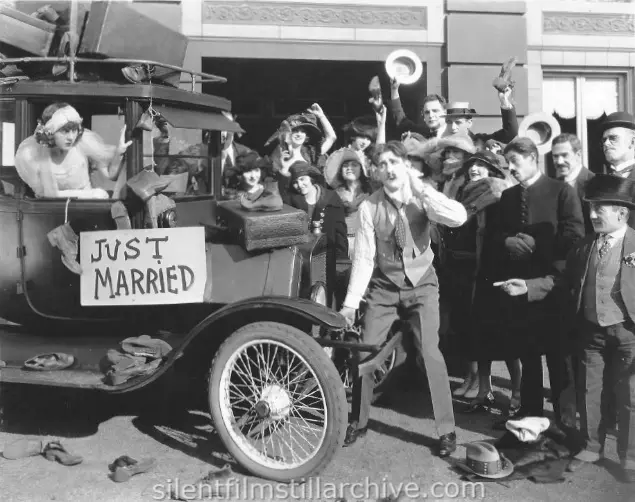
When placed alongside its contemporaries, The Bride-to-Be stands out for its sheer commitment to the bit. While The Dictator (1922) played with political satire and high-concept farce, Parrott’s work remains grounded in the relatable, albeit exaggerated, human experience of shame. Even the more exotic or experimental works of the time, such as the Russian avant-garde leanings of Zakovannaya filmoi, cannot match the universal accessibility of a man trying to hide behind a barrel.
The film also touches upon themes of class and luxury, though perhaps more subtly than The Lure of Luxury. In The Bride-to-Be, the wedding represents the peak of social achievement, and Paul's nakedness is the ultimate equalizer. He is stripped of his status as he is stripped of his wool and silk. This subtextual layer provides a richness that rewards repeat viewings. It’s not just about the laugh; it’s about the terror of being 'found out' as an impostor in the halls of respectability.
The cinematography deserves significant praise for its clarity. In an age where lighting was often flat and utilitarian, there are moments here—particularly in the alleyway sequences—where the interplay of shadow and light emphasizes Paul’s isolation. It’s a visual strategy that echoes the rugged, outdoor realism of Lone Star or the gritty atmosphere of Bandit's Gold, yet applied to a comedic urban environment. The camera doesn't just record the action; it participates in the hunt, often framing Paul in ways that make him look small, cornered, and utterly human.
Furthermore, the chemistry between Parrott and Eddie Baker is palpable. Baker’s imposing presence serves as a perfect foil to Parrott’s wiry, nervous energy. Their interactions are reminiscent of the classic 'big man/little man' dynamics that would later be perfected by Laurel and Hardy, yet here it feels fresh and unrefined. It lacks the polished sentimentality of Susan's Gentleman, opting instead for a raw, slapstick vigor that is far more visceral.
In the final analysis, The Bride-to-Be is a testament to the enduring power of silent comedy. It doesn't need dialogue to convey the sheer panic of a man whose world is falling apart—one button at a time. While it might not have the historical weight of The Captain Besley Expedition or the heavy-handed moralizing of Bars of Iron, it possesses a purity of purpose that is rare. It aims to make us laugh at our own deepest insecurities, and in doing so, it achieves a kind of timelessness.
Even when compared to the whimsical charm of A Wee Bit o' Scotch, Parrott's film feels more urgent, more modern in its anxieties. It is a frantic, beautifully composed piece of cinema that reminds us that no matter how high we climb—even to the very altar of marriage—we are always just one wardrobe malfunction away from total humiliation. And in that realization, there is a profound, albeit hysterical, liberation.
IMDb 4.3
1937
Community
Log in to comment.