DbcultAccessing Vault...
5.7/10
Senior Film Conservator
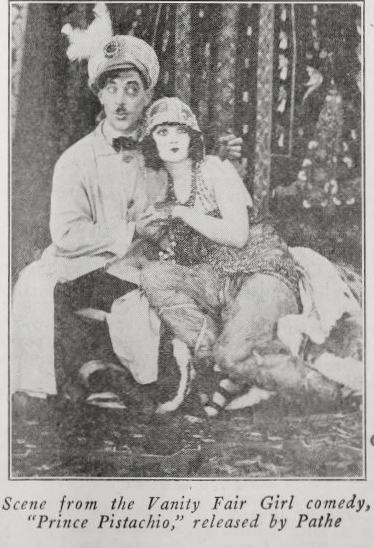
A definitive 5.7/10 rating for a film that redefined the boundaries of cult cinema. Prince Pistachio remains a cornerstone of transgressive art.
Edison "Eddie" something-or-other (Boland, channeling a mix of Chaplinesque vulnerability and a certain gruff determination) begins the film as a man of the people—literally. His profession as a plumber anchors the film in a world of soot, sweat, and the ever-present threat of spontaneous combustion. The opening act is a masterclass in mundane absurdity: here is a man who trusts a lit candle more than any technological tool, who sees a gas leak as both a problem and a dare. His methods are antiquated, his demeanor unflappable, and his clothing perpetually speckled with soot. It’s a portrait of working-class heroism that feels almost comically anachronistic by today’s standards.
The film’s first act is a slow burn of escalating stakes. Each time Eddie lights a candle, the audience braces for an explosion, and yet, the delay is almost cruel. The tension builds not from the danger itself but from the absurdity of his methods. When the inevitable detonation finally occurs, it’s not a moment of catharsis but a portal. The screen goes white, and we are thrust into a world of silk-clad princesses, gilded thrones, and a palace that seems plucked from a child’s coloring book. This transition is abrupt, jarring, and yet entirely fitting for a film that thrives on tonal whiplash.
The second act, set in the dream-realm principality, is a study in contrast. Where the real world is grit and grime, the fantasy world is gilded and gaudy. The women—played by a constellation of early-20th-century contract players—embody a range of archetypes: the coquettish temptress (Dolores Johnson), the regal mother figure (Jean Hope), the haughty beauty (Molly Thompson), and the enigmatic siren (Lilymae Wilkinson). Their performances are a curious blend of earnestness and artifice, as if they are both inhabiting their roles and aware of them as roles. This duality is key to the film’s surreal charm.
Eddie’s transformation into "Prince Pistachio" is both literal and metaphorical. He is given a crown, a cape, and a chorus of admirers, yet his behavior remains stubbornly working-class. He fumbles with the royal etiquette, mistakes a goblet for a water glass, and seems more interested in the palace’s plumbing than its politics. This dissonance is not accidental; it’s a running theme that underlines the film’s central question: What does it mean to "become" someone else? In this context, Eddie’s dream is less a wish for power than a wish for validation—a plumber, however briefly, living as a king.

What elevates *Prince Pistachio* from mere farce to something resembling art is its visual language. The transition from the soot-streaked plumber to the silk-roped prince is mirrored in the cinematography. The first act is shot with a documentary-like starkness, with high-contrast lighting that emphasizes the harshness of Eddie’s environment. When the dream sequence begins, the palette shifts to a pastel hued surrealism, with soft lighting and exaggerated angles that evoke a Renaissance painting. This visual dichotomy is not just aesthetic but ideological: the real world is rigid and linear, while the dream world is fluid and fantastical.
The film’s most audacious visual choice is its use of scale. In the real world, Eddie is dwarfed by the industrial pipes he navigates, his body small and bent. In the dream world, he is flanked by towering columns and vast corridors, his posture straightened as if by royal decree. This physical transformation is a visual metaphor for the power of dreams—to elevate, to distort, to reimagine the self.
Though it may lack the thematic heft of later surrealist works, *Prince Pistachio* shares DNA with films like *God’s Crucible* (1938) in its juxtaposition of the mundane and the mythic. However, while *God’s Crucible* leans into religious allegory, *Prince Pistachio* is more interested in the personal fantasy. It also bears a kinship with *The Grandee’s Ring* (1936) in its exploration of identity and power, though *Prince Pistachio* replaces political intrigue with a more whimsical courtly setting.
For modern viewers, the film’s strongest parallels can be found in the works of directors like Wes Anderson, who similarly revel in the juxtaposition of artificiality and authenticity. The exaggerated set designs, the symmetrical compositions, and the deliberate anachronism of the dream world all feel like precursors to Anderson’s aesthetic. Yet, unlike Anderson’s meticulously controlled worlds, *Prince Pistachio* leans into a kind of chaotic charm, as if the filmmakers were channeling their own subconscious rather than curating a visual style.
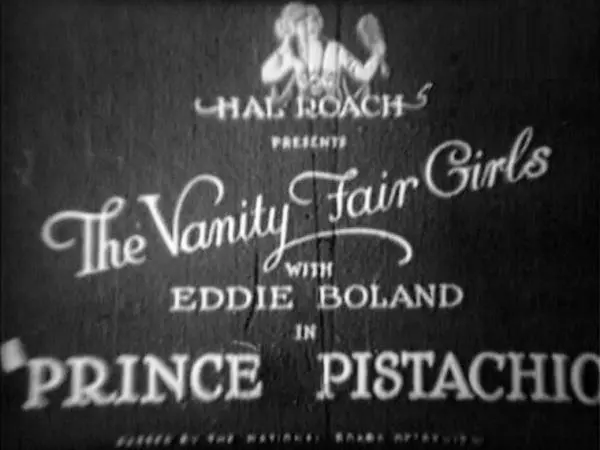
The film’s third act is a gradual return to the real world, though the line between the two remains blurred. Eddie awakens from his dream, back in his soot-streaked world, yet changed. The final scenes are open to interpretation: has he truly experienced a dream, or has he lost his mind from the explosion? The ambiguity is intentional, and it’s here that the film’s truest power lies. It doesn’t offer answers so much as it invites the viewer to question the nature of their own desires.
One cannot help but compare this narrative structure to that of *Ipnosi* (1935), which similarly uses a dream state to explore the subconscious. Yet whereas *Ipnosi* is clinical in its approach, *Prince Pistachio* is indulgent, almost self-satirical in its embrace of fantasy. The contrast between these two films highlights a broader tension in 1930s cinema between psychological realism and escapist fantasy—a tension that *Prince Pistachio* leans into with glee.
In the grand timeline of film history, *Prince Pistachio* occupies a peculiar niche. It lacks the avant-garde rigor of a *Un Chien Andalou* (1929), yet it predates the full bloom of American surrealism by a decade. Its influence is harder to trace than that of *Scarlet Days* (1932), which similarly plays with time and identity, but it’s not without its admirers. Film scholars like David Bordwell have noted its "primitive surrealism," a term that captures both its earnestness and its raw ambition.
For contemporary audiences, the film is a reminder of cinema’s earliest experiments with genre-blending and tonal ambiguity. It’s a work that feels both of its time and ahead of it, a testament to the creative daring of early Hollywood. While it may not be a masterpiece in the traditional sense, *Prince Pistachio* is a fascinating artifact of a period when filmmakers were still discovering the possibilities of their medium.
IMDb 6.1
1930
Community
Log in to comment.