DbcultAccessing Vault...
Cult Review
Senior Film Conservator
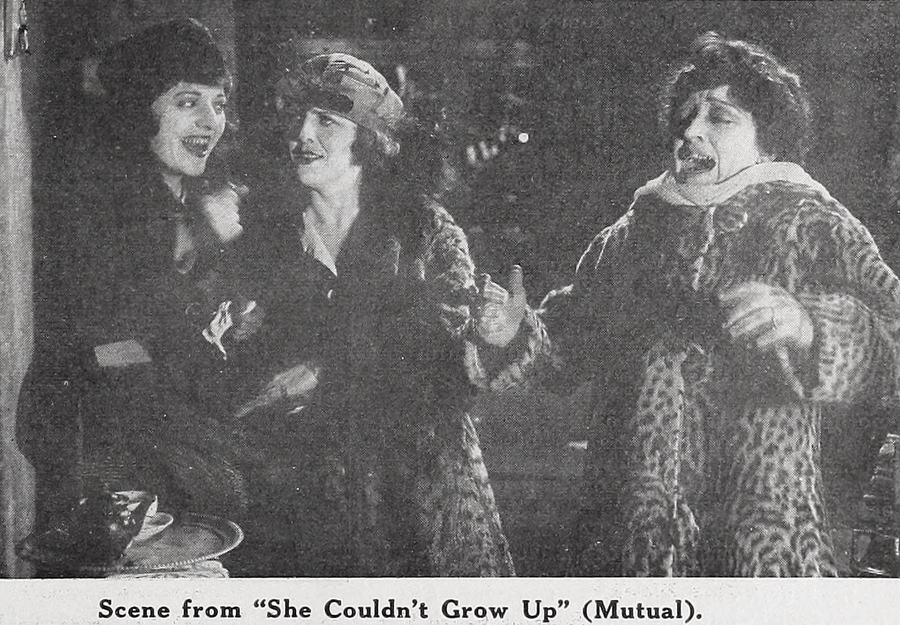
Stepping back into the nascent days of cinematic storytelling, one encounters a peculiar charm in films like She Couldn't Grow Up. This 1917 offering, a silent era relic, provides a fascinating glimpse into the social mores and familial dynamics of its time, all wrapped in a deceptively simple comedic package. Far from being a mere trifle, it subtly dissects themes of female agency, sibling rivalry, and the societal pressures that often dictated women's roles. The film, starring Billie Rhodes as the eponymous Mary, Eugenie Forde as her long-suffering 'Sis,' and Cullen Landis as the unwitting object of affection, transcends its rudimentary plot to offer a surprisingly nuanced commentary on the art of manipulation and the quest for individual identity within a restrictive framework.
At its core, She Couldn't Grow Up presents a domestic battlefield where the spoils are male attention and social standing. Mary, the younger sister, is painted as a perpetual spoiler, a romantic interloper who consistently siphons away the affections of her elder sister's sweethearts. This pattern of disruption leads to a rather drastic, albeit comically enforced, familial decree: Mary must recede into the background. The method of her enforced obscurity is particularly telling: she is compelled to dress as a child. This isn't merely a quaint costume choice; it's a symbolic stripping away of her perceived adult appeal, a deliberate attempt to infantilize her and thus neutralize her threat to 'Sis's' romantic prospects. The very title, then, becomes a double entendre: is Mary genuinely unable to mature, or is she strategically leveraging the guise of immaturity to achieve her very adult desires? Billie Rhodes imbues Mary with a mischievous glint, a silent defiance that speaks volumes through her expressive eyes and playful demeanor, making her character far more complex than a simple antagonist.
The film’s central conflict escalates on the night of a pivotal dance, an event often portrayed in silent comedies as a high-stakes arena for social maneuvering. Here, Mary’s forced regression into childhood attire becomes her ultimate weapon. While her family believes they have disarmed her, they have, in fact, handed her a potent form of camouflage. The child's costume, meant to render her invisible as a romantic rival, instead grants her a unique kind of freedom and a cloak of presumed innocence. This allows her to move with a certain impunity, setting the stage for her audacious coup. The act of locking her sister and mother in a room is a striking moment of rebellion, an overt rejection of the constraints placed upon her. It's a bold, almost anarchic move that highlights Mary's determination to carve out her own destiny, regardless of the prescribed social order. This scene, while played for laughs, carries a deeper resonance, touching upon the frustrations of women who felt stifled by societal expectations and familial dictates. It echoes a sentiment found in films like Virtuous Wives, where female characters grapple with their prescribed roles, albeit with different outcomes.
Cullen Landis, as the 'best beau,' serves primarily as a catalyst for the sisters' rivalry rather than a fully developed character. His appeal is largely implicit, a prize to be won, underscoring the transactional nature of courtship in certain societal circles of the era. His character's passivity allows Mary's agency to shine all the more brightly. She doesn't merely hope to attract him; she actively 'captures' him, a verb choice that speaks volumes about her predatory, yet undeniably effective, approach. This dynamic contrasts sharply with the more conventional romantic pursuits often depicted in contemporary films, where modesty and decorum were paramount. Mary shatters these conventions with a gleeful disregard, making her a proto-feminist figure in a strange, subversive way, even if her motivations are self-serving.
The narrative's climax, however, introduces a dramatic pivot that recontextualizes Mary's actions entirely. Just as 'Sis' manages to escape her confinement, undoubtedly preparing for a furious confrontation with her conniving sibling, an unexpected guest arrives: the beau's wife. This revelation is a masterstroke of comedic timing and plot resolution. It instantly deflates the tension of the sisterly feud and renders Mary's 'transgression' moot. What was initially perceived as a malicious act of sabotage is suddenly transformed into an inadvertent act of exposure, saving 'Sis' from a potentially disastrous romantic entanglement. The immediate consequence is Mary's forgiveness, a swift and almost bewildering shift in the emotional landscape. This forgiveness isn't earned through repentance or a change of heart, but through sheer serendipity, a narrative device that often characterized early silent comedies, allowing for quick, satisfying, if not always logically consistent, conclusions.
The sudden appearance of the wife also serves as a sharp commentary on the hidden complexities of social interactions. It suggests that beneath the polished veneer of societal gatherings, unspoken truths and hidden lives often lurk. The 'beau' who seemed so eligible is revealed to be anything but, casting a humorous, yet slightly cynical, light on the superficiality of appearances. In this regard, the film playfully skirts the edges of dramatic irony, where the audience is privy to a truth that the characters only stumble upon later. This unexpected turn of events, while providing a convenient resolution, also raises questions about the nature of justice and consequence. Is Mary truly forgiven for her manipulative behavior, or is her forgiveness merely a byproduct of a larger, external event? The film doesn't delve deeply into these philosophical nuances, preferring to maintain its lighthearted tone, but the implications are certainly present for a discerning viewer.
Billie Rhodes, as Mary, carries much of the film’s charm. Her performance is a masterclass in silent-era physical comedy and expressive acting. Without spoken dialogue, her facial expressions, gestures, and body language must convey a full spectrum of emotions – from impish glee to feigned innocence, to cunning determination. She manages to make Mary mischievous without being entirely villainous, a testament to her skill. Eugenie Forde, as 'Sis,' effectively embodies the exasperated older sister, her reactions often serving as the audience's emotional anchor, reflecting frustration and indignation at Mary's antics. The dynamic between the two actresses is palpable, establishing a believable, if exaggerated, sisterly rivalry that grounds the fantastical elements of the plot.
While specific directorial credits for such early shorts are sometimes elusive, the execution of She Couldn't Grow Up demonstrates a keen understanding of comedic pacing and visual storytelling. The use of intertitles is efficient, delivering necessary plot points and dialogue without bogging down the action. The sets, likely simple and theatrical, effectively convey the domestic setting, allowing the focus to remain on the characters and their interactions. The costume design, particularly Mary's child-like attire, is crucial to the plot and symbolism, serving as a visual shorthand for her enforced role and subsequent subversion of it. The film, despite its age and brevity, manages to construct a compelling, albeit humorous, narrative arc that is both entertaining and subtly thought-provoking.
The theme of sibling rivalry, particularly between sisters, is a perennial one in literature and film. She Couldn't Grow Up offers a comedic take on this, but its underlying tension is rooted in very real societal pressures. In the early 20th century, a woman's value was often tied to her marital prospects. Competition for eligible bachelors was not just about affection; it was about securing one's social and economic future. Mary's relentless pursuit of her sister's suitors, while framed comically, can be seen as a desperate, if misguided, attempt to assert her own place in this competitive landscape. This struggle for recognition and agency, even if expressed through mischievous means, resonates with broader narratives of female characters navigating restrictive environments, much like the challenging circumstances often depicted in films such as Children of Eve, where innocence and survival clash against harsh realities.
Moreover, the film's title and Mary's enforced 'childhood' can be interpreted as a commentary on the societal expectation for women to remain in a state of arrested development, particularly before marriage. The transition from 'girl' to 'wife' was often abrupt, with little room for an independent 'womanhood' in between. Mary's rebellion, therefore, is not just against her sister, but against a system that seeks to define and limit her. Her use of a child's guise to achieve adult ends is a fascinating inversion of this expectation, suggesting that true maturity might lie in cunning and self-determination, rather than passive adherence to rules. This subversive element gives the film a surprising depth, elevating it beyond a simple slapstick comedy.
The unexpected resolution, with the appearance of the beau's wife, brings a layer of moral ambiguity. While Mary is 'forgiven,' the film doesn't necessarily endorse her manipulative tactics. Instead, it highlights the often unpredictable nature of life and the way external events can reshape internal conflicts. It's a reminder that not all problems are solved by direct confrontation or moral rectitude; sometimes, fate intervenes in the most unexpected ways. This kind of resolution, where justice or consequence arrives through external factors, can also be observed in films like The Green-Eyed Monster, where jealousy's machinations are often thwarted by unforeseen circumstances rather than a direct moral reckoning.
While She Couldn't Grow Up might not be as widely recognized as some of the era's blockbusters, its enduring appeal lies in its clever plotting and sharp characterizations. It showcases the ingenuity of early filmmakers in crafting engaging narratives with limited resources and without the benefit of synchronized sound. The film serves as a valuable historical document, offering insight into the comedic sensibilities of its time and the nascent exploration of complex human relationships on screen. Its themes of rivalry, deception, and the pursuit of individual desire remain remarkably relevant, albeit presented through the charming lens of early 20th-century cinema.
Comparing it to other films of the period, one can see common threads in the exploration of human flaws and social dynamics. While not a dramatic exposé like Shame, which delves into moral failings with gravity, She Couldn't Grow Up offers a lighter, more satirical look at similar themes of impropriety and social maneuvering. It reminds us that even in the seemingly innocent world of silent comedies, filmmakers were keenly observing and commenting on the human condition, often with a wink and a nod. The film's compact narrative, delivering a full arc of conflict, escalation, and surprising resolution within a short runtime, is a testament to the efficient storytelling prevalent in that era. It doesn't waste a single frame, each visual cue and intertitle contributing directly to the progression of Mary's audacious scheme.
In conclusion, She Couldn't Grow Up is more than just a historical curiosity. It is a vibrant, engaging piece of silent cinema that deftly blends comedy with subtle social commentary. Billie Rhodes's portrayal of Mary is a standout, creating a memorable character who challenges expectations and manipulates her circumstances with audacious charm. The film’s unexpected twist provides a satisfying, if unconventional, resolution, leaving the viewer with a smile and perhaps a quiet reflection on the intricate dance of human relationships. It stands as a delightful example of how early cinema, even with its technical limitations, could deliver compelling stories with enduring thematic resonance, proving that sometimes, the most effective way to 'grow up' is to pretend you haven't at all.
IMDb 5.4
1934
Community
Log in to comment.