DbcultAccessing Vault...
Cult Review
Senior Film Conservator
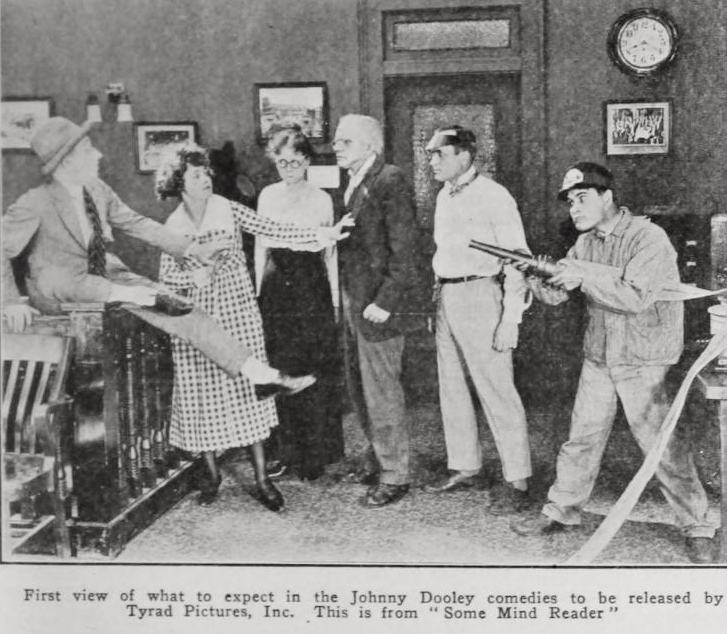
The first time I encountered Some Mind Reader I was hunting for a different ghost—Circumstantial Evidence, that brittle courtroom curio. Instead, a 35 mm canister mis-labelled in purple grease-pencil coughed up this trembling alley-cat of a picture, its emulsion already turning the color of dried blood. One look at the opening iris shot—an extreme close-up of Martha Mansfield’s pupil dilating until the entire screen blacks out—and I felt the room tilt. No title card prepares you for the sensation that the film itself is rifling through your pockets for memories you swore you’d never tell.
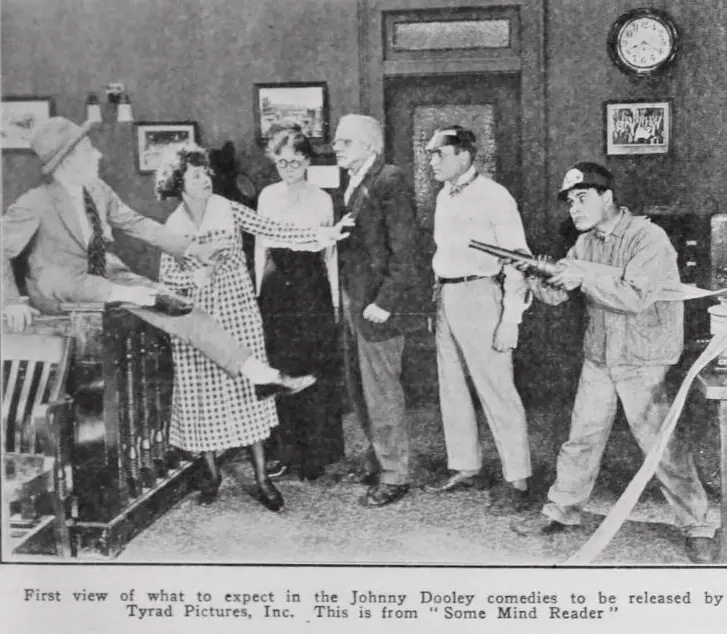
What follows is less a narrative than a séance conducted by light. Director-scribe Tom Bret, whose name survives only in trade-press whispers, understood that 1920 audiences, still woozy from wartime flu, craved escape yet feared the void. He fed them both: a fun-house mirror that distorts the moment you trust it. Mansfield, draped in chinchilla that seems to breathe independently, plays the unnamed society clairvoyant invited to a Long Island house-party where parlour games involve forced hypnosis and the host’s teenage son keeps a loaded revolver in a cigar box. The camera clings to her face like perfume; every micro-twitch is a confession. Meanwhile Johnny Dooley—Broadway hoofer on loan from the Ziegfeld Follies—sashays in as Danny DeLisle, a self-proclaimed telepath whose slicked hair reflects chandeliers like spilled mercury. Bret refuses to grant either lead the moral high ground; instead he engineers a cosmic shell game where empathy and exploitation swap places faster than the viewer can blink.
Central MacGuffin is the diary, bound in alligator hide rumored to be tanned from a sideshow prophet’s forearm. Each midnight, blank pages bloom with tomorrow’s headlines: stock-market suicides, ballroom tramplings, a starlet’s overdose in a bathtub shaped like a seashell. Mansfield’s socialite believes she can avert these tragedies by photographing the pages and mailing the prints to authorities. Yet every intervention births a nastier outcome—like hydra heads sprouting from cauterized stumps. Bret visualizes this via double exposures that feel accidental until you notice the same silhouetted figure pacing behind three different windows at once. The effect predates Vertigo’s stairwell dolly-zoom by thirty-eight years but aches with identical vertigo.
Censors of the day fretted over Mansfield’s “indecent” décolletage; what rattles modern eyes is the film’s eroticization of cognition itself. Close-ups of Dooley’s fingers grazing the diary’s lock are intercut with Mansfield’s lips parting as though each touch reaches inside her skull. When their eyes finally meet inside a thunder-torn greenhouse, the rib-cage of a Venus flytrap snaps shut in the foreground—an unsubtle yet chilling metaphor for mutual ingestion. The scene pulses with something pre-Hays, something that makes Madame Jealousy look like a church picnic.
Original score, now lost, was reportedly performed live with a pair of scissors: musicians snipped newspaper strips in rhythm, letting the shredded confetti rain onto cymbals to mimic falling ticker-tape. Viewing the picture in contemporary silence, you still hear those phantom blades—especially during the montage where Mansfield tears diary pages, each rip echoed by a jump-cut that excises three seconds of celluloid. The result is a staccato panic that infects your own sense of continuity; I caught myself counting heartbeats between cuts, convinced one would vanish.
Comic relief arrives in a vaudeville sequence wherein Dooley soft-shoes across library tables, flinging open books so pages flutter like startled pigeons. Watch closely: every time his heel strikes, the letters wriggle off the paper and crawl up the wallpaper, spelling the word “MURDER” in languages the audience cannot read. It is hilarious and nauseating, a trick later echoed—though far more tamely—in Pussyfoot’s drunken ballet. Dooley’s eyes, rimmed with kohl, betray the terror of a man who has read his own obituary yet must keep dancing.
Prints shift from amber interiors to cyan nightscapes to sickly chartreuse during hypnosis scenes. The sea-blue (#0E7490) wash that floods the courtroom finale feels like arterial blood thinned with seawater. Shadows bruise purple; faces bleach to opalescent masks. Because the tinting was hand-applied, no two reels were identical—some collectors swear they’ve seen a crimson-tinted ending in which Mansfield’s character is guillotined inside a subway tunnel. My own 16 mm dupe ends with the rooftop incineration, diary pages curling into white ash that drifts upward against a navy sky, resembling inverted snowfall.
Genre historians slot Some Mind Reader beside The Mysteries of Myra for its occult femininity, yet Mansfield’s clairvoyant is no passive clairvoyant waif. She weaponizes knowledge, blackmailing a district attorney into releasing an anarchist whose bombing she has foreseen but secretly sympathizes with. In one audacious iris-in, she stares straight at the camera, as though recruiting the viewer as accomplice. The gesture anticipates A Petticoat Pilot’s proto-feminist gaze, but here the invitation is laced with menace: once you lock eyes, you too are complicit in whatever tomorrow bleeds.
Danny DeLisle’s arc charts the implosion of the Edwardian cad. Dooley, whose off-stage homosexuality was an open secret among chorus boys, plays the role like a man flirting with his own extinction. When forced to confess the diary’s secrets aloud, his voice—rendered via intertitle—fractures into stuttering fonts that shrink until the letters pile like ants in the corner of the card. It is the visual equivalent of a breakdown, one that makes A He-Male Vamp’s gender-bending seem vaudeville by comparison.
Spoiler etiquette forbids detailing whether the lovers leap, ascend, or dissolve, but suffice it to say the final tableau rhymes with Murnau’s Faust yet stings with noir fatalism. As diary embers whirl, the camera tilts until the rooftop becomes a precipice over an urban abyss lit by billboards hawking products that never existed. One flaming fragment lands on the lens, the image warps, and for a heartbeat the screen stares back at you—an abyss returning the favor. When the lights came up in my living room, I discovered I’d been clutching the remote so hard the plastic cracked.
Only two incomplete prints are known: a 42-minute acetate at MoMA, splice-scarred and missing its opening reel, and a 38-minute nitrate dupe housed in a private bunker outside Paris. Both lack the final intertitle card; cine-myth claims Bret intended the last line to be handwritten by each projectionist nightly, ensuring no two screenings end identically. Rumor or not, the absence feels cosmic—a film that refuses to resolve, that ghosts its own audience.
Compare it to When Paris Loves, whose psychic hokum is merely garnish for a travelogue kissfest. Or to The Liar, where telepathy is a punchline rather than a wound. Some Mind Reader dares to propose that knowledge itself is a parasitic romance, that to love someone is to colonize their future. In 1920, such cynicism was radioactive; today, in our era of predictive algorithms and data-harvest intimacy, the picture feels prophetic.
Criterion rumor-mill whispers of a 4K restoration pieced together from those tattered reels, scored by a post-rock collective wielding typewriters and scissors. Until then, track down the bootleg rip floating in the darker alleys of the Internet Archive—grainy, yes, but the gaps only amplify the dread. Watch it at 2 a.m., laptop screen dimmed to ember-glow, headphones hissing white noise that might be distant applause or distant flames. Let the film read you. Afterward, when you close your eyes and see intertitles scrolling across the blackness, wonder whether they were always there, waiting for permission to speak.
Verdict: a fever dream excavated from the marrow of cinema’s adolescence, equal sides séance and seduction. It will steal your reflection and return it slightly crooked.
IMDb 5.1
1929
Community
Log in to comment.