DbcultAccessing Vault...
6.1/10
Senior Film Conservator
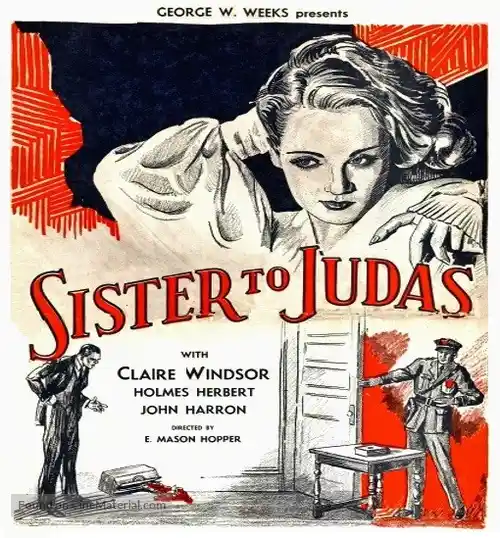
A definitive 6.1/10 rating for a film that redefined the boundaries of cult cinema. Sister to Judas remains a cornerstone of transgressive art.
If you have a soft spot for dusty, forgotten silent dramas where people make incredibly bad life choices in the first five minutes, Sister to Judas might be your jam. But if you hate slow pacing and plots held together by wet cardboard, please steer clear. 🎬
It starts with a writer saving a girl from jumping off a bridge, which is the most classic "meet cute" of the 1920s. Naturally, instead of calling a doctor or a therapist, they just get married.
Honestly, the speed at which they go from "please don't jump" to "I do" is hilariously fast. It makes Why Get Married? look like a realistic, slow-burn romance.
Claire Windsor plays the desperate girl, and she has this amazing way of looking sad. She just stares at the upper right corner of the screen like she's trying to remember if she left the stove on back at her apartment. 🤐
John Harron is the writer, and his hair is incredibly perfect throughout the entire ordeal. Seriously, not a single strand moves even when he's dragging her away from the edge of the river.
Then the "roadblocks" show up. By roadblocks, I mean a bunch of cartoonish family secrets that could be solved by a simple five-minute conversation.
There is this one scene where a character played by Wilfred Lucas just stands in the doorway for what feels like three minutes. He doesn't move. He just glares.
I actually wrote down in my notes: "Is this guy frozen?" But then he blinks, very slowly, and you realize the director just forgot to yell cut.
It reminded me a bit of the awkward staging in The Foolish Age, where people just stand around waiting for their turn to react. It's that classic early cinema clunkiness that I secretly love.
The film has this very uneven rhythm where absolutely nothing happens for twenty minutes, and then everything happens in a chaotic three-minute rush. The writing by Watkins E. Wright is pretty melodramatic, but you can tell they were trying to say something about trust.
There's also a weirdly specific moment where a maid drops a teacup and the camera zooms in on the broken pieces for no reason. I kept waiting for the teacup to be a major plot point, like maybe it was poisoned. It wasn't.
If you like finding these weird, unpolished gems from the silent era, it is a fun watch. Just don't expect a masterpiece like Nothing But the Truth.
It's just a silly, slightly creaky relic that is best enjoyed on a rainy Sunday afternoon when you have nothing better to do. 🌧️
IMDb 6.7
1915
Community
Log in to comment.