DbcultAccessing Vault...
6.7/10
Senior Film Conservator
A definitive 6.7/10 rating for a film that redefined the boundaries of cult cinema. The Lily and the Rose remains a cornerstone of transgressive art.
The Lily and the Rose arrives like a frostbitten love letter from 1915—its envelope brittle, handwriting spidery, yet every syllable throbs with bruised ardor. D.W. Griffith, still drunk on Birth triumphs, tosses Lillian Gish into a melodrama that feels, at times, closer to Gothic chamber poem than potboiler. Forget the paper-doll plots clogging nickelodeons that year; this is celluloid lieder, each intertitle a cracked lute string.
Visually, the picture hoards chiaroscuro like a miser. Cinematographer Billy Bitzer smuggles Rembrandt into the tenement parlor where Mary first tastes abandonment: a single kerosene lamp halos her pregnant silhouette while Jack’s suitcase yawns like a mouth ready to swallow whole decades. Watch how the camera lingers on the suitcase’s brass latch—three beats too long—until the object becomes predator, not accessory.
Performance calibration here is microtonal. Gish fractures her established ingénue template; she starts with fluttery bird-girl motions, but once betrayal calcifies, her shoulders square into Puritan granite. In the divorce-office scene she never blinks—an audacious choice in close-up heavy enough to count eyelashes. The tear that finally escapes travels a full inch before gravity claims it; on the silent screen that droplet is epic, a Niagara of interior monologue.
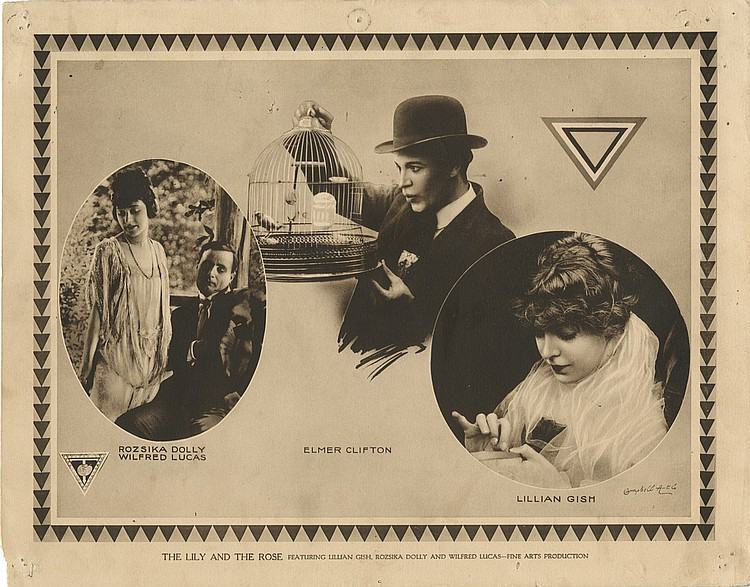
Wilfred Lucas’s Jack, meanwhile, exudes the affable cruelty of a summer camp counselor: muscles memorized from college touchdowns, moral imagination of a doorknob. His infatuation with Rose is rendered through match-cuts—Jack’s gaze at Mary’s plain calico dress smash-cuts to Rose’s sequined garter snapping like a shark bite. The montage feels almost Soviet in its dialectical punch, yet Griffith softens it with seaside dissolves that taste of salt and suntan, as if warning us that decadence always carries oceanic loneliness in its hip pocket.
One could argue the film’s midpoint pivot—from marital fracture to bohemian seaside bacchanal—owes a psychic debt to Tolstoy’s 1914 adaptation, yet Griffith refuses the Russian snow-blown fatalism. He plants the American DNA of second chances, a Protestant promise that even after the grave’s final comma, the next sentence may begin with resurrection.
Rose, essayed by Rosie Dolly of the contortionist Dolly Sisters, is a serpentine marvel. She enters astride a papier-mâché moon in a cabaret number titled Midnight on the Riviera, her body a question mark that silences every rattle of popcorn boxes. But Griffith refuses to caricature her as harlot-witch; in private moments she lounges in Jack’s shirts, cigarette glowing like a captured firefly, and admits she’s “allergic to the word wife.” The line—delivered in an intertitle bordered by art-nouveau lilies—feels proto-feminist, a pre-Flapper yawp against caged domesticity.
Yet the film’s ethical fulcrum tilts toward Allison Edwards, the neighbor whose pince-nez and stammer mask volcanic patience. Played by Elmer Clifton with a hush that anticipates Bergman’s repressed clerics, Allison writes his novel in the margins of Mary’s grief, each keystroke a quiet promise. His final proposal—performed under that snowing crabapple—avoids triumphalism; instead, he offers a book whose flyleaf reads: “For Mary, whose story taught mine how to breathe.” Rarely has marriage been framed as literary collaboration rather than patriarchal acquisition.
Technically, the picture flaunts innovations that would make even Pathé’s serial magicians envious. A proto-tracking shot glides along the Atlantic boardwalk, absorbing carousel music and brine; the camera mounts a makeshift dolly on roller-skate wheels, predating German street-films by half a decade. Meanwhile, a double-exposure dream shows Jack’s corpse superimposed over Rose’s jitterbugging legs—an effect achieved by running the negative backward through a hand-cranked projector, the kind of DIY witchcraft that reminds you cinema was once alchemy, not algorithm.
Griffith’s regular stable of bit players—Loyola O’Connor as the flinty landlady, Cora Drew as the cigarette girl—populate scenes with Dickensian density. Notice how the landlady’s parrot screeches “serves you right” during Jack’s first slap at Mary; the bird’s squawk, intertitle-carded in garish red font, is the moral Greek chorus prefiguring his seaward plummet.
Some scholars dismiss the suicide as moralistic comeuppance, yet the staging resists easy sermon. Jack’s roadster hurtles off a cliff whose rocks are painted papier-mâché, but Bitzer under-cranked the shot so the fall feels eternal, a Muybridge study in regret. The aftermath—surf sucking at chassis, gulls jeering—evokes less divine wrath than cosmic indifference, a visual premonition of Euripidean fatalism.
Gender politics oscillate between progress and penance. Mary’s final forgiveness at the coffin reads as Christian virtue, yet Gish plays it with eyes wide in terror, as if absolution is a cliff she’s forced to leap from. The film neither condemns Rose nor sanctifies Mary; both orbit the same patriarchal sun, burning or flourishing according to proximity. In 1915, such moral ambivalence was dynamite wrapped in lace.
Compare this nuance to the narrative sadism of The Pines of Lorey, where fallen women are dragged through penitential muck, or the comic recuperation in What Happened to Jones. Griffith’s film lands somewhere between, a purgatorial beach where sinners sunbathe beside saints, all equally likely to drown.
The score, now lost, survives only in cue sheets: “Hearts and Flowers” during marital rapture, Debussy’s Clair de Lune rearranged for solo harmonium during the seaside tryst. Contemporary reviewers complained the juxtaposition of highbrow French impressionism with lowbrow strip-club shimmer bordered on sacrilege—exactly the friction that makes the film pulse a century later.
Restoration efforts remain patchwork; the third reel, scarred by nitrate bloom, flickers like a candle in migraine. Yet the imperfections amplify authenticity—every scratch a scar, every missing frame a cavity where audiences must insert their own anguish. In an age of 4K sterility, such wounds feel perversely alive.
Why does The Lily and the Rose matter now? Because we still live inside Jack’s convertible, speeding toward cliffs of distraction—TikTok sirens, crypto Rose’s beckoning. The film whispers that the antidote is not blind fidelity but attentive witness: Allison’s patient authorship, Mary’s resilient rereading of her own narrative. Their final union is less romantic closure than collaborative editing, two editors splicing trauma into testimony.
Box office tallies were modest—Variety reported “a tidy but not staggering” profit—yet the picture haunted Griffith. In private letters he called it “my little seaside penance,” admitting he identified with Jack’s self-immolation. Perhaps the director sensed that every close-up of Gish’s tear was also an indictment of his own wandering lens, his own appetite for fresh faces.
Modern viewers allergic to melodrama may scoff, but scoffing is too facile. Strip away the quaint intertitles and what remains is a study in attention economics: who gets seen, who gets abandoned, who gets rewritten. Swap parlors for open-plan lofts, cabarets for OnlyFans, and the emotional circuitry hums identical voltage.
So seek it out—on rickety YouTube uploads, on 16 mm reels at cinematheques where projectionists wear cotton gloves. Watch how the iris-in on Mary’s final smile contracts like a diaphragm learning to breathe again. Feel the sea-salt ghost that drifts from the screen, salting your own cheeks. Then ask yourself: am I Jack, Rose, Mary, Allison—or some flickering composite, forever negotiating the flicker between lily-white ideal and rose-red appetite?
In that self-interrogation lies the film’s resurrection. Critics once labeled it minor Griffith, a trifle between epics. Yet time, the ultimate archivist, has elevated it to something starker: a mirror whose silvering has corroded just enough to show our 21st-century faces beneath the 1915 masks. And the reflection, like all honest reflections, refuses to flatter.
IMDb 7
1919
Community
Log in to comment.