DbcultAccessing Vault...
4.2/10
Senior Film Conservator
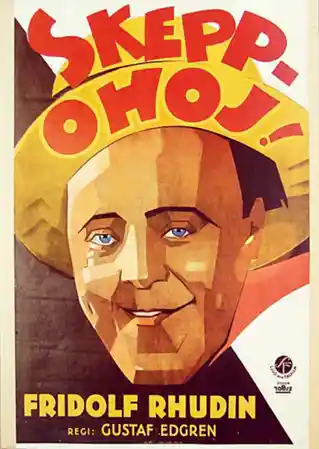
A definitive 4.2/10 rating for a film that redefined the boundaries of cult cinema. Skepp ohoj! remains a cornerstone of transgressive art.
If you have a rainy Sunday and a weirdly specific interest in how people in 1930s Sweden laughed at boats, then Skepp ohoj! is probably your best bet. It’s not a masterpiece, but it’s got this dusty charm that’s hard to ignore.
I think most people today would find it incredibly slow, but if you like seeing how early sound cinema tried to figure itself out, it’s actually kind of fascinating. 🚢
The whole thing centers on Fridolf Svensson, played by Fridolf Rhudin. He’s a journalist for a tiny newspaper called Allehanda in the town of Kungshamn.
Rhudin was a massive star back then, and you can see why. He has this incredibly elastic face that looks like it's made of rubber, and he doesn't even need to speak to be funny.
The plot is... well, it’s barely there. It’s more like a series of sketches tied together by the fact that everyone is near the water.
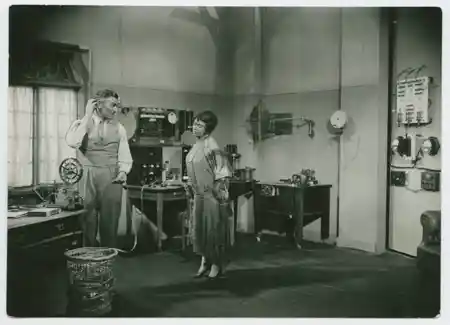
There is a scene early on in the newspaper office that I really liked. It’s cluttered and feels lived-in, not like a movie set.
Fridolf is trying to be this serious reporter, but he’s just too clumsy. He reminds me a bit of the characters in Soft Shoes, where the physical comedy is the whole point.
One thing that hit me was the sound. Since this was 1931, the audio is pretty rough.
There’s this constant hiss in the background that makes it feel like you’re listening to the movie through a seashell. It adds to the atmosphere, I guess? 🐚
The dialogue is fast and snappy, even if I didn't catch every single joke. It has that high-energy rhythm you find in A Damsel in Distress, where nobody ever seems to stop talking.
There’s a bit with a boat—hence the title—where things go predictably wrong. It’s classic slapstick.
I noticed one extra in the background of a harbor scene who just stands there staring at the camera for a solid five seconds. He looks completely lost, like he wandered in from a different century.
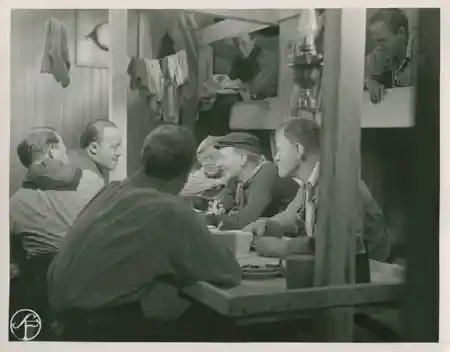
The movie is full of these small, unpolished moments. Sometimes the camera lingers on a building for no reason, or a conversation goes on way past the punchline.
It doesn't feel manufactured. It feels like a group of people in 1931 just went out and made a movie because they had a boat and a famous comedian.
"It’s the kind of film where a character falling into the water is the height of comedy, and honestly, sometimes that's all you need."
The supporting cast is okay, but they are mostly there to react to Fridolf. Weyler Hildebrand is in this too, and he always brings a certain energy to these old Sweedsh films.
If you've seen Ham and Eggs at the Front, you know the kind of broad, loud humor I'm talking about. It's not subtle. At all.
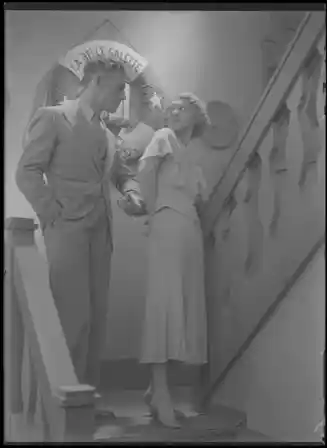
I did find myself checking my phone a few times during the middle stretch. The pacing is a bit of a mess.
It feels like they had forty minutes of material and had to stretch it to feature length. There’s a lot of walking and looking at the sea. 🌊
But then Rhudin will do something weird with his eyebrows and I'm back in. He really carries the whole weight of the film on his shoulders.
That's a hard question. Is it "good" compared to modern stuff? No, not really.
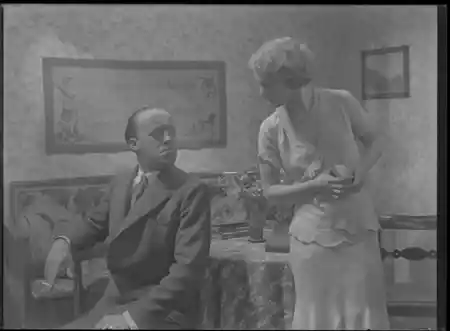
But is it a fun relic? Absolutely. It’s like finding an old postcard in an attic. You don't really care about the person who wrote it, but the picture is cool to look at.
If you're into the history of comedy, you should watch it just to see a master of the craft like Rhudin. He’s got that same "clumsy but sweet" vibe you see in The Gay Buckaroo.
The ending is pretty abrupt. It just sort of... stops. No big emotional wrap-up, just a quick resolution and then the credits.
I kind of respect that. They knew they were making a light comedy, and they didn't try to make it anything more than that.
Anyway, I'm glad I watched it. I probably won't ever watch it again, but I'll remember the way the light hit the water in Kungshamn. ⚓
Final thought: If you hate black and white movies where people yell a lot, stay far away. Everyone else might find a little joy here.
IMDb 5.1
1934
Community
Log in to comment.