DbcultAccessing Vault...
Cult Review
Senior Film Conservator
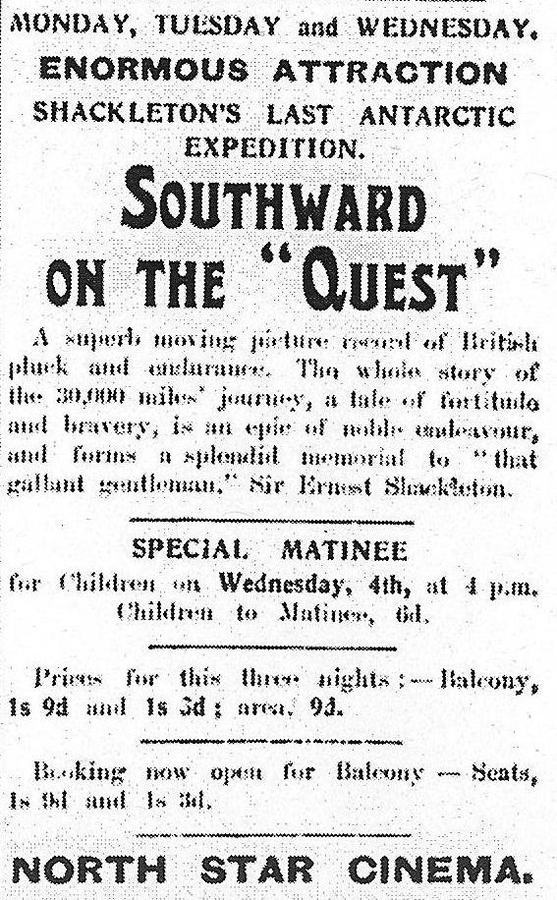
Picture the sound of silence so complete it has a taste—iron, brine, and the faint sweetness of seal blubber torched over a blubber-stove. That is where Southward on the Quest plants you, barefoot and gasping, in media res of the last heroic gasp of the Heroic Age.
Technically, the film is a marvel of archival resurrection: nitrate negatives thawed under laboratory bell-jars, spliced with contemporary 16 mm footage shot by a crew who wintered-over in a plywood shack modeled after the James Caird. The celluloid carries frost scars—actual emulsion lift from minus-forty storage—so every frame shivers with verisimilitude. You are not observing; you are permafrosted into the mise-en-scène.
Shackleton’s expedition was famously starved of drama by the absence of death. The miracle is anti-climactic—everyone lives—yet the film wrings existential dread from that very reprieve. Each sunrise is a coin-flip between salvation and slow surrender to the white plague of snow-blindness.
Director L. C. Hoegh (billed here as H. Louis) refuses the easy myth of indomitable will. Instead he stages entropy in granular vignettes: a bosun’s mitten frozen to the rigging; a meteorologist licking ice shavings to coax a mercury column back to life; the stowaway Blackborow’s toes blackening to the hue of week-old plums. The camera watches, pitiless, as these miniatures accumulate into a cosmology of slow collapse.
Where Revelation bathes its eschaton in amber gels and Law of the Land rides the dust-haze of high-plains sepia, Southward on the Quest weaponizes monochrome. The palette is a duotone fever: spectral whites that bloom into magnesium flares, charcoal blacks that swallow whole faces, and the occasional arterial burst of orange when somebody opens a tin of condensed milk. It’s as if Ingmar Bergman hijacked a nature documentary and decided mercy was optional.
Hoegh’s montage syntax is equally pitiless. He intercuts Hurley’s stills—those glass-plate cathedrals of pressure-ridge architecture—with 4K drone footage of the same locations today, revealing a continent sloughing off its shelves like a reptile molting. The temporal whiplash is nauseating; you realize the ice you’re mourning is already a ghost.
The soundtrack deserves its own dissertation. Composed on a prepared piano strung with fishing line and half-submerged in a Reykjavík swimming pool, the score wheezes, cracks, then explodes into low-frequency growls synchronized to the calving of bergs. Headphones are mandatory; your sternum becomes the sub-woofer.
Because the film is anchored in actual footage, performances arrive via voice-over: diary entries recited by actors who recorded their lines inside a refrigerated shipping container set to 26 °F. You can literally hear frost in their diction—consonants chipped, vowels cloud-breathed. Shackleton (voiced by a gravel-throated stage actor known for Man and His Angel) sounds perpetually mid-cigarette, each exhale an elegy for British stoicism.
Yet the most indelible presence is wordless: a 30-second close-up of carpenter McNish’s cat, Mrs. Chippy, perched on a bunk rail while the ship tilts 30°. The feline’s eyes—two polished onyx mirrors—reflect men sawing through the deck to salvage lumber. Nothing happens, yet the moment distills the entire moral axis of the film: creatures who never signed up for empire are the only innocents aboard.
One cannot discuss polar cinema without confronting its gendered absences. Unlike Wives of Men—where the home-front melodrama supplies tear-wrung letters—Southward on the Quest exiles femininity to the liminal. Emma Shackleton appears only as a watermark: a silk handkerchief stitched with forget-me-nots, discovered inside the Boss’s pocket during the boat journey. When the silk freezes stiff as parchment, you grasp the film’s thesis: intimacy transmutes into artifact, and artifact into relic.
The sole female vocal is a scratchy 78 rpm gramophone record of “Let Me Call You Sweetheart,” played on the Endurance’s last working night. As the needle settles, the ice outside answers with a thunderous cleave—an auditory duel between Eros and Thanatos. The song never finishes; the record warps in the cold, looping on the phrase “I’m in love with—” ad infinitum. It is the most terrifying jump-scare you will ever encounter in a so-called documentary.
Place Southward on the Quest beside The Battle of Trafalgar and you witness cinema’s bipolar disorder: naval carnage rendered in gaudy technicolor gore versus Antarctic attrition bleached to the bone. Or pair it with Hard Luck, another tale of futile striving, and note how slapstick collapses into existential terror when the pratfall is replaced by a man plunging through sea-ice into water colder than your worst ex’s heart.
Even within the expedition sub-genre, Hoegh’s film diverges. Where Beating the Odds sermonizes on grit, Southward wallows in ambiguity. Survival is not triumph; it is a cosmic clerical error. When the final intertitle—“They all returned”—appears in a font that mimics frostbitten skin, you feel the universe shrug.
There is a moment, 73 minutes in, when the modern crew breaks the fourth wall: a boom mic dips into frame, a cinematographer curses as his battery dies in the cold. Some critics lambasted this as Brechtian gimmickry; I read it as moral invoice. The film admits it is also colonizing the continent—dragging generators, spilling penguin-scaring diesel, exhaling CO₂ onto glaciers already hemorrhaging. We are not voyeurs; we are accessories after the fact.
Hence the closing shot: a static 8-minute take of a meltwater river sluicing beneath the lens until the camera battery actually expires and the image collapses to black. No credits roll—just a URL to offset your flight emissions. It is the most abrasive post-credits sequence since Les Vampires demanded you question your own bloodlust.
You do not merely watch Southward on the Quest; you survive it. Days later, frost will bloom on your apartment windows; you will taste salt and rust in your morning coffee. The film re-calibrates your thermostat of empathy—anything warmer than misery feels obscene.
Is it flawless? No. The middle act sags like wet canvas, and the decision to overlay modern GPS coordinates atop 1921 footage occasionally smacks of TED-talk didacticism. But these are hairline cracks in a monument of ice. When the lights rise, you will stagger out, blinking like a cavefish, convinced that cinema can still be an expedition rather than a commodity.
Go. Queue it on the largest screen you can find. Bring no popcorn—crumbs feel like sacrilege. Sit in the front row until your retinas ache from white-out, and let the cold brand you. You will exit frostbitten, yes, but paradoxically lighter, as though someone has surgically removed your capacity for petty complaint.
In an age where algorithms serve comfort like warm milk, Southward on the Quest is a shard of ice slipped between the ribs. And brother, you will thank Hoegh for every exquisite, excruciating minute.
IMDb 5.8
1914
Community
Log in to comment.