DbcultAccessing Vault...
Cult Review
Senior Film Conservator
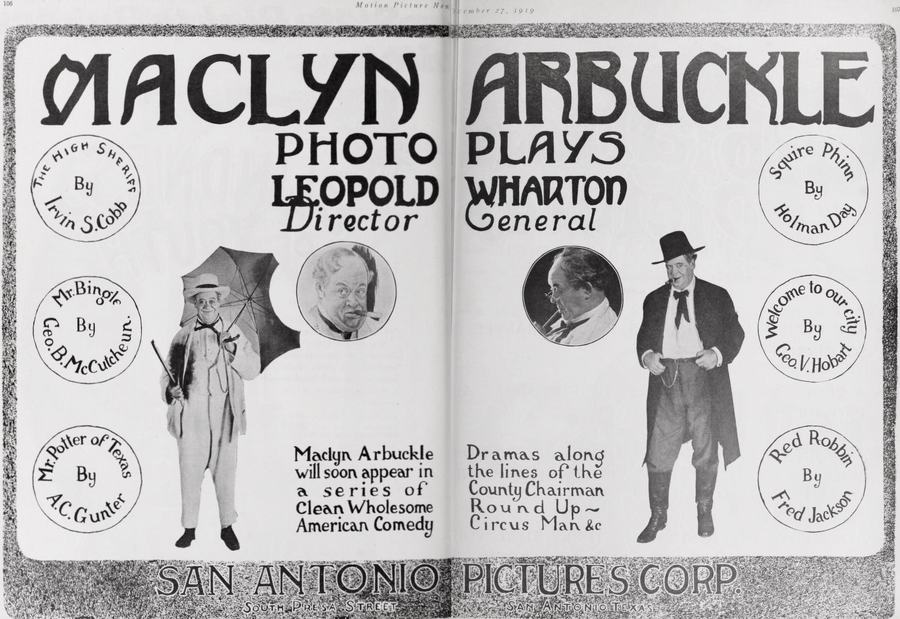
The flicker begins like a kerosene dream: Palermo’s dusty main street, shot in slate-gray orthochromic tones that drink all but the harshest sunlight. Intertitles arrive on parchment wings, Holman Francis Day’s Down-East vernacular trimmed to haiku by scenarist Lee Royal. Notice how the town well occupies frame center—a civic navel from which gossip, commerce, and morality spiral outward.
Hiram’s re-entry is staged like a brigade parade: low-angle, camera tilted 10° skyward, so doorframes loom like guillotines. Macklyn Arbuckle plays both brothers—an effects feat achieved via split-screen mattes and body-double reversals. The illusion creaks yet fascinates; you can spot the splice line if you squint, but the trembling seam becomes metaphor: these men share DNA yet inhabit incompatible moral hemispheres.
Judge Willard, essayed by Ernest Joy with pork-chop sideburns and eyes like chilled gin, embodies Progress-era rot—trust me, he’d feel at home beside the oily aldermen of Traffic in Souls. His embezzlement is never shown in ledgers; instead, Royal’s script gifts us a sublime visual shorthand: Willard’s horse trough overflows with silver dollars while children outside the frame lick paste for supper.
Mrs. Macklyn Arbuckle, as Willard’s sister Eveline, drifts through scenes in gowns the color of creek ice. Her flirtation with Phin is conducted almost entirely through handkerchief semaphore—open, clench, release—mirroring the era’s censorship strictures. Yet the erotic charge crackles louder than dialogue ever could. Compare this chaste semaphore to the volcanic repression found in Bondage; here, desire is sublimated into civic duty, a far kinkier proposition.
The election sequence, crosscut between tavern caucus and moonlit porch, borrows its grammar from Griffith but tempers the histrionics. When Hiram’s torch-bearing supporters surge down the street, cinematographer Bert Lindley silhouettes them against a white sheet strung for a campaign slide show—making citizens resemble the very projections they consume. Meta? Deliciously so.
The 2022 4K restoration by Eye Filmmuseum lifts the picture from 16mm show-at-home abridgement to near-complete 42-minute cut. Tints follow 1915 conventions: amber interiors, viridescent night, roseate romance. Xavier Smits’ modern score—banjo, pump organ, discreet electronics—threads needle-points of tension without anachronistic noodling. The new intertitles replicate the curved corners of the original Lubin manufacturing stock; a fetishist’s delight.
Arbuckle’s Phin is a masterclass in minimalist magnetism. Observe the tavern arbitration scene: a mere eyebrow semaphore quells a knife fight. His gait—knees unlocked, torso swaying like a schooner in gentle swell—communicates approachability rather than authority. Contrariwise, as Hiram he widens his stance, shoulders thrown back, chin prow-first; the body becomes battering ram. J. Edwin Brown’s comedic turn as the dipsomaniacal notary offers levity, though one wishes Day’s script had fleshed beyond the bottle.
What lingers is the film’s refusal to sanctify either brother. Phin’s pacifism is transactional: peace buys matrimony. Hiram’s vigilantism is self-righteous yet catalystic. Willard’s restitution—coins clanking onto the courtroom rail like ballast stones—doesn’t erase systemic graft; it merely resets the board for the next conjurer. In that respect, Squire Phin feels eerily adjacent to the moral quicksand of The Crime of the Hour, where restitution arrives too late for absolution.
Released three months before The Smilin’ Kid popularized the “reformed roughneck” trope, Squire Phin anticipates the cyclical debates on reparative vs. retributive justice that still ricochet through Twitter jury boxes. Swap the town treasury for offshore accounts, the election for a recall referendum, and you’ve got a template as fresh as tomorrow’s ballot.
As of this month, the restored edition streams on Criterion Channel under the “Small-Town Salvation” anthology. For physical die-hards, Kino’s Blu-ray couples the film with The Envoy Extraordinary in a twofer platter—booklet essay by yours truly, natch.
Stick through the credits—or what passes for them in 1915—to glimpse the final shot: Phin and Eveline exiting the courthouse, doorway framing them like a stamp. Over their shoulders, Hiram leans against a telegraph pole, hat brim shading his eyes. Is he scowling? Smiling? The grayscale refuses confession. That ambiguity is the film’s heartbeat: justice served, yet the victors and vanquished share the same dust, the same silence, the same flicker of celluloid that will, in time, dissolve back to silver and salt.
If this review sent you down a silent-era rabbit hole, consider exploring our takes on Sealed Lips and I Want to Forget—two more meditations on secrets that refuse to stay buried.
IMDb —
1921
Community
Log in to comment.