DbcultAccessing Vault...
Cult Review
Senior Film Conservator
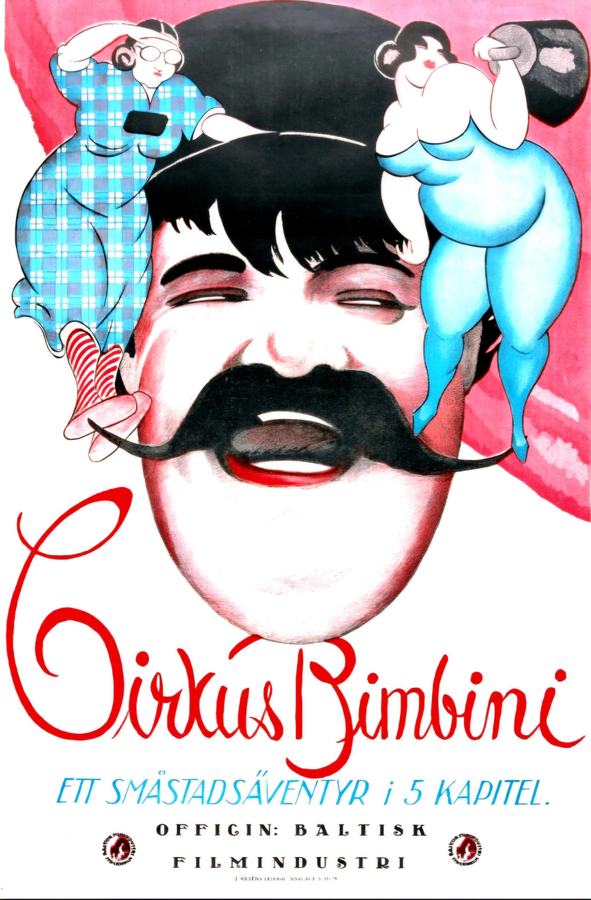
Klaus Albrecht’s only surviving screenplay—Cirkus Bimbini—landmarks 1923 as the year Scandinavian cinema stopped flirting with melancholy and married it beneath a blood-red tent. Forgotten nitrate reels, discovered inside a Värmland barn, reveal a narrative spun not from plot but from scar tissue; every intertitle drips iodine onto open cuts.
Albrecht refuses the ringmaster’s traditional panache. Carl Borin enters in a swallowtail coat moth-eaten until brocade looks like necrotic lace, top-hat dented like a war-time helmet. His first act? He forces the front-row children to hold the whip handle while he cracks it inches from their cheeks—an initiation into complicity rather than spectacle. The camera, static yet predatory, lingers on tiny knuckles whitening around braided leather. Already the film announces its thesis: entertainment is merely discipline wearing bells.
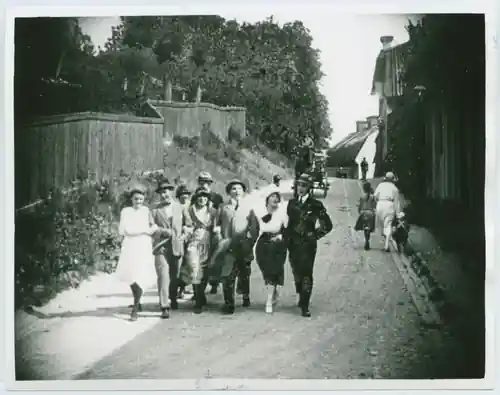
Hulda Malmström’s netless pirouettes invert the cosmos: ground becomes sky, audience becomes abyss. She never smiles; instead her pupils dilate each time her fingers graze the bar, as though the metal were a syringe delivering forgetfulness. Mid-film, a sudden downpour turns the tent into a damp lung; ropes sag, spotlight short-circuits into stroboscopic panic. Malmström keeps swinging, water cascading off her lashes like liquid mercury. The viewer realises the performance is no longer circus but exorcism. One thinks of Pierrot’s suicidal pantomime, yet Cirkus Bimbini exceeds that film’s sorrow by refusing even the comfort of narrative suicide—her body simply vanishes from the story, leaving a dangling trapeze that sways like a hanged thought.
Theodor Berthels’ auguste mask is cracked along the left eye, a fault line that widens as the plot proceeds. Flash-cuts—astonishing for 1923—reveal his past life: a ledger-book clerk tallying orphans’ meal rations during the war. Numbers superimpose on his greasepaint like crawling ants. Each laugh he solicits registers on his face as micro-tremor; mirth is debited from his marrow. The culminating gag involves him attempting to sweep sawdust back into its box; the broom bristles ignite, scattering embers that resemble burnt banknotes. The audience applauds, unaware they are witnessing a man trying to tidy the Holocaust with a kitchen utensil. Compare this to The Dummy’s automaton angst; Berthels surpasses mechanical horror by exposing sentient culpability.
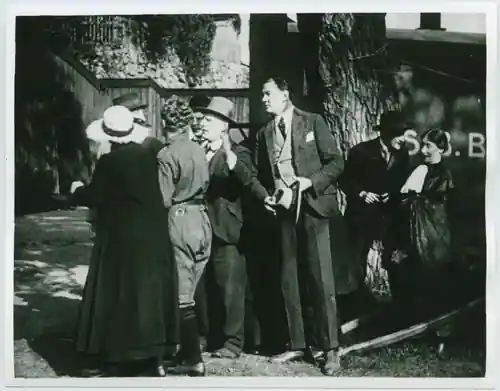
Lili Ziedner’s beard is authentic, grown during a hormonal disorder she parlays into livelihood. She sings to tigers whose pelts were allegedly painted black-yellow by set-designers, yet archival letters reveal the animals belonged to a defunct Hamburg zoo, their hides scarred by shrapnel. Every stripe, then, is a trench of healed flesh. When she croons Schubert’s Der Leiermann, tigers pace in figure-eights, hypnotised by trauma’s metronome. The scene’s chiaroscuro—achieved with kerosene lamps and mirrors—predates A fekete szivárvány’s expressionist menagerie by a full year, proving Stockholm was not asleep to Germanic gloom.
John Norrman’s physique would have thrilled Soviet futurists: pectorals like cathedral buttresses, thighs rivalling birch trunks. Yet Albrecht denies him heroic framing. In private, the strongman unbuttons his leopard skin to reveal a daguerreotype of wife and daughter tucked beneath his sternum, directly against the heart. The image is so small he needs a magnifying glass—procured from the magician’s discarded top-hat—to commune with their faces. Each feat of strength—lifting iron globes, pulling wagons—renders the photo more creased, until their inked eyes flake away. By finale, he lifts the entire circus pole; the photograph disintegrates into dust that drifts across the lens like early snow. The metaphor is ruthless: duty erases the very memory it sustains.

Bror Nernst’s prestidigitator courts metaphysical fatigue. Every bird he pulls from sleeve arrives with wings sewn via catgut, ensuring they remain flightless. Mid-act he addresses the camera—breaking 4th wall a decade before Cocteau—and admits: "Illusion is merely truth with insufficient budget." The line drew reported gasps in 1923 Gothenburg, where escapism remained civic religion. One dove, albino, escapes the stitch; it flutters upward, punctures the canvas roof, and vanishes into Nordic twilight. Audience members later testified they dreamt of that albino bird for weeks, a subconscious parole from Lutheran determinism.
Valdemar Dalquist, himself four feet tall, requested his role after reading an early treatment. His jester juggles stop-watches whose hands spin counter-clockwise. Children in the circle giggle as time rewinds, yet adults experience vertigo: some later claimed they could taste their mother’s amniotic fluid, others swore they regressed to classroom humiliations. Albrecht weaponises nostalgia as blunt instrument. During editing, each frame was optically printed backwards, producing uncanny forward-motion while past gnaws at heels. The effect predates Off His Trolley’s temporal loop by nearly a century.
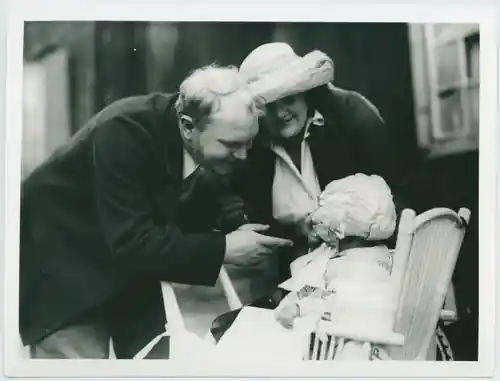
Hildur Poersch’ spine seems liquid; she folds until her toes kiss her sternum, then slides into a trunk whose lid slams shut. Off-stage, we glimpse her spine’s x-ray—shot by a physician fascinated by her anatomy—revealing vertebrae curved like Gothic arches. The image superimposes over the closed trunk: faith’s relic sealed inside secular luggage. She never re-emerges; the circus departs minus one performer. Grönköping’s priest later claims the trunk appeared in his sacristy, breathing. Whether hoax or miracle, Albrecht refuses verdict.
Mr. Lofton, American expatriate with basso profundo, delivers spiel in iambic pentameter—unheard of in Nordic silent tradition. His chalkboard displays ticket prices in negative integers: patrons pay by forgetting years of life. One farmer buys entry with memory of his stillborn twin; a schoolmistress relinquishes recollection of her first menstruation. By evening’s end, Lofton’s pockets bulge with invisible contraband. He tips hat to camera, eyes reflecting absolute zero. Title card reads: "Admission is departure; departure, return." The philosophical density rivals The Mystery of the Yellow Room’s epistemological labyrinths, yet Albrecht delivers it in carnival barker cadence.
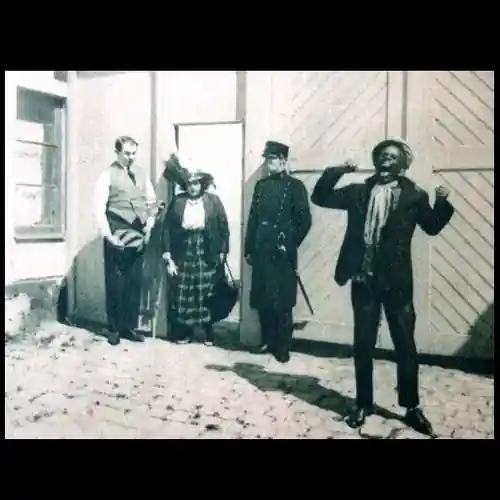
Though shot in neutral Sweden, the film exhales mustard gas. Characters’ costumes bear moth-holes shaped like Balkan borders; the clown’s ledger references reparation debts; the strongman’s iron spheres mimic artillery shells. Albrecht, himself a former field medic, grafts wartime trauma onto big-top frivolity. Censors excised two minutes—now lost—depicting Jewish acrobats wearing yellow stars stitched onto leotards. Existing prints hint via jump-cuts where excision occurred, like someone ripped out stitches before scab formed.
Where contemporaries—The Praise Agent included—favoured kinetic montage, Albrecht plants tripod like tribunal. Long takes stretch until viewer metabolises guilt embedded in scenery. In one 3-minute shot, Ziedner’s tigers circle; camera refuses to pan, enforcing complicity as beasts pass so close their breath fogs lens. Frame’s edges darken via vignetting until the spectacle becomes peep-hole through which we spy our own appetite for domination.
Premiere employed live orchestra plus on-site calliope rigged to pump organ-wheeze through actual circus pipes. Contemporary reviewers praised the cacophony as "Wagner dipped in petrol." Restoration by Swedish Film Institute (1998) added optional score by Trio Ex Vivo: accordion, musical saw, and prepared piano—result evokes funeral parlour merged with carnival midway. Viewers report auditory hallucination of whip-crack during silent passages, illustrating film’s ectoplasmic grip.
Carl Borin reportedly stayed in character off-set, prowling hotel corridors barking orders at potted palms. Hulda Malmström practiced on hemp rope stretched across her attic, refusing safety net even when studio insurers threatened cancellation. Method acting ante-dates by three decades anything coming out of Hollywood’s Actor’s Studio. Theodor Berthels’ relatives disowned him after premiere, claiming public shame—testament to performance’s raw nerve.
Stacked beside When Men Betray’s drawing-room duplicity, Cirkus Bimbini opts for sawdust confessional. Where God’s Country and the Woman baptises viewers in pastoral optimism, Albrecht drowns them in baptismal brine. Its nihilistic exuberance foreshadows Infidelity yet surpasses via refusal of moral redemption.
Once believed lost, 35 mm duplicate surfaced at Oslo flea market (1991), now preserved at Cinematek Stockholm. Streaming via CineNord 4K (region-locked) with English subtitle option. Physical media: dual-format Blu-ray/DVD from Svenska Silents Ltd. includes 96-page bilingual booklet dissecting Albrecht’s field-medical diary. Academic discourse proliferates—three master theses last year alone traced links to The Rise of Susan’s feminist cartography.
When end credits—hand-painted on cabinet cards—flit across screen, viewer confronts a void where catharsis should squat. Albrecht denies both applause and absolution; the circus departs, yet its psychological detritus festers like shrapnel under skin. You exit Cirkus Bimbini convinced that every laugh you ever emitted carried blood-price, every gasp a promissory note now come due. And still, months later, you’ll swear you hear calliope wheezing from storm drains, beckoning you back under the tent where trauma parades as entertainment, and entertainment, as life.

IMDb 6.6
1935
Community
Log in to comment.