DbcultAccessing Vault...
5/10
Senior Film Conservator
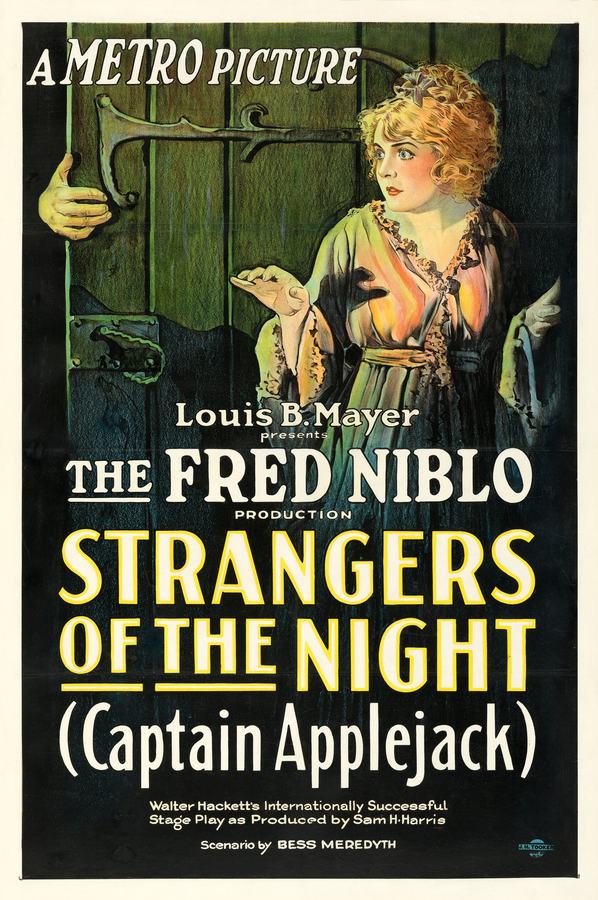
A definitive 5/10 rating for a film that redefined the boundaries of cult cinema. Strangers of the Night remains a cornerstone of transgressive art.
Stepping back into the cinematic landscape of the early 1920s, one often anticipates a certain quaintness, a gentle charm characteristic of the silent era. Yet, every so often, a film emerges from the archives that defies such simplistic categorization, presenting itself as a vibrant, multifaceted jewel. Such is the case with Strangers of the Night (slug: strangers-of-the-night), a compelling melange of satire, mystery, and pulsating action that manages to feel both distinctly of its time and remarkably timeless. It’s a testament to the enduring power of clever storytelling and compelling performances, proving that even without spoken dialogue, narratives can resonate with profound depth and exhilarating momentum.
At its core, Strangers of the Night introduces us to Ambrose Applejohn, an aristocrat whose existence is as comfortably padded as it is soul-crushingly tedious. He epitomizes the dilettante, a man of means whose greatest challenge is staving off the relentless ennui that gnaws at the edges of his privileged life. His yearning for excitement isn't a mere passing fancy; it's a deep-seated, almost existential hunger for anything that might inject a spark of vitality into his otherwise predictable routine. This longing sets the stage for a delightful, albeit dangerous, dramatic irony, as the universe, in its infinite wisdom, decides to grant his wish in the most unexpected and thrilling fashion.
The catalyst for this transformation arrives on a dark, clandestine night, personified by the enigmatic Russian thieves, Anna Valeska and her inscrutable partner, Borolsky. Their intrusion into Applejohn's stately mansion isn't just a simple act of burglary; it's an invasion of his very perception of reality. The film masterfully pivots from a character study of a bored aristocrat to a high-stakes cat-and-mouse game, infused with a sophisticated brand of humor that elevates it beyond a mere crime caper. The narrative, meticulously crafted by the collective genius of C. Gardner Sullivan, Renaud Hoffman, Walter C. Hackett, Lenore J. Coffee, and Bess Meredyth, unfolds with a precision that belies the apparent chaos of the plot. Their collaborative vision ensures that every twist and turn feels earned, every comedic beat lands with impact, and every moment of suspense tightens its grip on the viewer.

The success of any silent film hinges significantly on the expressive power of its cast, and Strangers of the Night is blessed with an ensemble that delivers in spades. Barbara La Marr, with her striking beauty and undeniable screen presence, imbues Anna Valeska with a captivating blend of danger and allure. Her portrayal transcends the stereotypical 'femme fatale,' presenting a character of complex motivations and a surprising depth that keeps the audience guessing. Her every gesture, every flicker of her eyes, conveys a wealth of unspoken emotion, a hallmark of truly great silent acting. One can almost see shades of the dramatic intensity found in a film like The Idol Dancer in her powerful, magnetic performance, though La Marr's character here possesses a sharper, more cynical edge.
Mathilde Brundage and Emily Fitzroy, veterans of the screen, provide excellent support, often serving as comedic foils or grounding elements amidst the escalating absurdity. Their nuanced performances, even in smaller roles, contribute significantly to the film's rich tapestry. Enid Bennett brings a delicate charm to her role, offering a contrast to La Marr's intensity. Otto Hoffman, a prolific character actor, delivers a performance that is both memorable and essential to the film's comedic and mysterious undertones. His ability to convey gravitas and vulnerability without uttering a single word is remarkable. The male leads, including Tom Ricketts, Matt Moore, and Robert McKim, navigate their roles with a deftness that allows the audience to fully invest in their plights and transformations. Moore, in particular, often brings a relatable everyman quality to his characters, which serves as a vital anchor in a story populated by more flamboyant personalities. The ensemble works in perfect synchronicity, each actor understanding their place within the grander narrative, much like the tightly knit cast in a suspenseful mystery like The Million Dollar Mystery, where every character's contribution is critical to unraveling the central enigma.
The directorial choices throughout Strangers of the Night are nothing short of inspired. The pacing is a masterclass in silent film construction, building tension incrementally, punctuating dramatic moments with bursts of action, and allowing comedic beats to breathe. The use of intertitles is particularly effective, not merely serving as dialogue placeholders but often injecting witty observations or advancing the plot with a narrative flourish. The cinematography, while perhaps not groundbreaking in the vein of a more experimental film, is expertly handled, utilizing shadows and light to enhance the pervasive sense of mystery and danger that permeates Applejohn's mansion. The framing of shots often emphasizes the isolation of characters or the grandeur of their surroundings, reinforcing thematic elements.
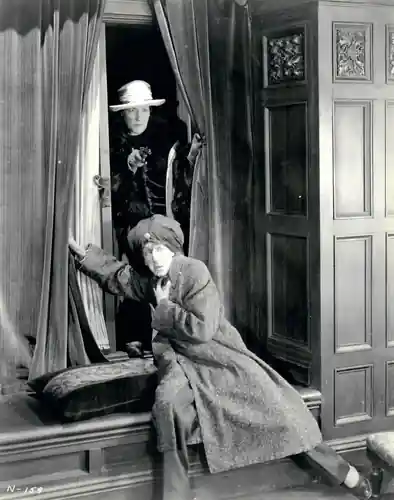
There’s a clear understanding of visual storytelling, a fundamental requirement for silent cinema. The camera angles are thoughtfully chosen, guiding the viewer's eye and conveying emotional states without the need for spoken exposition. The action sequences, though limited by the technology of the era, are staged with a dynamism that keeps the audience engaged, reminiscent of the thrilling escapades seen in films like Days of Daring or The Field of Honor, albeit with a more refined, almost theatrical, sensibility here. The film’s ability to blend these disparate elements – high-stakes action, subtle satire, and genuine mystery – into a cohesive and entertaining whole is a testament to the skill behind the camera.
Beyond its immediate narrative pleasures, Strangers of the Night delves into fascinating thematic territory. The most prominent is the biting satire directed at the indolence of the upper classes. Ambrose Applejohn’s desperate search for 'excitement' is a thinly veiled critique of a society so insulated by wealth that it loses touch with genuine human experience. His transformation, from a jaded aristocrat to an active participant in a thrilling, if dangerous, escapade, is both comedic and surprisingly poignant. This theme of social commentary, albeit wrapped in a different genre, echoes the critiques of societal structures found in films like The Food Gamblers, which tackled economic disparity, or even the more allegorical The Family Skeleton, which explored hidden truths beneath respectable facades.
The film also explores the intoxicating allure of danger and the blurring lines between identity and performance. Anna Valeska and Borolsky are not just thieves; they are performers, their criminal enterprise imbued with a theatricality that captivates Applejohn. This fascination with the 'other,' the dangerous and exotic, speaks to a deeper human desire for transgression and escape from the mundane. The mansion itself becomes a character, a gilded cage that transforms into a stage for a high-stakes drama, much like the confined settings in The Marriage Pit could become intense psychological battlegrounds. The intricate web of deception and mistaken identities adds layers of complexity, inviting the audience to question what is real and what is merely a carefully constructed illusion. The writers’ ability to weave these threads together without losing narrative clarity is truly commendable, creating a rich tapestry of meaning.
While perhaps not as widely known as some of its contemporaries, Strangers of the Night holds a significant place in the annals of silent cinema. It stands as a testament to the era's capacity for sophisticated genre blending and character development. The film’s continued resonance lies in its universal themes: the search for meaning, the thrill of the unknown, and the comedic potential of human foibles. It’s a reminder that even in an age without synchronized sound, filmmakers were crafting narratives that were emotionally resonant, intellectually stimulating, and thoroughly entertaining. One could argue its subtle exploration of character desire for more than the ordinary links it thematically, if not stylistically, to more introspective works of the period.
The meticulous craftsmanship, from the compelling screenplay to the nuanced performances and artful direction, ensures that this film remains a rewarding watch for both silent film aficionados and newcomers alike. It’s a vibrant piece of cinematic history that deserves to be rediscovered and celebrated, offering a delightful glimpse into a bygone era of storytelling that continues to charm and thrill. In an industry often focused on spectacle, Strangers of the Night reminds us of the enduring power of a well-told story, driven by compelling characters and a keen understanding of human nature. It’s a joyous ride through a mansion filled with secrets, laughter, and a surprising amount of heart, a true gem that shines brightly even a century later. Its ability to balance genuinely thrilling moments with a pervasive sense of dry wit makes it a unique entry in the period's output, preventing it from ever feeling dated. It’s a film that understands the power of a well-placed visual gag as much as it does the suspense of a quiet, creeping shadow. The collaborative writing team, a powerhouse of talent, clearly understood the intricate demands of silent storytelling, crafting a narrative that moves with a fluid grace, never allowing the viewer's attention to waver. Each scene builds upon the last, escalating the stakes and deepening the comedic potential, ensuring that Ambrose Applejohn's unexpected adventure is one we are fully invested in. This blend of precise narrative construction and dynamic visual execution solidifies Strangers of the Night as a truly remarkable cinematic achievement, a film that continues to speak volumes without uttering a single word.
IMDb 5.4
1936
Community
Log in to comment.