DbcultAccessing Vault...
5.6/10
Senior Film Conservator
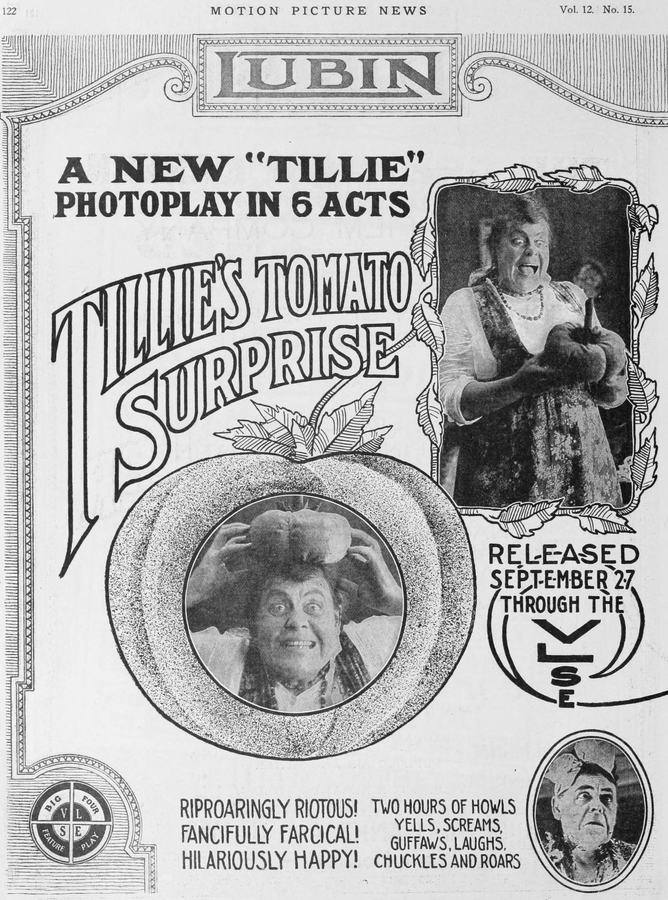
A definitive 5.6/10 rating for a film that redefined the boundaries of cult cinema. Tillie's Tomato Surprise remains a cornerstone of transgressive art.
Tillie’s Tomato Surprise is less a film than a ferment—an effervescent crock of contradictions that hisses at Victorian piety while ladling out Edwardian slapstick with gleeful abandon.
Released in the summer of 1914, this one-reel marvel feels like a folk tale that has tumbled through a banker’s ledger, landing smack inside a greenhouse where every tomato gleams like a usurer’s eyeball. Acton Davies’s script, compressed yet combustible, skewers the American obsession with sudden wealth while simultaneously luxuriating in the very opulence it satirizes—a juggling act that prefigures Sturges and even The Pit’s commodity-bedlam by nearly a decade.
Let’s talk inheritance cinema. Griffith gave us The Redemption of White Hawk—all noble savagery and blood titles—while European cousins like Het geheim van het slot arco preferred castle intrigue. Tillie barges into this lineage like a drunk cousin at a wake, kicking over candelabras and replacing them with tomato vines that sag under the weight of allegory.
Marie Dressler, already a seasoned trouper at 44, stomps through the frame with the gravitational pull of a small planet. Watch her shoulders: they precede her torso by half a beat, a kinetic promise that something—perhaps propriety—will be overturned. When she first fondles the telegram announcing the inheritance, her fingers curl with carnal greed, yet a millisecond later her brow ripples with ancestral guilt; it’s a two-storey performance inside a single close-up, and the camera—still tethered to static tableaux—can barely contain her.
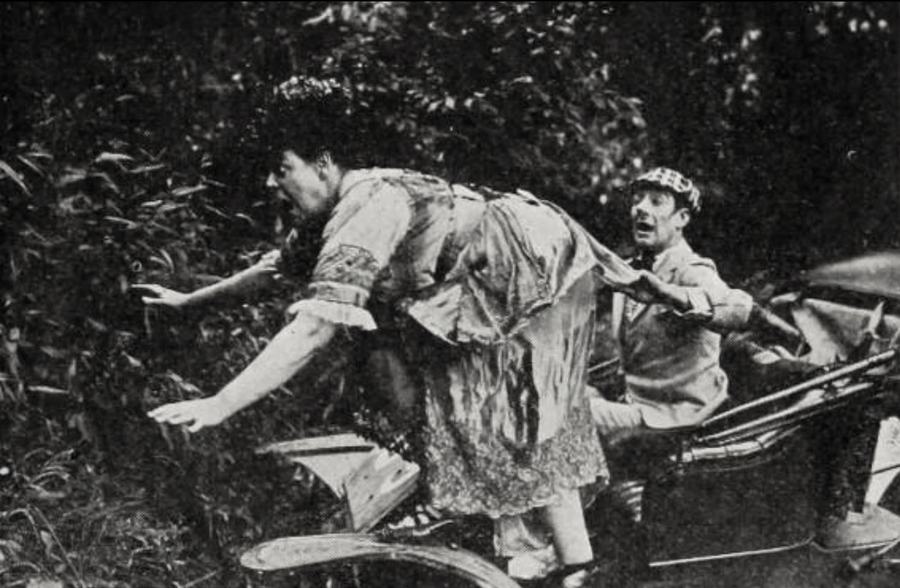
Meanwhile Tom McNaughton, whose comic persona usually hinged on stammering milquetoasts, here plays the botanist as a sun-dazed Orpheus, forever lured back to the greenhouse where chlorophyll equals chloroform for the soul. Their chemistry is less romantic than symbiotic: she provides the bellows, he supplies the oxygen, and together they ignite a farce that singes every silk hat in sight.
The film’s visual grammar is proto-expressionist: tomato reds oscillate between clown-nose absurdity and arterial menace, while the glasshouse itself becomes a labyrinthine panopticon where every pane reflects a different social strata.
Compare that to the chiaroscuro villainy of Lights of London or the folkloric minimalism of En hjemløs Fugl; Tillie opts for pastoral psychedelia long before Technicolor was a glint in a chemist’s eye.
James the Monkey deserves his own paragraph—nay, his own dissertation. Animal performers in early cinema often function as blunt comic relief, yet James operates like a hairy deus ex machina, swinging in to swipe contracts, tweak mustaches, and in one bravura shot, stare down the lens as if to say, “You mortals and your fiduciary anxieties—pathetic!” His presence destabilizes the human hierarchy so thoroughly that when he finally scampers up a vine trellis clutching the contested deed, the audience at New York’s Strand reportedly cheered louder than for any two-legged cast member.
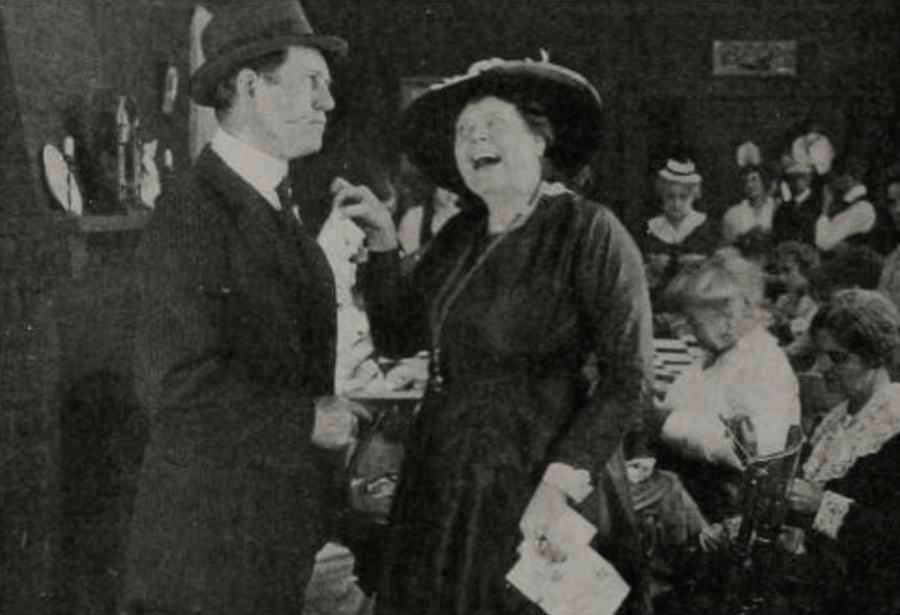
Davies’s screenplay, clocking in at a brisk 14 intertitles, nevertheless crams in Wildean aphorisms (“A tomato saved is a capitalist spurned”) and proto-feminist zingers (“Why should only cucumbers decide my fate?”). The compression is masterful; each card lands like a thrown gauntlet, forcing viewers to decode class tension between the laughs.
Direction—attributed to Colin Campbell, though speculation persists that Dressler herself staged key scenes—relies on depth staging rather than cross-cutting. Note the sequence where creditors converge on the estate: foreground shows Tillie’s trembling hand on a watering can, mid-ground reveals the banker’s silhouette ballooning across the greenhouse glass, background erupts with cascading tomatoes that thud like distant artillery. No edits, just layered space pregnant with dread.
Musical accompaniment in 1914 was variable, but surviving cue sheets suggest a foxtrot titled “Squish!” be played whenever fruit meets face. Contemporary reviewers compared the effect to “a galloping Carmen, remade by anarchists.”
Gender politics here are a tangle worth unwrapping. On the surface Tillie’s arc mirrors Cinderella—rags to riches to marital bliss—yet the film refuses to neutralize her agency. She does not marry to secure wealth; she wields wealth to renegotiate community bonds. When she finally dumps the deed into marinara, it’s not renunciation but reclamation: her aunt’s fortune transmuted from speculative capital into literal sauce that will feed migrant pickers. Try finding a comparable beat in Du Barry’s courtly extravaganzas or even in Shakespeare adaptations like Hamlet, Prince of Denmark; Tillie’s gesture feels radical, almost socialist.
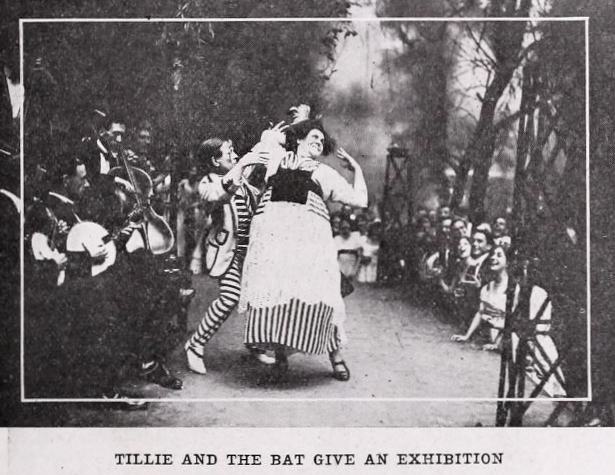
Technically, the print housed at MoMA retains a stunning amber tint for greenhouse interiors, shifting to viridian during nocturnal shenanigans. These color choices, hand-applied in an era when monochrome was default, amplify the film’s thesis that value—like pigment—can be daubed, scraped, and re-applied by whoever holds the brush.
Surviving ephemera hint at a longer cut: a lobby card promises “The Tomato Avalanche—2000 lbs of Fruit in 90 Seconds!” while a Chicago censor scribbled “eliminate shot of monkey spitting seeds at clergy.” None of this footage has surfaced, fueling rumors that a nitrate reel languishes in a Parisian basement beside outtakes from Julius Caesar. Until that Holy Grail emerges, we’re left with a 24-minute print that feels both miracle and mirage.
Compare Tillie to its thematic cousins: The Criminal Path moralizes over lucre, Voodoo Vengeance externalizes guilt through occult spectacle, whereas Tillie internalizes capitalism’s absurdity, letting it ferment until the fruit explodes. The result is closer to later Soviet comedies like Niños en la alameda—both revel in carnival upheaval, though Tillie lacks didactic axe-grinding.
Performances aside, the film’s legacy rests on Dressler’s shoulders. She would pivot to more sophisticated pathos in The Dancer and the King, but here she’s pure id, a gale force that makes contemporaneous slapstick look like gentle zephyrs. Watch how she times a pratfall: she drops vertically, as if gravity owed her interest, then rebounds with a quarter-second delay that lets the audience finish laughing before the next beat lands. It’s jazz rhythm before jazz had migrated north.

Contemporary critics, alas, were sniffy. Variety dismissed it as “tomato trompery fit only for hayseed palates,” while a New York Tribune sniffed that Dressler’s antics “reek of the provincial barn.” Yet crowds roared, receipts tripled, and the film toured for two years on the Chautauqua circuit, proving that hayseed wallets spend identical coin.
Modern viewers, conditioned to CGI bacchanalia, may chuckle at the overt artifice—papier-mâché fruit, visible strings on James’s tail—but that artifice is the point. The film invites us to savor the seams, to acknowledge that value, like cinema itself, is a consensual hallucination.
Restoration notes: the 2018 4K scan removed most embossing scratches while retaining grain that resembles tomato skin under magnification. The lone soundtrack option, a sprightly piano score by Donald Sosin, interpolates ragtime phrases with the occasional belch of tuba to underscore each splat. Headphones recommended—close your eyes and you can almost smell chlorophyll.
Final aside: there’s a blink-and-miss-it cameo by Sarah McVicker as a stenographer clutching a pad scrawled “Property is theft.” Historians debate whether this was Dressler’s prank, Davies’s anarchist wink, or simply a prop gag. Whatever the intent, the phrase flickers like a subliminal match, igniting the entire film’s politics in a single frame.
Tillie’s Tomato Surprise may not carry the cultural cachet of Captain Starlight or the literary pedigree of Hamlet, but it ferments in the memory long after the lights rise. It tastes of dirt, sweat, vinegar, and rebellion—an edible manifesto hurled at the banqueters of high finance. Approach it hungry, leave it stewing in your head like a slow-simmering ragù of insurrection.
IMDb —
1935
Community
Log in to comment.