DbcultAccessing Vault...
Cult Review
Senior Film Conservator
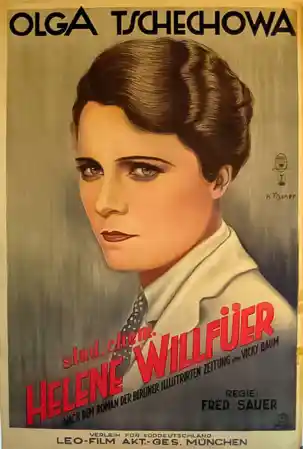
Okay, so Stud. chem. Helene Willfüer is definitely not for everyone today. If you need explosions and snappy dialogue to stay interested, you’re gonna have a rough time with this one.
But if you’re into *really* old movies, especially silent ones, or appreciate watching someone try to make it in a world not quite built for them, then yeah, give it a shot. People who usually skip anything pre-1950s? This won't likely be the film to change your mind.
Helene, played by Olga Tschechowa, is just… determined. Her eyes, even with the sometimes heavy makeup of the era, really sell this sense of quiet purpose.
You see it clearly in the lab scenes, where she’s often surrounded by a sea of men, peering intently into test tubes. It’s a subtle kind of defiance, but it’s undeniably there.
The lab itself almost feels like another character, with all those beakers and bubbling flasks. You get a real sense of a specific scientific world from nearly a century ago.
One shot, I remember, just focuses on a row of dark glass bottles, and for a second, it feels quite grand, like anything is possible.
Then there are these moments where the movie just *slows down*. There’s a scene where Helene is studying late into the night, and the camera just sits on her face for a good long while.
You can practically feel her exhaustion, her mental strain. It’s not flashy, but it works surprisingly well.
Other times, though, it feels like it’s dragging its feet a bit. Like when two characters are having a dramatic conversation entirely through title cards, and they just keep looking at each other, looking away, then looking back again. You kinda wish they’d just get on with it already.
I really liked the small details, like how the professors wore these very stiff, formal clothes. And the male students all seemed to have this same slight, arrogant smirk.
It really paints a picture of the environment Helene is trying to break into. Then she walks in, all serious and focused.
There’s a love story here, of course, because it’s a silent film from the '20s. It’s not the main event, but it definitely weaves its way through Helene’s journey.
The way they convey longing or heartbreak without a single spoken word is sometimes incredibly effective. Other times, honestly, it’s a bit much.
Like, one actor — I think it was Igo Sym — just stares intensely at Helene. For *ages*. You almost want to yell, “Buddy, just blink!” 😂
What truly stuck with me, though, was Helene’s quiet strength. She’s not shouting, she’s not performing grand, theatrical gestures.
She just keeps going. Even when things get tough for her, and they really do, you see her just squaring her shoulders, ready for the next challenge. It’s a subtle kind of heroism.
The film doesn’t really get bogged down in the *how* of the chemistry. It’s more about the *why* she’s doing it. The ambition, the need to create something, to prove something.
And that part, I think, still resonates powerfully today. That drive is universal.
There’s a moment near the end, not to give anything away, but it’s a pretty big reveal. And the way they film Helene’s reaction… it’s a classic silent film close-up, but it just hits you right in the gut. The slight tremor in her lips says it all.
It’s a powerful, understated ending for such a specific, quiet film. The final scenes linger in your mind.
It’s not a perfect film, no. Some of the acting feels a little over-the-top by today's more naturalistic standards. And yes, the pacing can feel absolutely glacial if you're not already accustomed to silent cinema.
But it has this undeniable charm, this genuine earnestness about it. It’s a fascinating slice of film history that, for me, holds up better than some others from the same era.
You really feel like you’ve been on a real person's journey, even without sound. It feels lived-in.
One last thing: The costumes. Hertha von Walther, as the other female student, has some truly fantastic outfits. Really sharp, very flapper-esque.
It’s a nice contrast to Helene's more practical, but still chic, laboratory wear. It's the kind of thing you just naturally notice when there's no dialogue to distract you.
IMDb 6
1917
Community
Log in to comment.