DbcultAccessing Vault...
Cult Review
Senior Film Conservator
In the cinematic lexicon of the early 20th century, the automobile was more than a mere prop; it was a character, a harbinger of the encroaching modern world. In Table Steaks, the arrival of the 'city chap' in his flivver serves as the catalyst for a delightful exploration of social friction. This isn't just a man arriving at a destination; it is the collision of the frantic, urban energy with the rhythmic, grounded life of a rural proprietor. Much like the tonal shifts seen in The Busher, the film uses the outsider’s mobility to highlight the static nature of the setting he disrupts.
The flivver itself, shaking with a life of its own, mirrors the protagonist's internal agitation. Charles Dorety plays this city dweller with a physicality that borders on the acrobatic. Every movement is a calculated piece of slapstick, a desperate attempt to maintain dignity while being physically betrayed by the very technology he uses to assert his superiority. It’s a fascinating dynamic that Fred Hibbard exploits with surgical precision, ensuring that the car is not just a vehicle, but a comedic partner in the unfolding drama.
The core of the narrative—the wooing of the proprietor’s daughter—is a trope as old as the medium itself, yet Table Steaks breathes fresh life into it through the sheer intensity of its rivalry. Richard Smith’s portrayal of the local suitor provides a necessary foil to Dorety’s manic energy. Smith is the 'strong hand,' the embodiment of local stability and physical prowess. However, in the logic of the silent comedy, strength is often a liability when faced with the unpredictable agility of the underdog. We see echoes of this romantic tension in The Prodigal Liar, where the truth of a man’s character is secondary to the performance he puts on for the object of his affection.
Bartine Burkett, as the daughter, manages to elevate a somewhat archetypal role. She isn't merely a prize to be won; she is a participant in the chaos. Her chemistry with Dorety is palpable, even through the grainy textures of the surviving prints. The way she looks at the city chap—half-amused, half-enchanted—suggests a longing for the excitement he represents, a departure from the predictable advances of the local rival. This triangular conflict is handled with a lightness of touch that prevents it from feeling overbearing, focusing instead on the absurdity of the chase.
One of the most inspired elements of the script by Fred Hibbard is the inclusion of the 'little brother.' In many films of this era, children are used for saccharine sentimentality, but here, the child is a pragmatic opportunist. He understands the value of privacy and is more than willing to sell it for the 'regulation quarter.' This transactional approach to romance adds a layer of cynical wit that feels surprisingly modern. It reminds us of the domestic politics found in Hobson's Choice, where familial loyalty is often weighed against personal gain.
The boy’s 'tact' is portrayed not as a virtue, but as a business strategy. He facilitates the 'spooning' session with the efficiency of a high-end concierge. This subplot provides some of the film's biggest laughs, as the audience is let into the secret economy of the household. It also serves to ground the high-stakes romance in a mundane, relatable reality. The boy doesn't care about the true love of the city chap or the heartbreak of the rival; he cares about the silver in his pocket. It’s a brilliant subversion of the 'innocent child' trope.
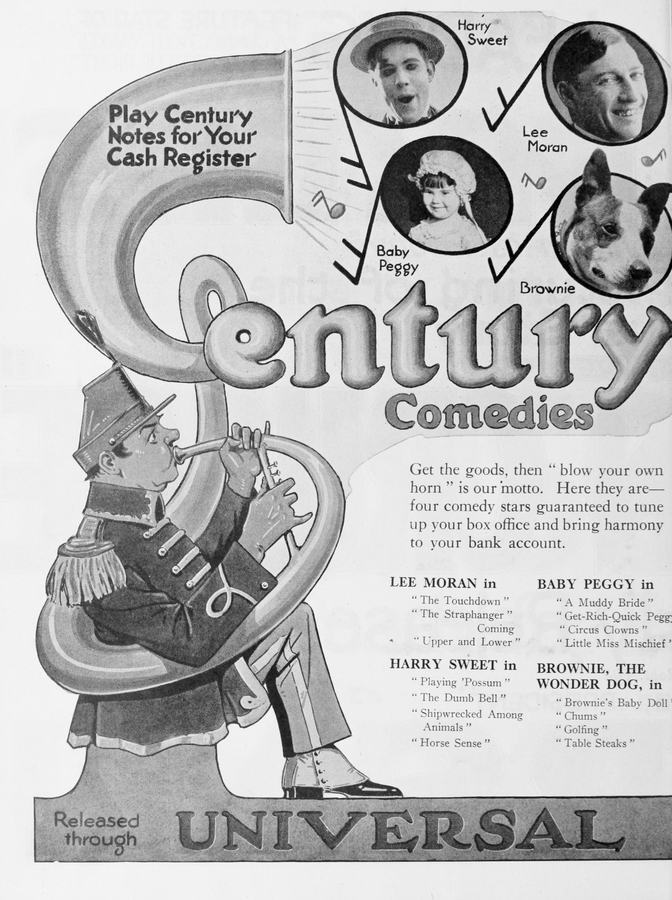
No discussion of Table Steaks would be complete without mentioning Brownie the Dog. In an era where animal actors were often the biggest draws, Brownie stands out for his ability to react to the human folly surrounding him. He isn't just performing tricks; he is providing a canine commentary on the absurdity of the human condition. His presence adds a layer of warmth and spontaneity to the scenes, often stealing the spotlight from his human costars. The use of animals to ground the narrative was a common technique, seen in films like The Magic Cup, where the animal becomes an emotional anchor for the audience.
Brownie’s interactions with the 'little brother' and the city chap are choreographed with a naturalism that is rare for the period. He seems to sense the shift in the household’s equilibrium, his tail-wagging or barking acting as a barometer for the narrative’s tension. In many ways, Brownie represents the audience—watching the elopement and the rivalry with a mixture of confusion and loyalty.
The climax of the film, the moonlight elopement, is a masterclass in silent cinematography. Capturing the essence of night on the orthochromatic film stock of the day was no small feat, and while much of it was likely shot 'day-for-night,' the resulting atmosphere is ethereal. The elopement represents the ultimate victory of the city chap’s mobility over the rival’s stability. It is a sequence defined by shadows, silhouettes, and the frantic speed of the flivver as it carries the lovers away from the proprietor’s reach. This theme of forbidden love and nocturnal escape is a comedic echo of the tragedy found in Romeo and Juliet, though here the stakes are measured in laughs rather than lives.
The elopement also serves to tie together the film’s various threads: the technology of the car, the failure of the rival, and the finality of the daughter’s choice. It is a satisfying conclusion that rewards the viewer for following the chaotic journey of the protagonist. The moonlight provides a romantic sheen to what has been, up to this point, a purely slapstick endeavor, allowing the film to end on a note of genuine sentiment.
To view Table Steaks today is to peer into a window of a world in transition. The 'city chap' is a figure of both ridicule and aspiration—a man who brings the future with him in a cloud of exhaust and a jingle of quarters. The film touches on themes of class and the changing nature of womanhood, similar to the explorations in The Price Woman Pays or Her Own People. While it remains a comedy at heart, its underlying observations about the commercialization of romance and the power of the machine are surprisingly astute.
Fred Hibbard’s direction ensures that the pace never falters. The editing is sharp, favoring the rhythmic timing of the gags over elaborate set-pieces. It lacks the heavy-handed moralizing often found in contemporary dramas like Wife Number Two, opting instead for a celebratory, almost anarchic spirit. This is a film that understands its purpose: to entertain, to surprise, and to capture the fleeting beauty of a moonlit night and a rattling car.
In the broader landscape of silent cinema, Table Steaks may not have the epic scale of a Griffith or the surrealist depth of a Keaton, but it possesses a charm and a kinetic energy that are undeniably infectious. It is a testament to the skill of Charles Dorety and the writing of Fred Hibbard that such a simple premise—a man, a girl, a rival, and a dog—can still resonate with such vibrancy a century later. Whether you are a scholar of the era or a casual viewer looking for a laugh, this film offers a delightful slice of cinematic history, served with a side of sharp wit and a dash of moonlight.
IMDb —
1920
Community
Log in to comment.