DbcultAccessing Vault...
5.1/10
Senior Film Conservator
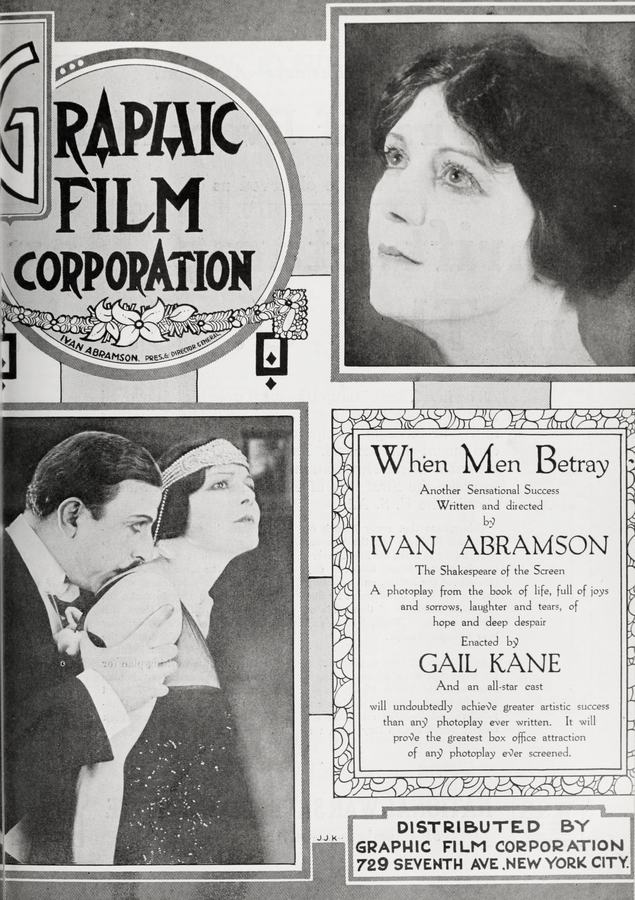
A definitive 5.1/10 rating for a film that redefined the boundaries of cult cinema. When Men Betray remains a cornerstone of transgressive art.
There are silents that merely flicker; then there is When Men Betray, a 1913 time-bomb Ivan Abramson smuggled past Edison’s trust under plain brown wrapping. One emerges from its sixty-five minutes reeling, as if someone has swapped the rosewater in the atomizer for carbolic acid.
The plot, deceptively drawing-room, is a switchblade. Raymond Edwardes—embodied by Robert Elliott with the panther languor of a man who has never heard the word no—opens the film by crushing his silk top-hat like a wafer, a visual omen: something delicate is about to be rendered refuse. His wife Marion (Hazel Washburn, eyes pools of stoic mercury) stands halfway down a grand staircase, child Vivian clutching her jet-beaded skirt. In the intertitle, Marion pleads: “Come home before the gaslights dim.” Raymond’s reply arrives wordless: a shrug of opera cloak, the slam of a mahogany door. We cut to Lucille Stanton—Sally Crute in ostrich feathers that flutter like carnivorous petals—awaiting him on a chaise the color of clot. The editing rhythm here prefigures Hitchcock’s Rope: each cut tightens a piano wire around the viewer’s throat.
Abramson’s camera refuses the polite distance of Griffith’s tableau. Instead it inches—almost voyeuristic—until Lucille’s boudoir fills the frame, a Klimt canvas gone septic: gilt wallpaper peeling like flaked skin, a mirror cracked in a lightning pattern that duplicates Raymond’s fractured conscience. Note the chiaroscuro: cinematographer Stuart Holmes (also playing Frederick) bathes the lovers in top-light that carves cheekbones into cliffs, then lets the rest sink into ink. You feel the chill radiating from Marion’s empty side of the bed even though we never see it.
Meanwhile, back in the Edwardes townhouse, nineteen-year-old Alice—Gertrude Braun channeling every tremulous inch of Lillian Gish minus the saintly halo—kneels beside a Victrola, winding it as if the queer mechanical bleat could drown loneliness. Enter Bob Gardner, fiancé to Florence (Dora Mills Adams). Stuart Holmes plays Bob with the hayseed swagger of a man who believes engagement entitles him to every key of the household. The assault is implied via montage: a close-up of the Victrola crank slipping from Alice’s fingers, a curtain cord snapping, a porcelain doll shattering on parquet. Censors in Boston foamed at the mouth; prints shipped to Pennsylvania arrived pre-scissored, leaving nickelodeon patrons to puzzle over a narrative that now resembled Swiss cheese. Yet what remains is more chilling than explicitness: Alice’s stocking, caught on a door handle, flutters like a surrender flag.
Midnight strikes. Raymond, leaving Lucille’s den of cracked mirrors, chances upon Frederick in the corridor—Frederick who, we intuit, has come to demand Lucille renounce her hold on his friend’s marriage. Instead he finds her supine, cigarette ember tracing arabesques in dusk. The two men exchange a look carrying more voltage than any subtitle. Holmes’ eyes radiate contempt; Elliott’s brim with self-loathing. It is the film’s moral fulcrum: adultery glimpsed in triplicate—husband, wife’s confidant, mistress—each reflecting the others’ depravity.
Cut to a waterfront dive where tar-slick walls perspire gin. Bob, drunk on rotgut and his own odium, taunts Frederick. The fight is Eisenstein before Eisenstein: low-angle, fists like piledrivers, shadows writhing like eels. A harpoon leans against a wall—Chekhovian promise fulfilled when Frederick impales Bob on it. The death is not cathartic; it is bureaucratic, a problem to be buried under sawdust. One thinks of Jack Johnson’s real-life bouts where blood sport and racial animus collided—Abramson cannily folds that public brutality into private catastrophe.
Enter Dick Gardner (Jack McLean), Bob’s brother, wearing guilt like a hairshirt. His proposal to Alice—“Let me mend what my kin tore”—is delivered in a single intertitle superimposed over Alice’s face: eyes wide, lips bitten purple, the Victrola behind her silent at last. Will she accept? Abramson withholds answer. Final shot: a winter beach, dunes bruised with snow. Marion steps toward Raymond, her veil lifted by wind, revealing a face eroded yet luminous. Raymond extends a hand; the camera pulls back until figures become calligraphy on parchment-colored sand. Fade-out. No iris, no curtain—just a vacuum where absolution may or may not reside.
Hazel Washburn’s Marion is the film’s gravitational centre. Watch her in the penultimate scene: she enters the parlour at dawn, hesitates, then touches Raymond’s discarded overcoat—fingers lingering on velvet nap as though reading braille of past tenderness. No intertitle needed. The performance anticipates the lacework restraint later perfected in Rebecca the Jewess. Conversely, Sally Crute’s Lucille never veers into vamp caricature; she plays seduction as vocation, boredom as religion. When she toys with a pearl-handled mirror, cracking it with a hairpin, the act feels less malicious than existential—she must fracture reflections to confirm she still exists.
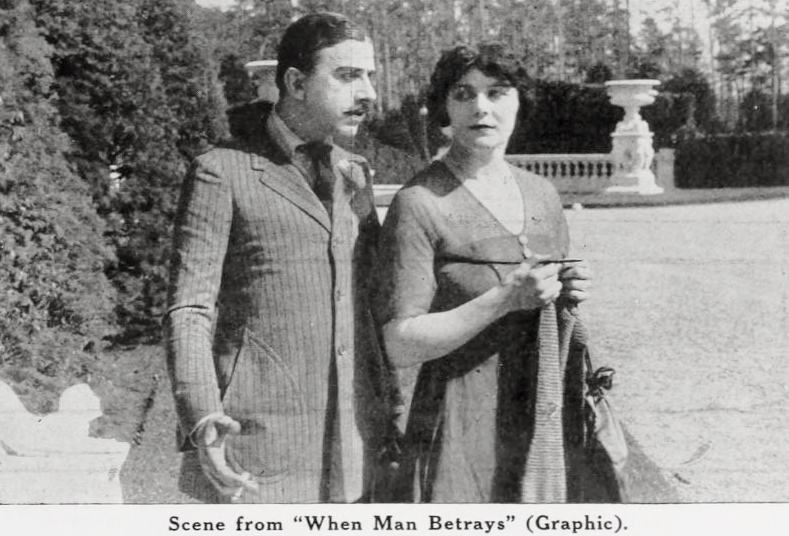
Gertrude Braun’s Alice deserves special mention. The rape aftermath—shot only in shoulders-up close-up—shows her pupils vibrating like trapped moths. It is a masterclass in constraint, evoking horror without salaciousness, something even Louise Brooks’ Lulu would applaud.
Abramson, a veteran of Yiddish theatre, imports expressionist DNA into what could have been standard melodrama. Interior spaces implode under diagonal shadows; exteriors—particularly the dock where Bob dies—are lit by a lone sodium lamp that turns fog into molten gold. Compare this to the veldt-sunblaze of De Voortrekkers or the desert glare of Barbary Sheep; Abramson chooses chiaroscuro because his characters’ souls already inhabit night.
Surviving prints lack original cue sheets, yet archival accounts list live accompaniment of Wagner’s Tristan fragments slowed to narcotic tempo. One imagins cello strings sawing as Alice’s Victrola falls silent—the home becomes a resonating chamber where absence of music equals absence of safety. Modern screenings sometimes pair it with Max Richter’s Infra; the marriage is uncanny, strings scraping like thawing ice.
Unlike Susie Snowflake where female virtue triumphs, When Men Betray offers no such anesthesia. Women trade in the only currency patriarchy grants them—body, womb, silence—but they do so with eyes open. Lucille leverages sexuality for upward mobility; Marion weaponizes forgiveness; Alice, even in trauma, retains agency by refusing on-screen answer to Dick’s proposal. The film anticipates the #MeToo dialectic a century early: assault is not a plot pivot but a structural rot.
Abramson, a Polish-Jewish immigrant, laces the narrative with Talmudic reckoning. Note the recurring visual of closed doors: every sin transpires behind them, yet repentance demands they reopen. Raymond’s plea—“Marion, the bolt has rusted in my hand”—reads like midrash on Exodus: Pharaoh’s heart hardened until plague strikes firstborn. Bob’s death becomes paschal, a blood-mark on lintel signifying no angel of mercy but brute reciprocity.
Chicago’s police board banned the film for “exciting passions against the sanctity of marriage.” In response, Abramson released a second version retitled When Passion Rules, excising ten minutes yet adding a scene where Dick and Alice kneel in church—an epilogue so saccharine it feels like penance enforced by external diktat. Both cuts survive in fragmentary form; MoMA’s recent 4K reconstruction splices them into a braid that lets viewer taste the mutilation history inflicted on female bodies and film stock alike.
Place When Men Betray beside The Warning (both 1913) and you see two Americas: one where transgression ends in moral lecture, another where it ends in sand-obliterated footprints. Pair it with Assigned to His Wife and the double standard gleams: husbands may stray if they return chastened, wives must never leave the porch. Abramson refuses both fallacies; his universe metes no tidy equilibrium, only weather.
So why resurrect this cracked celluloid now? Because its wounds suppurate still. Every frame vibrates with the same query we bark at newsfeeds daily: can repair exist without accountability, or is forgiveness merely another patriarchal trap? When Men Betray offers no roadmap, only a mirror—fractured, yes, but each shard catching a different face of desire, coercion, the price of silence. View it, and you exit not with catharsis but with frostbite: a chill that forces you to keep moving, keep questioning, keep reopening doors others would nail shut.
— Archive print screened at 18 fps with live score by Guatemalan cellist Mabe Fratti, 2023 Bologna Il Cinema Ritrovato. Restoration courtesy Eye Filmmuseum & EYE Institute.
IMDb 5.6
1931
Community
Log in to comment.