DbcultAccessing Vault...
3/10
Senior Film Conservator
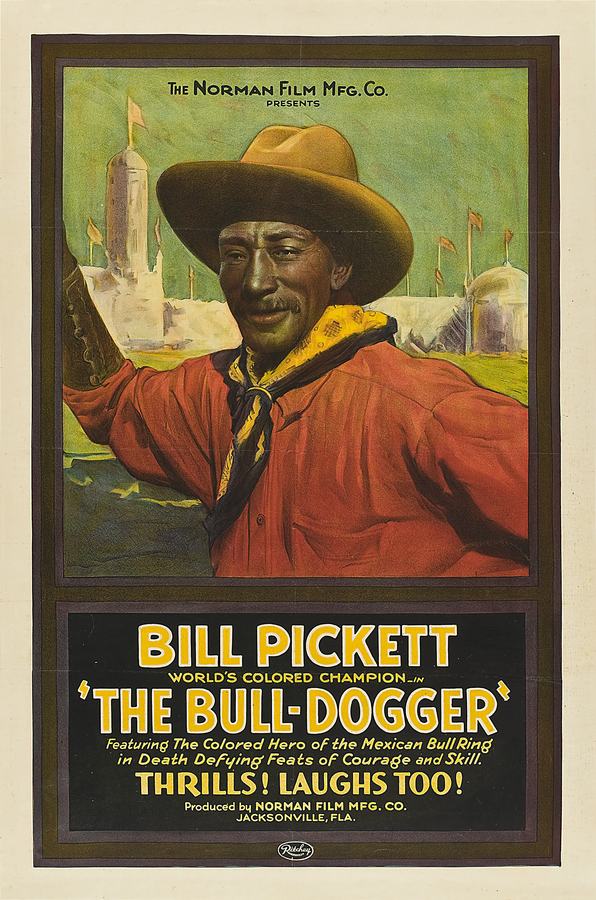
A definitive 3/10 rating for a film that redefined the boundaries of cult cinema. The Bull-Dogger remains a cornerstone of transgressive art.
The first thing that wallops you about The Bull-Dogger is the smell you can’t actually smell—an imaginary bouquet of dung, gun-oil, and cheap lemonade fermenting beneath the ferris-wheel skeleton. Shot sometime in the blistering summer of 1921 on the baked-hard flats of present-day Oklahoma, this patchwork of newsreel vigor is less a film than a passport to a vanished cosmos where cinema itself is still wet with birth-blood.
Director-stroke-showman E.B. Cole simply hoisted his Pathé into the dust and let the 101 Ranch Wild West Show thunder past the lens. No script, no intertitles, no star close-ups in the modern sense—just the raw pith of spectacle, tethered to whatever sun-scorched light God gave that afternoon. Yet within that skeletal framework blooms a hallucinatory energy that makes later, more polished westerns feel embalmed by comparison.
Front and center looms Bill Pickett, the Texas-born African-American cowboy who invented bull-dogging—a death-defying tango wherein a rider leaps from horse to steer, bites the animal’s lip, and brings the ton-and-a-half of muscle crashing to earth. The camera, stationed at ground-trough level, captures every tendon-snapping detail: Pickett’s teeth sinking, the steer’s eyes ballooning in shock, a plume of dust blooming like burnt umber fireworks. It’s brutal, balletic, borderline sacrilegious—yet also the first recorded proof that Black athletic genius could headline national entertainment decades before Jackie Robinson.
Watch the way Pickett’s body folds mid-air, a question mark hurled against the sky’s blank parenthesis; notice how the steer’s horns slash negative space that the editor refuses to soften with a cut. The sequence is maybe forty-five seconds, but it detonates in the mind like a flash-bang, forever altering the optics of cowboy heroism. Compare it to the sanitized heroics of The Witch Woman or the drawing-room dalliances of The Cabaret Girl—and you realize how raw meat tastes next to pâté.
Threading through the chaos is Anita Bush, trick rider and unofficial poet laureate of motion. Astride her palomino she carves figure-eights that read like cursive against the horizon, her split skirt snapping like a metronome. The camera, perhaps smitten, lingers on her silhouette longer than on any other performer, granting her a gravitas that complicates the film’s otherwise testosterone-thick milieu. In a cultural moment when Black women were often relegated to footnotes, Bush commands the frame with a sovereign ease that prefigures the glam-ferocity of The Silver Girl’s flapper iconography.
There’s a blink-and-miss instant where she reins her horse to a sliding stop, looks straight into the lens, and offers the faintest half-smile—an act of cinematic trespass so intimate it feels like she’s threading her soul through the camera’s aperture. That smile detonates across time: a Black woman returning the colonial gaze, owning her image decades ahead of bell hooks’ oppositional politics.
Forget the tidy three-act plot you crave; The Bull-Dogger is a kaleidoscope of stunts, a pop-up encyclopedia of frontier virtuosity. Bennie Turpin’s wall-eyed clowning supplies slapstick relief that feels imported from a different cosmos entirely—his pratfalls vibrating at 12 fps like a nickelodeon fever dream. Meanwhile, Steve Reynolds’ bulldogging horse, a blaze-faced roan namedShiloh, steals half the reel with nothing more than nostril flares and a neck that ripples like liquid bronze.
The editing strategy mirrors the rodeo itself: sudden, visceral, impatient. One moment you’re hypnotized by a lariat describing perfect sine waves; the next, a hard cut slams you into a tableau of cowboys branding calves while a brass band oompahs off-screen. It’s the cinematic equivalent of a switch-blade—compact, gleaming, lethal when flicked open.
Because the film lacks intertitles, historians have squabbled for decades over whether its Black performers were billed as equals inside the 101 Ranch tent. The footage itself is our best witness: Pickett and Bush are framed in medium shots that grant them full-body agency, not the servile half-cropping common in contemporaneous race films. Their presence on a national circuit—playing before segregated crowds, their images shipped to nickelodeons in Boston and Birmingham alike—constitutes a radical act of infiltration.
Contrast this with the plantation nostalgia peddled by Honeymoon Ranch or the lily-white frontiers of The Frozen North, and you’ll taste the difference between testimony and fantasy.
The print survives in 1080p thanks to a 2018 MoMA restoration, yet the image still bears scabs: gate-weave, watermarks, emulsion cracks that flicker like fireflies. Far from flaws, these scars act as stigmata—proof that the film has lived. When the sun flares the lens during Pickett’s signature bulldog, the over-exposure blooms into a saffron halo, a visual amen that no CGI could counterfeit.
Colorists have opted to leave the grayscale untouched, resisting the temptation to slap on Instagram sepia. The result is a chiaroscuro rodeo: blinding whites of shirts, tar-pit blacks of chaps, mid-tone grays that shimmer like heat mirage. It’s a palette that whispers: history was never monochrome—only your memory is.
Though originally released sans score, modern festivals often pair the film with live banjo or junk-yard percussion. Go if you can; the anachronism works. The clatter of tin cans against washboard syncs uncannily with the 16fps gait of trotting horses, creating a polyrhythmic loop that re-animates the dead. On Kino’s Blu-ray, the included optional track by composer Donald Rubinstein leans into dissonant strings and distant yodels—think Godspeed You! Black Emperor goes cowboy. It’s haunting, but purists may prefer the vacuum of silence, where every hoofbeat becomes a ghost knocking from inside the frame.
Cine-genealogists trace a straight if sinewy line from Pickett’s athletic bravura to the dignified swagger of Sidney Poitier, and onward to the kinetic ferocity of today’s Black action heroes. More obliquely, Jordan Peele cited the film’s unflinching spectacle as a reference point for the sunken-place rodeo sequences in Get Out. When you watch white spectators leering at Pickett’s physical sacrifice, you glimpse the same exploitative voyeurism that Peele weaponized a century later.
Yet The Bull-Dogger also prefigures the meta-carnivals of Love (1920) and the fatalistic showbiz swirl of The Sunny South. It is both museum piece and seed crystal, a hinge between Buffalo Bill’s live extravaganzas and the mythic revisionism of mid-century westerns.
Because streaming algorithms will never recommend it. Because it shoves a mirror in the face of Manifest Destiny and makes the reflection sweat. Because in an age of pixel-perfect overtures, its scratches are sermons. Because Anita Bush’s ghost deserves another ovation. Because Bill Pickett’s teeth marks are still imprinted on the hide of American cinema, and that steer is still bucking.
Popcorn? Optional. Jaw-guard? Highly advised.
IMDb —
1921
Community
Log in to comment.