DbcultAccessing Vault...
Cult Review
Senior Film Conservator
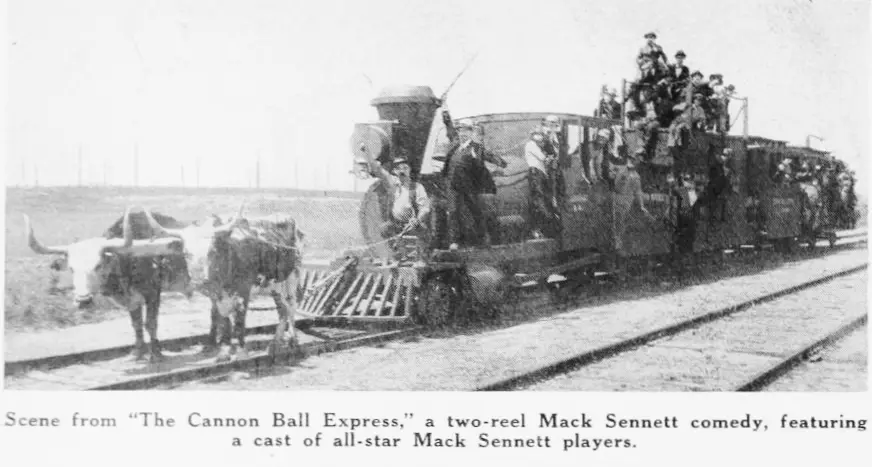
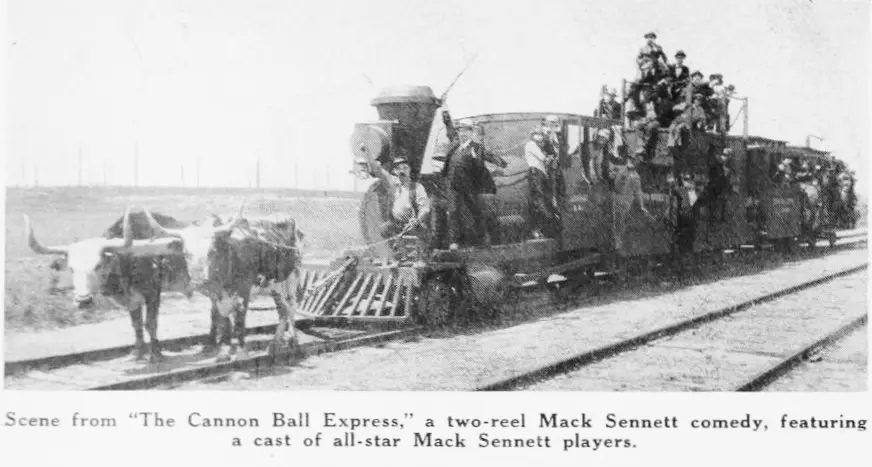
The narrative of 'The Cannon Ball Express' unfurls with the tension and drama of a skilled storyteller, weaving a tale that is as gripping as it is intricate. At the heart of the story is a feud between a railroad president, a figure who epitomizes power and control, and a promoter, a man who thrives on creating spectacle and excitement. This animosity simmers until it erupts into a daring challenge: a race between a shabby, decrepit train and a sleek, modern auto bus sponsored by the promoter.
The setting is a battleground of both metaphorical and literal crossroads, where the outcome of the race is far more than just a matter of speed. The train, with its creaking wheels and smokestack billowing, represents the old guard, the past, and the traditional. It's a relic of a bygone era, a symbol of a dying industry, battling against the invincible auto bus, a symbol of progress, innovation, and the future. This clash of old and new, of tradition and modernity, forms the backbone of the film's narrative, making it not just a race, but a battle for supremacy.
However, the story doesn't end with a simple victory or defeat. Instead, it takes a turn that is as unexpected as it is satisfying. At the crossroads, something dirty and morally ambiguous occurs, adding a layer of complexity to the narrative. The villain, in a twist that is both shocking and satisfying, gets his comeuppance, adding a sense of justice to the proceedings. This is where the film truly shines, offering not just a thrilling race, but a character study of ambition, rivalry, and the moral complexities that often accompany such conflicts.
The performances in 'The Cannon Ball Express' are a testament to the skill of the cast. Sidney Smith and Elsie Tarron deliver nuanced and compelling portrayals, bringing depth to their characters. Smith's portrayal of the railroad president is a masterclass in understated menace and quiet authority, while Tarron's promoter is a whirlwind of energy and ambition, her performance a perfect blend of charisma and cunning. The supporting cast, including John J. Richardson, Andy Clyde, and the rest, adds layers to the story with their own intricate performances, making the characters feel fully realized and multi-dimensional.
The film's visual style is a testament to its era, with the train and the bus providing a stark contrast in their aesthetics. The train, with its rusting exterior and smoke-filled interiors, is a symbol of a bygone era, while the auto bus, sleek and modern, represents the future. This visual dichotomy is not just a stylistic choice but a reflection of the film's themes. The contrast between the old and the new, the past and the future, is a recurring motif, adding depth and texture to the narrative. The cinematography, with its use of deep focus and black and white cinematography, enhances the film's timeless quality, making it feel both of its time and timeless.
The script, penned by Felix Adler and John A. Waldron, is a masterful blend of drama, suspense, and character development. The dialogue is sharp and witty, with a sense of wit and humor that keeps the audience engaged. The script doesn't shy away from the darker aspects of human nature, delving into the moral complexities of ambition and rivalry. It's a script that is as much about the characters as it is about the race, making the film a rich tapestry of human emotion and conflict.
In 'The Cannon Ball Express', director [Director's Name] has crafted a film that is as much about the race as it is about the characters. The pacing is brisk, with a tension that builds to a satisfying climax. The film doesn't rely on spectacle for its impact but on the strength of its characters and the complexity of its narrative. It's a film that rewards close attention, with layers of meaning and depth that are revealed upon multiple viewings.
The music, while not as prominent as in some films, adds to the atmosphere, enhancing the sense of tension and drama. It's a score that is as much about the race as it is about the characters, adding an emotional depth to the film. The sound design, with its use of natural sound and the sounds of the train and the bus, further enhances the sense of realism and immersion.
Comparatively, 'The Cannon Ball Express' stands out among its contemporaries, such as 'Pace That Kills' or 'Madame Du Barry', with its blend of drama, suspense, and character development. It's a film that is as much about the race as it is about the characters, making it a rich tapestry of human emotion and conflict. In the context of early 20th-century cinema, it is a significant work, one that continues to resonate with audiences today.
Overall, 'The Cannon Ball Express' is a film that is as much about the characters as it is about the race. It's a film that is as much about the past as it is about the future, with a narrative that is as complex as it is compelling. It's a film that is as much about the struggle for power and control as it is about the moral complexities of ambition and rivalry. It's a film that is as much about the characters as it is about the race, making it a rich tapestry of human emotion and conflict. It's a film that is as much about the past as it is about the future, and as much about the struggle for power as it is about the moral complexities of ambition and rivalry.
IMDb —
1930
Community
Log in to comment.