DbcultAccessing Vault...
Cult Review
Senior Film Conservator
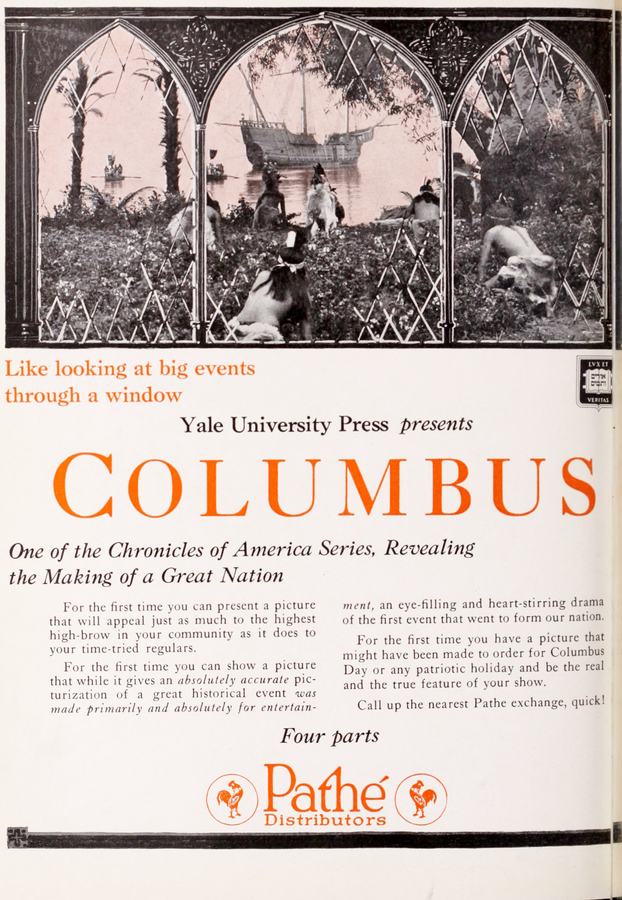
The 1923 iteration of Christopher Columbus, a cornerstone of the 'Chronicles of America' series, serves as a fascinating specimen of early 20th-century historiography and cinematic ambition. Unlike the bombastic spectacles that would follow in later decades, this silent production, directed with a certain austere reverence, focuses its lens on the psychological and political attrition required to launch a dream. It is a film less about the salt spray of the ocean and more about the suffocating weight of velvet curtains and the scratching of quills in the court of Ferdinand and Isabella.
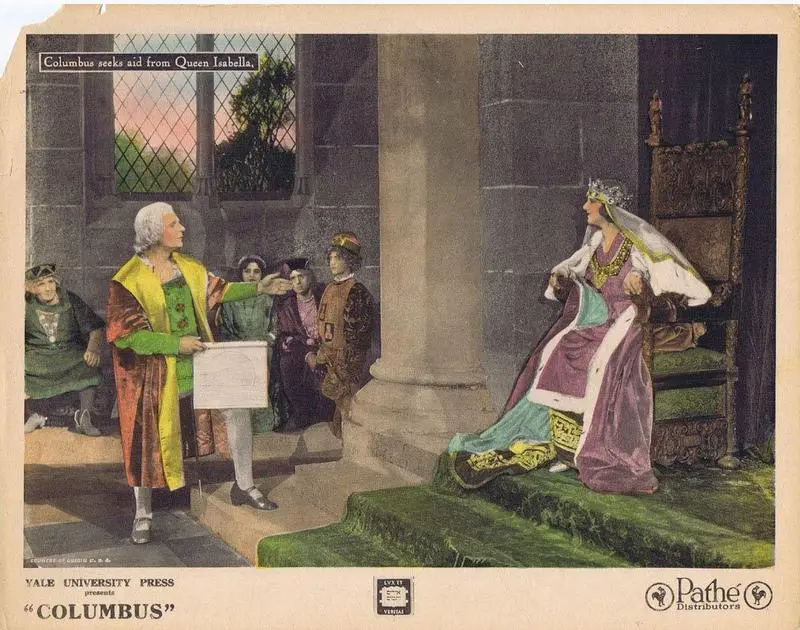
At the heart of this production lies Paul McAllister’s portrayal of Columbus. McAllister eschews the swashbuckling tropes often associated with explorers, opting instead for a performance defined by a simmering, almost weary conviction. His Columbus is a man caught in a temporal vice—possessing a Renaissance mind trapped in a medieval administrative nightmare. The film spends a significant portion of its runtime documenting the seven-year struggle for patronage, a narrative choice that mirrors the thematic density found in contemporary dramas like The Man and the Moment, where the pivot of history rests on a single, agonizing decision.
The screenplay by Irving Berdine Richman and Arthur E. Krows is surprisingly nuanced. It refuses to frame Columbus as the sole architect of transatlantic contact. By explicitly acknowledging the previous voyages of the Norsemen, the Phoenicians, and Asian mariners, the film exhibits a scholarly integrity that was rare for its time. This intellectual honesty elevates the work from mere propaganda to a genuine inquiry into the nature of discovery. It suggests that while others may have touched the soil of the Americas, Columbus’s specific contribution was the persistent, bureaucratic battering ram he used to bridge two worlds permanently.
Visually, the film utilizes a chiaroscuro palette that emphasizes the divide between the enlightened aspirations of the explorer and the shadowy, dogmatic halls of the Spanish Inquisition. The cinematography captures the textures of the era with a tactile richness; one can almost smell the old parchment and the heavy incense. In terms of visual storytelling, the film shares an aesthetic DNA with Inspiration, utilizing the silent medium to convey internal states through carefully staged tableaux rather than relying solely on intertitles.
The supporting cast, featuring Dolores Cassinelli and Howard Truesdale, provides a solid framework for McAllister’s central performance. Cassinelli, in particular, brings a regal yet humanized presence to the screen, embodying the cautious curiosity of the Spanish crown. The tension between the financial risks of the voyage and the potential for imperial expansion is played out in hushed tones and meaningful glances, creating a sense of stakes that feels remarkably modern. This isn't the frantic energy of The Battle Cry of Peace; rather, it is a slow-burn exploration of geopolitical maneuvering.
One must appreciate the pedagogical intent behind this film. As part of the Yale University Press's 'Chronicles of America' series, it was designed to be as accurate as the scholarship of the 1920s allowed. This commitment to realism often results in a pacing that some modern viewers might find glacial, but for the patient observer, it offers a reward of deep immersion. The film doesn't rush to the sea; it understands that the most difficult part of any journey is the first step taken away from the status quo. In this regard, it mirrors the thematic gravity of The Deep Purple, where the environment itself acts as a character, resisting the protagonist's desires.
The acknowledgement of the Phoenicians and Norsemen is particularly striking. It reframes the 'discovery' not as a singular lightning strike of genius, but as part of a long, often forgotten continuum of human wandering. By doing so, the film avoids the pitfalls of ethnic exceptionalism, presenting Columbus as a man who succeeded because of his relentless pursuit of funding and royal sanction, rather than being the first human to ever conceive of land to the west. This nuance provides a layer of sophistication that makes the film endure as a piece of art rather than just a historical curiosity.
As we navigate the film’s middle act, the focus shifts to the sheer exhaustion of Columbus’s quest. We see him rebuffed, ignored, and mocked. The production design excels here, using the scale of the Spanish palaces to dwarf the individual, illustrating the insignificance of one man’s vision when pitted against the machinery of state. This sense of isolation is reminiscent of the emotional landscapes explored in Daddy-Long-Legs, though the stakes here are cartographic rather than domestic. The film captures the essence of what it means to be an outlier, a theme that resonates across the decades.
The maritime sequences, when they finally arrive, are handled with a gritty realism. There is no CGI to smooth over the terrifying vastness of the Atlantic. The wooden ships look fragile, the ocean looks indifferent, and the crew’s growing mutiny feels like a rational response to an irrational situation. The film successfully conveys the existential dread of sailing off the map, a feat that requires a high degree of directorial control in the silent era. The interplay between the celestial navigation and the primitive tools of the time highlights the audacity of the undertaking.
Christopher Columbus (1923) is a masterclass in restrained historical drama. It avoids the melodramatic excesses of many silent films, preferring a grounded, almost documentary-like approach to its subject matter. While it lacks the kinetic energy of a film like The Kangaroo, it replaces it with a profound sense of historical weight and intellectual curiosity. It is a film that demands your attention and rewards it with a complex portrait of a man who changed the world through sheer, bloody-minded persistence.
In the pantheon of early cinema, this work stands out for its refusal to oversimplify. It recognizes that history is not just made of heroes and villains, but of committees, budgets, and the long, slow passage of time. For anyone interested in the intersection of film and history, or for those who appreciate the subtle power of silent acting, this 1923 production remains an essential watch. It reminds us that the greatest obstacles to discovery are often found not on the high seas, but in the minds of those who refuse to look beyond what is already known.
A seminal work of silent historiography that captures the agonizing birth of the modern world.
IMDb —
1915
Community
Log in to comment.