DbcultAccessing Vault...
7.1/10
Senior Film Conservator
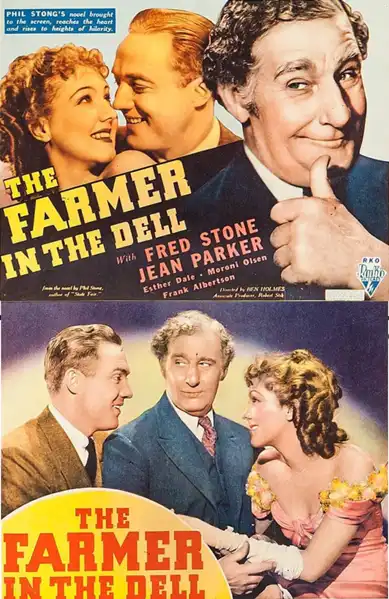
A definitive 7.1/10 rating for a film that redefined the boundaries of cult cinema. The Farmer in the Dell remains a cornerstone of transgressive art.
If you have an afternoon where you just want to sink into a black and white world that doesn't ask much of you, then yes, give it a watch. It's perfect for people who like seeing how Hollywood looked back when it was still trying to figure itself out.
But if you need fast pacing or characters that actually make smart decisions, you'll probably want to throw your remote at the wall. It's a very specific kind of slow.
The movie is basically about the Boyer family. They live in Iowa, they have a farm, and they have a daughter named Adie who is played by Jean Parker.
Ma and Pa Boyer (Fred Stone and Esther Dale) decide that Adie is too pretty to be stuck on a farm. So they just... leave. They go to California with big dreams and almost no plan.
What I liked most was how uncomfortable the parents look once they get to Hollywood. Fred Stone plays the dad, and he has this way of standing where he looks like he's still checking the weather for his crops even when he's on a movie set.
He wears these suits that look like they itch. It's a small detail, but it made the whole thing feel more real to me.
The movie doesn't treat them like idiots, exactly. But it does make them look very, very out of place.
Speaking of the studios, there’s this one part where they’re walking through the backlot. You can see all the fake buildings and the extras just hanging around. It reminded me a bit of the scale in Wings, but obviously much smaller and cheaper.
It’s weirdly fascinating to see the 'behind the scenes' of a 1930s movie inside a 1930s movie. It’s like a mirror reflecting a mirror, or something like that.
Jean Parker is fine as Adie. She's got that very specific 1930s face—big eyes, very expressive. But the movie doesn't really give her a lot to do other than look pretty and be the object of everyone's attention.
The romance subplot feels like it was added because the producers thought they had to. I honestly forgot the boyfriend's name about ten minutes after he showed up.
One thing that bugged me was how easy everything seemed to happen. One minute they're in Iowa, the next Adie is getting noticed. It lacks that grit you see in movies like Branded Men where things actually feel difficult.
I also noticed a very young Lucille Ball in a tiny role. If you aren't looking for her, you’ll miss her. She’s just a background face here, which is wild considering what she became later.
There is a scene in a kitchen where the sound gets really crunchy. I don't know if it was just the copy I was watching, but it sounded like someone was eating potato chips next to the microphone.
Also, the ending happens so fast. It's like the director realized they only had five minutes of film left and had to wrap every single plot point up in one conversation. It’s not satisfying, but it is fast.
I think the movie is better when it's just showing the family being confused by Los Angeles. When it tries to be a serious drama about the movie business, it gets a bit boring.
It’s a bit like Life Is a Dog in the way it focuses on simple people dealing with big changes, though this one is much more optimistic. Maybe too optimistic.
I don't think I'll ever watch this again. But I'm glad I saw it once. It feels like a postcard from a version of America that doesn't exist anymore.
It’s a gentle movie. No one is really a villain. Even the Hollywood people are mostly just busy rather than mean.
If you like 1930s Americana, it’s a nice way to spend an hour. Just don't expect it to change your life or anything.

IMDb 7.7
1933
Community
Log in to comment.