DbcultAccessing Vault...
4.5/10
Senior Film Conservator

A definitive 4.5/10 rating for a film that redefined the boundaries of cult cinema. Always in the Way remains a cornerstone of transgressive art.
In the annals of early cinema, certain films resonate with a particular, almost haunting, poignancy, transcending their historical context to speak to universal human experiences. Always in the Way, a 1915 production, is unequivocally one such work. It's a film that, despite its sepia-toned existence and reliance on intertitles, manages to excavate the raw, often unbearable, emotional terrain of childhood neglect and familial betrayal with an intensity that few contemporary dramas could hope to match. This isn't merely a historical curiosity; it's a profound exploration of vulnerability and resilience, meticulously crafted and deeply affecting.
The narrative, penned by Charles Harris, unfolds with a devastating simplicity that belies its psychological depth. We are introduced to Dorothy, a four-year-old girl whose world has been irrevocably shattered by the recent death of her mother. The opening scenes paint a stark picture of grief, a profound sadness that radiates from the screen, largely thanks to the remarkable performance of the young Mary Miles Minter. Minter, even at such a tender age, possessed an uncanny ability to convey complex emotional states through subtle gestures and expressive eyes, a talent that would define her career as a child star and later, a leading lady. Her portrayal of Dorothy's inconsolable sorrow is not merely a performance; it feels like an authentic outpouring of a child's deepest pain.
Dorothy's father, Winfred North, portrayed with a certain detached gravitas by Harry Blakemore, embodies a common, if tragic, archetype: the successful man whose professional triumphs come at the cost of his personal connections. Absorbed by the relentless demands of his legal practice, Winfred remains tragically oblivious to the gaping void in his daughter's heart. His emotional unavailability creates a fertile ground for the machinations that follow. This portrayal of a father so consumed by ambition that he fails to see the suffering right under his nose is a timeless theme, and Blakemore subtly conveys the character's inherent decency, even as his actions (or inactions) lead to such profound distress.
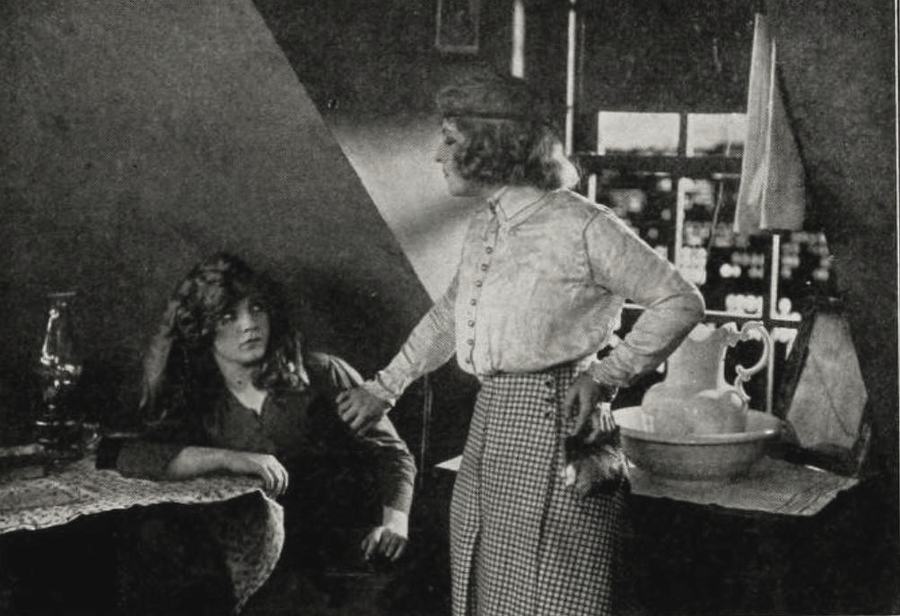
The true antagonist emerges in the form of Helen Stillwell, a widow with two children of her own, brought to life with chilling effectiveness by Mabel Greene. Helen's entry into the North household is not merely a search for companionship; it is a calculated bid for security and status. From the outset, her treatment of Dorothy is a masterclass in passive-aggressive cruelty. She showers affection upon her own offspring while systematically ignoring Dorothy, making the child feel like an unwelcome intrusion, perpetually 'in the way.' Greene’s performance is nuanced; she doesn't resort to overt villainy but rather a cold, dismissive demeanor that is arguably more insidious. The subtle glances, the preferential treatment, the deliberate exclusion—these are the tools of Helen's emotional warfare, and they are wielded with devastating precision.
The contrast between the innocent suffering of Dorothy and the calculating ambition of Helen forms the emotional core of the film. It's a stark reminder of the vulnerability of children in the face of adult self-interest. While the melodrama might seem heightened to modern sensibilities, it was a common and effective narrative device in early silent cinema, designed to elicit strong emotional responses from the audience. Films like The Dishonored Medal or Leah Kleschna often employed similar dramatic tension, though perhaps not always with a child's plight at its absolute center.
The escalating neglect eventually pushes Dorothy to her breaking point. Unable to endure the emotional torment, she makes the harrowing decision to run away. This segment of the film is particularly heart-wrenching, as the tiny figure of Dorothy navigates the indifferent vastness of the outside world, a stark visual metaphor for her profound isolation. Her desperate flight is a testament to the human instinct for survival, even in its most nascent form. It speaks to a universal fear: that of being utterly alone and unwanted.

Her discovery by the Goodwins, a kindly missionary couple, offers a momentary glimmer of hope. Their compassion is a welcome balm after the chill of Helen’s indifference. However, this respite is brutally short-lived. Upon returning Dorothy to her home, the Goodwins are met with Helen Stillwell’s most egregious act of cruelty: a categorical denial of ever knowing the child. This moment is a punch to the gut, a stunning act of perfidy designed to solidify her own children's inheritance by effectively erasing Dorothy from existence. Hal Clarendon, Franklin B. Coates, and Ethelmary Oakland, as other members of the supporting cast, contribute to the atmosphere of a household fractured by deceit and self-interest, but it is Greene's Helen who truly chills the blood with her calculated malice.
With nowhere else to turn, Dorothy embarks on an extraordinary and unexpected journey to Africa with the Goodwins, who are dedicated to bringing Christianity to native populations. This geographical shift marks a significant pivot in the narrative, moving from domestic melodrama to an adventure with ethnographic undertones. The depiction of missionary work and indigenous cultures, viewed through the lens of early 20th-century sensibilities, is fascinating and, by modern standards, undoubtedly problematic in its portrayal of 'natives' and the 'civilizing' mission. However, within the context of its time, it reflects a prevalent cultural perspective.
The film doesn't shy away from depicting the challenges and disappointments faced by the Goodwins in their endeavor. Matters, as the plot succinctly states, “don't work out quite as well as they expected.” This understated observation speaks volumes about the complexities of cultural exchange and the often-naïve assumptions of colonial-era missionary efforts. It hints at unforeseen obstacles, cultural clashes, and perhaps even the futility of imposing one's worldview onto another. While we don't have the explicit visual details, one can infer the struggles and the profound sense of dislocation Dorothy must experience, thrust from a life of quiet luxury into an entirely alien environment.
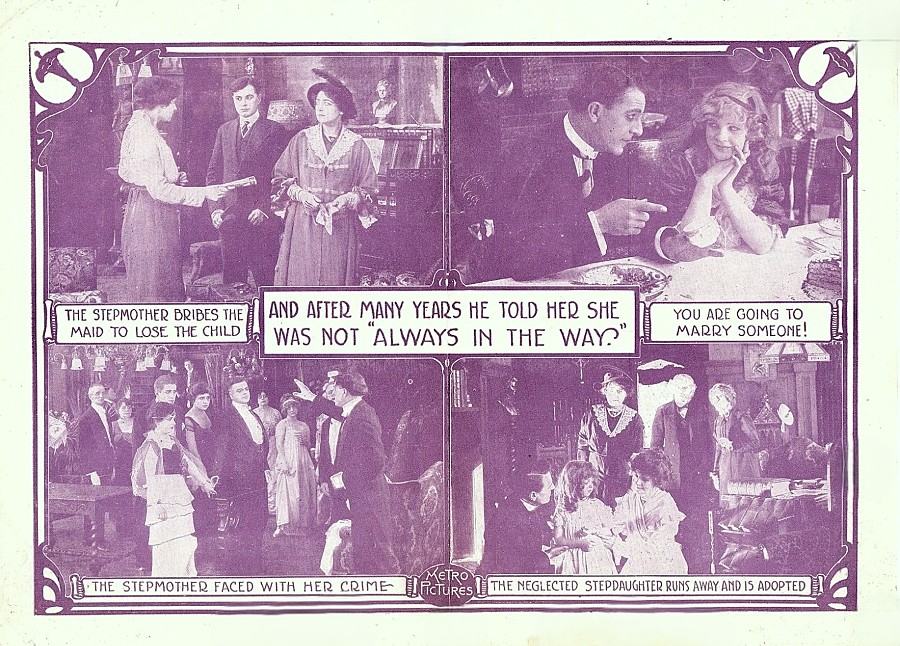
This subplot, while seemingly a drastic change of scenery, serves to further underscore Dorothy's resilience. She is a child continually uprooted, forced to adapt to drastically different circumstances. This element of journey and hardship can be loosely compared to the adventurous spirit found in films like Wildfire, though Always in the Way maintains its emotional core rather than devolving into mere spectacle. Other cast members like Charlotte Shelby, Edna Holland, James Riley, Arthur Evers, Boots Wall, Lowell Sherman, and Harold Meltzer likely populate these later scenes, adding texture to the African setting, even if their roles are less prominent than the central family drama.
The film's direction, typical of the era, likely relied heavily on clear visual storytelling, expressive acting, and the judicious use of intertitles to convey dialogue and exposition. The power of silent film lies in its ability to communicate emotion purely through visual means, and Always in the Way seems to have excelled in this regard, particularly through Minter's nuanced performance. The narrative arc, moving from domestic tragedy to a global adventure, showcases Charles Harris's ambition in crafting a story that is both intimate and expansive.
Themes of abandonment, the fragility of familial bonds, the corrupting influence of greed, and the search for belonging are woven throughout the film. It's a testament to the enduring power of these universal struggles that the film, despite its age, still feels relevant. The story of a child navigating a world that seems determined to cast her aside is a timeless one, capable of stirring deep empathy in audiences across generations. One might even draw parallels to the heightened dramatic stakes found in thrillers like The Fatal Night or the intense emotional journey of The Third Degree, not in genre, but in the sheer weight of the protagonist's emotional burden.
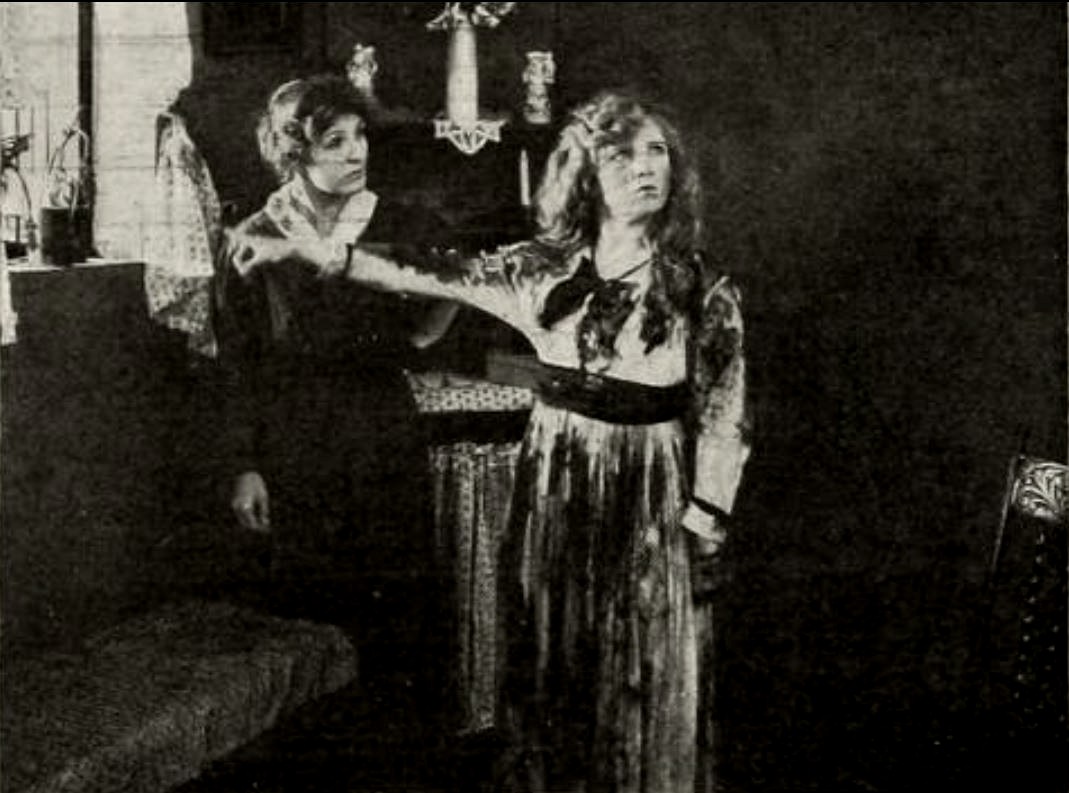
While we might not have the same cinematic language today, the core message of Always in the Way remains potent. It serves as a stark reminder of the profound impact of parental attention (or lack thereof) on a child's development and the devastating consequences of unchecked avarice. The film's conclusion, with Dorothy in Africa, leaves a lasting impression, hinting at a future that is uncertain but perhaps, for the first time, truly her own, free from the shadow of Helen Stillwell's malice. It’s a narrative that, for all its melodramatic flourishes, grounds itself in a very real, very human experience of pain and the persistent, if quiet, hope for solace.
In an era that also produced spectacles like Jeffries-Johnson World's Championship Boxing Contest, or the early European cinematic endeavors such as Der Zug des Herzens and I tre moschettieri, Always in the Way stands out for its intimate focus on psychological drama. It belongs to a tradition that explored the darker facets of human nature and societal structures, much like Shadows of the Moulin Rouge or even the more fantastical Vampyrdanserinden in its own way, delves into human desires and their often-unforeseen consequences. The film's ability to elicit such strong emotional investment from its audience, relying solely on visual storytelling and the raw talent of its performers, is a testament to the power of early filmmaking.
The nuanced portrayal of child neglect, the chilling depiction of a stepmother's calculated malice, and the father's unwitting complicity create a narrative tapestry that is both heartbreaking and thought-provoking. It challenges viewers to consider the various forms that cruelty can take, not just the overt, but the subtle, insidious kind that erodes a child's spirit. The journey to Africa, while a dramatic shift, offers a glimmer of potential redemption or at least, a new beginning, for a character who has endured so much. It suggests that even when all seems lost, there can be new horizons, albeit ones fraught with their own unique challenges.
Ultimately, Always in the Way is more than just a period piece; it is a timeless narrative about the desperate search for love and acceptance in a world that can be profoundly indifferent, if not outright hostile. It reminds us of the profound responsibility that comes with parenthood and the devastating impact of its absence. The film, through its silent eloquence, speaks volumes about the human condition, making it a vital piece of cinematic history and a compelling watch for anyone interested in the enduring power of storytelling.
IMDb —
1924
Community
Log in to comment.