DbcultAccessing Vault...
Cult Review
Senior Film Conservator
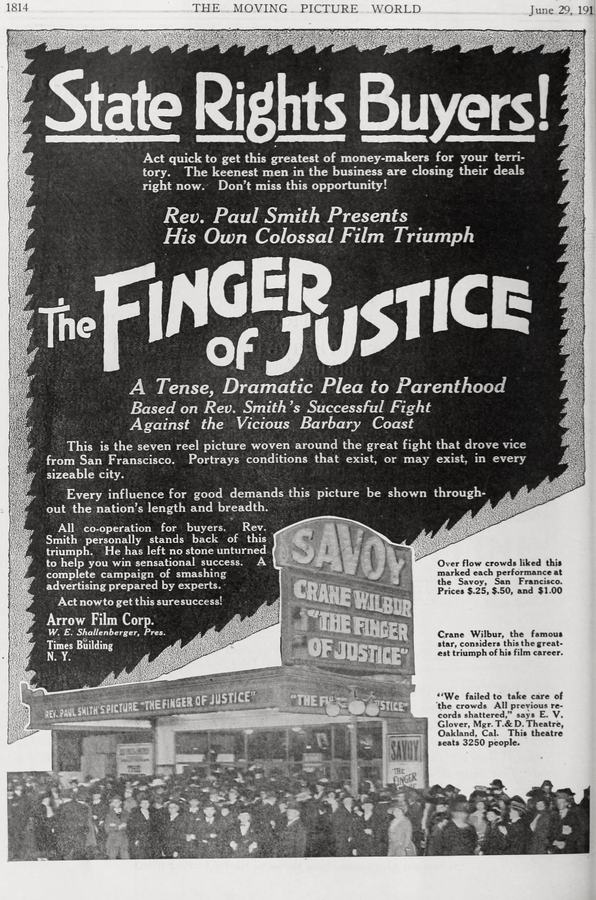
Set against the backdrop of a decaying urban landscape, *The Finger of Justice* (1930) emerges as a pre-Code gem that sears its indictment of political corruption into the viewer’s consciousness. Director Crane Wilbur’s unflinching lens captures a metropolis where skyscrapers loom like silent judges over a populace trapped in a web of systemic rot. This is not merely a tale of good versus evil; it is a psychological dissection of how power corrupts through complicity, where even the protagonists’ idealism is tested by the suffocating weight of institutionalized greed.
John Oaker’s portrayal of the political boss is a masterclass in understated villainy. His character, a man who has perfected the art of appearing benevolent while orchestrating a city’s moral collapse, is rendered with chilling subtlety. Oaker’s delivery—measured, deliberate, and laced with a quiet menace—conveys a mind that views human lives as chess pieces in a game of self-aggrandizement. This performance echoes the complexity of similar figures in later works like *The Great Ruby* (1934), yet stands apart for its refusal to reduce the antagonist to mere caricature.
The young couple at the film’s heart, brought to life by Beulah Booker and Velma Whitman, represent the fragile hope of renewal. Their journey from naive idealism to hardened resolve mirrors the broader struggle against corruption. Unlike the archetypal heroines of *The Vow* (1918), these women are not pristine vessels of virtue; instead, they grapple with self-doubt and ethical compromises that humanize their quest. The chemistry between Booker and Whitman crackles with authenticity, their dynamic evolving from cautious partnership to a fierce camaraderie forged in the fires of adversity.
Wilbur’s direction employs chiaroscuro lighting not merely as a stylistic choice but as a narrative device. The interplay of shadow and light in key scenes—such as the climactic confrontation in the political boss’s office—transforms the visual into metaphor. This technique recalls the atmospheric tension of *The Scarlet Pimpernel* (1934), yet here it serves a more urgent purpose: to illustrate the moral ambiguity that permeates every relationship in the film. The cinematography, particularly in scenes of urban decay, evokes a sense of claustrophobia that mirrors the protagonists’ psychological entrapment.
Grace Marbury Sanderson’s screenplay is a tour de force of subversive dialogue. The exchanges between characters are laden with double meanings, exposing the hypocrisy of a society that venerates progress while tolerating corruption. One particularly striking sequence—a conversation between the political boss and a naively optimistic journalist—mirrors the verbal sparring of *Shame* (2011), though Sanderson’s dialogue retains a distinctively 1930s cadence that grounds the film in its era. The script’s refusal to offer tidy resolutions elevates it beyond conventional moralizing, instead inviting reflection on the cyclical nature of power and resistance.
While *The Finger of Justice* may lack the technological polish of contemporary political dramas, its thematic resonance endures. The film’s exploration of media complicity in the face of corruption presages the narratives of *Public Opinion* (1934) and even *Stolichnyi iad* (2016). Its most enduring legacy, however, lies in its unflinching portrayal of systems that thrive on moral compromise—a theme that remains tragically relevant. For scholars of film history, it is an essential text; for general audiences, a stark reminder of the fragility of justice in the face of entrenched power.
When juxtaposed with *Barranca trágica* (1943), *The Finger of Justice* reveals a distinct American preoccupation with institutional corruption rather than personal tragedy. Similarly, while *The Golden West* (1930) romanticizes frontier justice, Sanderson’s work strips away such idealism, exposing the brutal realities beneath. The film’s approach to political themes also diverges from the allegorical style of *Creation* (1985), opting instead for grounded, socio-historical critique.
More than nine decades after its release, *The Finger of Justice* retains its power to unsettle. Its cautionary tale about the corrosive effects of unchecked authority resonates in an age where political cynicism is often mistaken for realism. The film’s enduring relevance is a testament to the prescience of its creators, who understood that the battle for justice is as much about self-sacrifice as it is about exposing the corrupt. For modern audiences, it serves as both a historical artifact and a mirror—reflecting the persistent struggle between integrity and expediency.
IMDb 5.6
1937
Community
Log in to comment.