DbcultAccessing Vault...
6.8/10
Senior Film Conservator
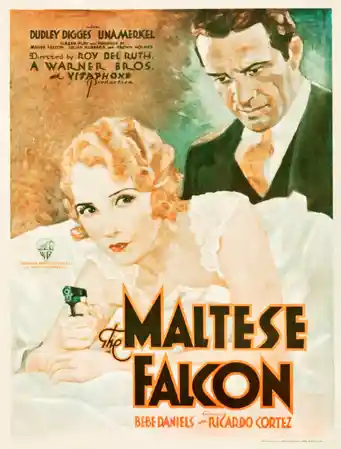
A definitive 6.8/10 rating for a film that redefined the boundaries of cult cinema. The Maltese Falcon remains a cornerstone of transgressive art.
Alright, so you’re wondering if you should track down the 1931 version of The Maltese Falcon? Absolutely, especially if you’re into old movies, pre-Code grit, or just curious about how Hollywood handled noir *before* it was even called noir. If you're expecting the polished, iconic Bogart version, you might be a bit surprised. This one’s a different beast entirely. It's for the film history buffs, not necessarily for a casual Friday night watch.
Right from the start, you notice the sound. It's an early talkie, you know? Sometimes the dialogue feels a little distant, a little tinny. You really have to lean in to catch every word, especially when someone's mumbling or has a thick accent.

Ricardo Cortez plays Sam Spade here, and he’s... interesting. He’s got this slick, almost predatory charm. Not the world-weary cynic Bogart made famous. Cortez's Spade smiles a lot, sometimes a little too much, like he knows something you don't and finds it all terribly amusing.
Bebe Daniels as Brigid O'Shaughnessy (Ruth Wonderly in this version, oddly enough) is a force. She glides into Spade's office, all wide eyes and breathless lies. She’s definitely got the femme fatale thing down, but with a dramatic, almost theatrical flair that’s very 1930s.
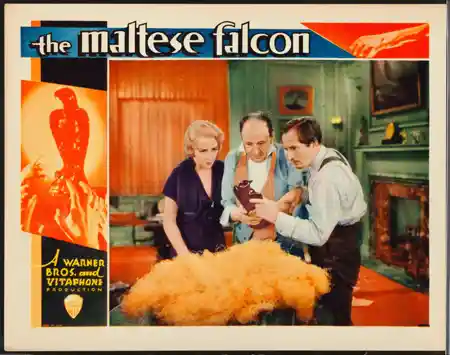
There's a scene early on where she's just *so* distraught, but her tears feel a bit put on, almost performative. It makes you wonder how much Spade actually buys it, even as he's drawn in. Her delivery of "Oh, I'm so terribly sorry!" is a whole mood.
The pacing is a mixed bag. Sometimes the dialogue rattles off at a blistering speed, like everyone’s had too much coffee. Other times, a scene just sort of... hangs there, letting the tension build, or maybe just letting the actors catch their breath.
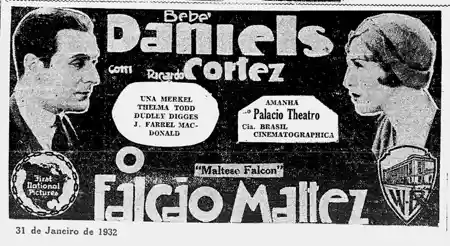
You can tell they're figuring things out, visually speaking. There's some clever use of shadows, but also moments where the camera just sits, capturing actors standing around, talking. It’s not quite the shadowy, dynamic look we associate with later film noir.
Dudley Digges as Casper Gutman is a treat. He’s much more overtly menacing than Sydney Greenstreet's portly, jovial version. Digges’ Gutman is almost reptilian, with these piercing eyes that seem to see right through everyone. His laugh is unsettling, too. Not a hearty chuckle, but a sort of dry, scratchy cackle.
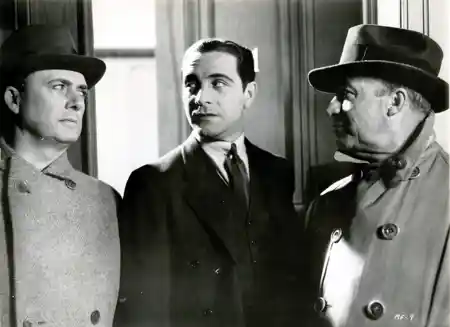
And Dwight Frye, famous for playing Renfield in Dracula, pops up as Wilmer Cook, Gutman's bodyguard. He’s got that signature nervous energy, always twitching, always glaring. You almost feel sorry for him, being bossed around by Gutman, but then he pulls out a gun and you remember he’s just as dangerous.
One detail I found kinda neat: the whole affair with Effie, Spade’s secretary. She’s much more involved, much more openly affectionate towards Spade. It paints a slightly different picture of his character, less detached than Bogart's version. There’s a moment where she practically fusses over him, and he just lets her. It’s a little softer.
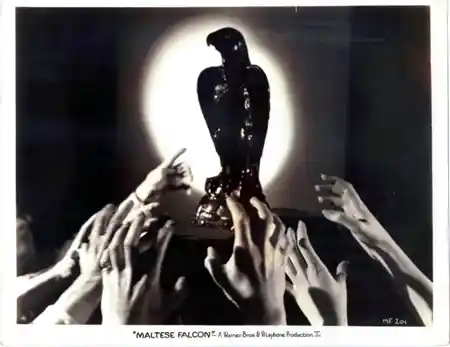
The actual falcon statuette itself feels more present, somehow. It's talked about with such reverence, and when it finally appears, you really get the sense of what all the fuss is about. It's dusty, a little worn, not some gleaming, perfect thing.
There’s a surprising amount of innuendo and suggestive dialogue for a film from 1931. The pre-Code era really allowed for some bolder stuff. Characters are openly scheming, betraying, and flirting without much subtlety. It's refreshing, actually, to see a film just get to the point with its wickedness.
The movie doesn't waste time on a lot of extraneous stuff. It's almost entirely focused on the central mystery and the web of lies. Sometimes it feels a little claustrophobic, with so many scenes taking place indoors, in offices or hotel rooms.
The ending, without giving too much away, has a definite punch. It’s bleak, fitting for the story. Cortez’s final moments as Spade, his face hardening, really sell the idea that this guy, for all his charm, operates in a very cynical world. He’s tough, maybe a little heartless, but he gets the job done.
Look, it's not a perfect movie. The sound can be iffy, the acting styles are from a different era, and it lacks the iconic polish of its 1941 successor. But it’s a fascinating piece of film history. A raw, energetic take on a classic story, full of sharp dialogue and characters who are just *bad* in all the right ways. Worth watching for the experience, if nothing else.
IMDb —
1927
Community
Log in to comment.