DbcultAccessing Vault...
4.3/10
Senior Film Conservator
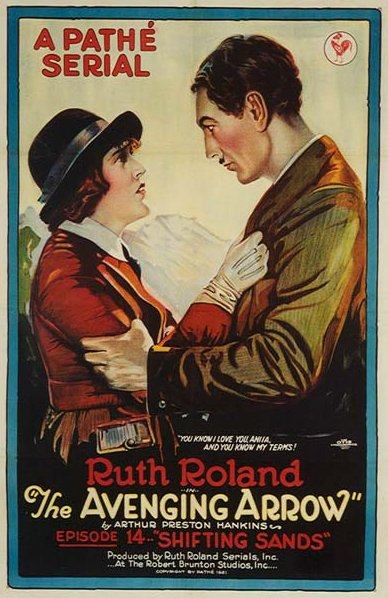
A definitive 4.3/10 rating for a film that redefined the boundaries of cult cinema. The Avenging Arrow remains a cornerstone of transgressive art.
The Avenging Arrow, a 1919 silent film directed by Arthur Preston Hankins and Jack Cunningham, is a chilling exploration of hereditary doom disguised as a proto-feminist thriller. With Ruth Roland in a career-defining role as the protagonist—a nameless archetype, a vessel of collective female rage and grief—the film crafts a narrative that feels both archaic in its gothic trappings and strikingly modern in its interrogation of patriarchal control. The plot hinges on a simple yet potent premise: every woman in the protagonist’s lineage has perished before turning 21, a fact presented not as mere lore but as a visceral wound etched into the film’s very texture. The screenwriters, Hankins and Cunningham, employ a series of flashbacks, shot in sepia-toned chiaroscuro, to reveal the tragic fates of these women, their deaths linked to a shadowy cult or perhaps a familial secret weapon—a bowstring and arrow motif that haunts the heroine’s every move.
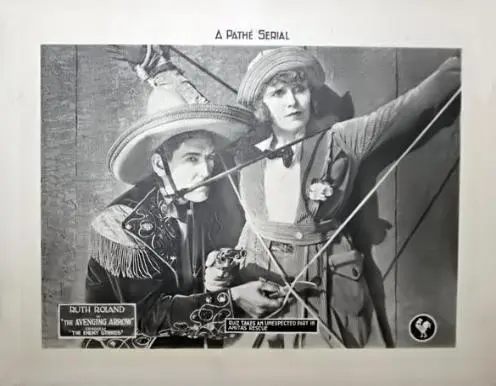
What elevates The Avenging Arrow beyond its contemporaries is its refusal to simplify the curse into a plot device. Instead, the film uses the recurring deaths as a metaphor for the systemic obliteration of female autonomy. Each flashback is a microcosm of oppression: a woman in bloom, her potential snuffed out by external forces or internalized guilt. The protagonist’s journey—through dimly lit forests, crumbling ancestral estates, and encounters with a cast of grotesque yet oddly sympathetic characters—is less about solving a mystery and more about confronting the inescapability of her own identity. Her quest mirrors the structure of a labyrinth, where the minotaur is not a monster but the weight of expectation.
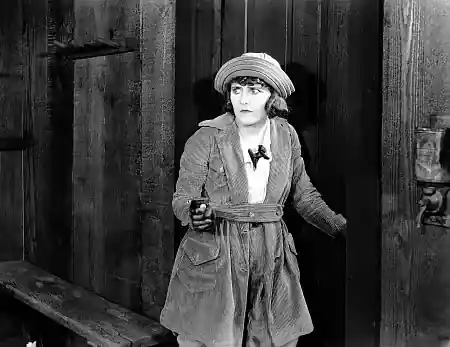
Ruth Roland’s performance is a revelation. Her face, a canvas of micro-expressions, conveys the protagonist’s oscillation between terror and resolve. In one particularly harrowing scene, she stands before a mirror, her reflection shattering as she whispers a line that translates to, “I will not become them.” The use of the mirror as a symbol is deliberate; it reflects not just the protagonist’s fear of repetition but the film’s broader commentary on how history, particularly women’s history, is distorted by those in power. The supporting cast—Otto Lederer as the enigmatic historian, Virginia Ainsworth as the guilt-ridden aunt—add layers of complexity, their subplots intertwining with the central narrative to create a mosaic of complicity and resistance.
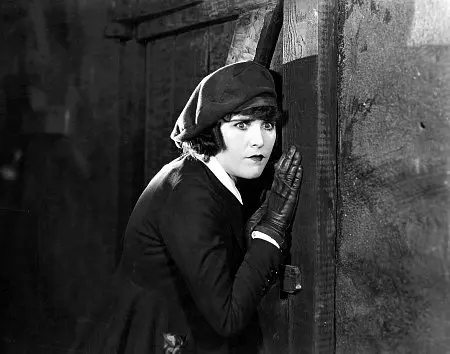
Visually, The Avenging Arrow is a triumph of early cinema’s capacity to evoke mood. The use of negative space in the protagonist’s scenes—her small frame dwarfed by grandiose settings—visually enforces her powerlessness. The arrow motif recurs in unexpected places: as a decorative element in a drawing room, a scar on a character’s back, a projectile aimed at the sky during a climactic confrontation. These repetitions are not coincidental; they form a visual language that mirrors the inescapability of the curse. The film’s pacing, deliberate yet urgent, owes much to its editing, which juxtaposes the protagonist’s present-day struggles with the past tragedies of her ancestors. This technique, reminiscent of the cross-cutting in The Greyhound, heightens the tension between then and now, making the past feel like a living entity.
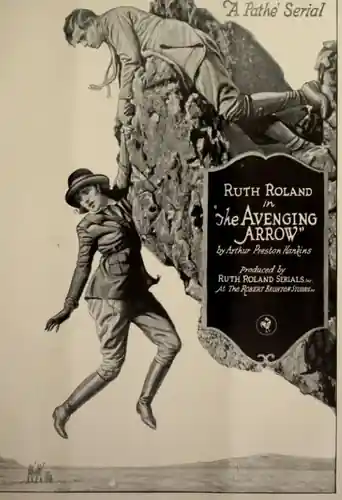
Thematically, the film walks a tightrope between horror and hope. While the curse’s origin is rooted in a patriarchal betrayal—a betrayal that requires the protagonist’s male relatives to be both victims and perpetrators—its resolution lies in the protagonist’s reclamation of her narrative. Unlike the women before her, who are shown as passive recipients of fate, she becomes an active agent of change, breaking the cycle through a final act that is equal parts catharsis and defiance. This resolution, while satisfying, is not tidy; the film acknowledges that breaking a curse is not a clean process but a violent rupture. The final shot, of the protagonist releasing an arrow into a stormy sky, is open to interpretation: is it an act of vengeance, liberation, or surrender?
Comparisons to other films of the era are inevitable. Like A Child of Mystery, The Avenging Arrow uses familial secrets as a narrative engine, but it diverges in its darker, more subversive take on gender roles. Its structure shares DNA with The Man Who Disappeared, particularly in its use of parallel narratives to build suspense. Yet, where those films often lean into melodrama, The Avenging Arrow maintains a sober tone, its horror stemming from psychological realism rather than overt spectacle. The film’s influence can be seen in later works that grapple with inherited trauma, though few match its audacity in centering a woman’s struggle against systemic erasure.
The Avenging Arrow is not without its flaws. Some scenes—particularly the flashback sequences—lack the emotional gravity they aim for, undercut by overly theatrical performances (a common pitfall of silent film acting). Additionally, the film’s ambiguity, while thematically appropriate, may frustrate modern audiences craving clear resolutions. However, these shortcomings are minor in the context of a film that dares to question the very foundations of legacy and identity.
In conclusion, The Avenging Arrow is a landmark in early cinema, a film that uses the language of gothic horror to dissect the silencing of women across generations. Its legacy is best understood in contrast to its contemporaries: while films like Neal of the Navy and Chicken Hunting prioritize action and comedy, The Avenging Arrow opts for introspection and moral complexity. For those seeking a film that marries form and content with such precision, it is an essential watch. It is a film that whispers, “Remember,” and in doing so, ensures that its characters—and its message—never vanish into the ether.
IMDb 4.7
1929
Community
Log in to comment.