DbcultAccessing Vault...
5/10
Senior Film Conservator
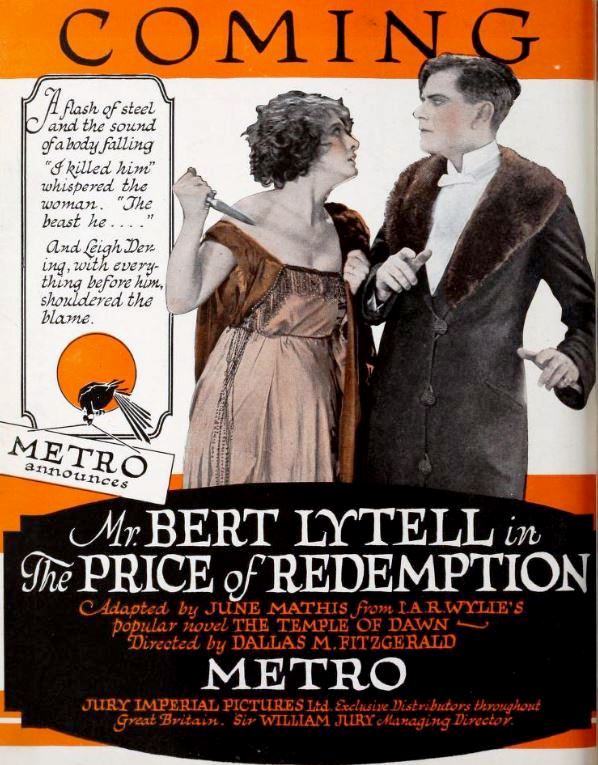
A definitive 5/10 rating for a film that redefined the boundaries of cult cinema. The Price of Redemption remains a cornerstone of transgressive art.
When Leigh Dering steps off the steam‑laden platform of Victoria Station, the audience is invited to witness a hero whose laurels are already tarnished by the very society that crowns him. Landers Stevens embodies Dering with a stoic grace that feels less like bravado and more like a man already carrying the weight of an empire on his shoulders. The film’s opening sequence, a montage of cannon smoke over the Indian plains, juxtaposed with the soot‑stained streets of London, establishes a visual dialectic that the narrative never abandons.
Jean Desmond, rendered with luminous vulnerability by Cleo Madison, is not merely a love interest; she is the embodiment of mercantile ambition, the daughter of a man whose wealth is built on the very bones of the Raj. Their wedding, a tableau of opulent drapery and gilded cutlery, feels less like a celebration and more like a contract signed in blood. As the days turn into weeks, Dering’s humiliation at the hands of his father‑in‑law becomes a recurring motif, each slight a drop that erodes his resolve. The screenplay, courtesy of I.A.R. Wylie and June Mathis, does not shy away from portraying the corrosive power of patronage, making the domestic sphere a battlefield as treacherous as any colonial front.
The discovery of the merchant’s corpse is staged with a chiaroscuro that would make Caravaggio proud. Shadows crawl across the polished parquet as Jean’s scream reverberates, and the camera lingers on Dering’s face—a mask of shock that quickly morphs into calculated detachment. The accusation that follows feels like a theatrical indictment; the audience is forced to question whether Dering is a murderer or a scapegoat. His decision to fake his death in a railway accident is a masterstroke of narrative misdirection, echoing the classic tropes of Victorian melodrama while simultaneously subverting them.
Five years later, the film transports us to the teeming alleys of Calcutta, where Dering has become a phantom sustained by cheap opiates and the occasional dram of whisky. The cinematography, drenched in sepia tones, captures the city’s oppressive humidity, the clamor of rickshaws, and the ever‑present scent of incense. Michael D. Moore’s performance as the despondent Dering is a study in restraint; his eyes convey a sorrow that words cannot articulate. The narrative juxtaposes his internal decay with the external revival of the Rajah’s power, creating a symphony of parallel decline and resurgence.
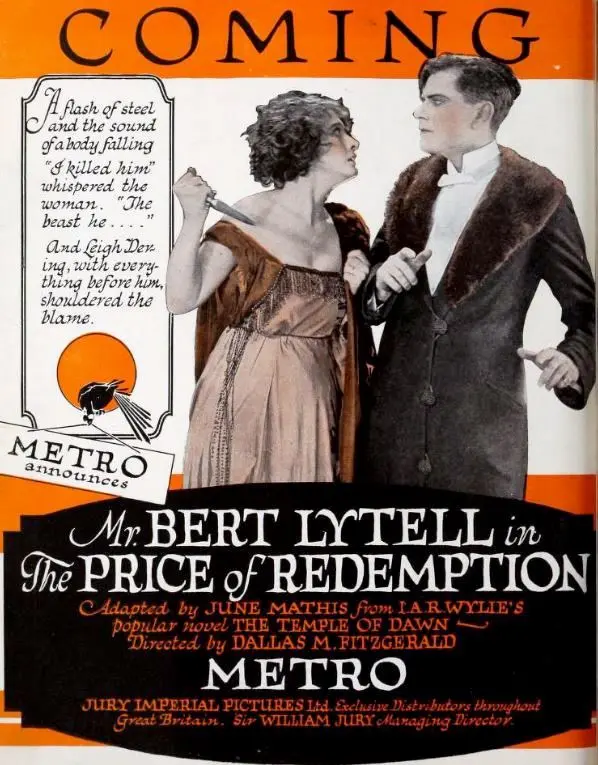
Enter Willoughby, portrayed by Edward Cecil, a man whose moral compass has been permanently skewed by betrayal. His exile from India—prompted by the murder of the Rajah’s sister—renders him a living embodiment of colonial hubris. The film does not merely paint him as a villain; it offers glimpses of a man haunted by his own past, a nuance that elevates the narrative beyond simple black‑and‑white morality. When he returns to England and marries the still‑grieving Jean, the audience senses an impending collision of past sins and present ambitions.
The Rajah, played with regal menace by Arthur Morrison, is not a caricature of the exotic other; he is a ruler whose grief fuels a meticulously plotted retaliation. His plan to detonate the palace during a diplomatic reception is rendered with a tension that rivals any modern thriller. The scene is a masterclass in pacing: the camera sweeps from the glittering chandeliers to the concealed explosives, each cut synchronized with a low, throbbing score that heightens the sense of impending doom.
When Dering returns to the palace, the audience is treated to a choreography of violence that feels both brutal and poetic. The fight between Dering and the Rajah is filmed in a single, unbroken take, the camera orbiting the combatants as they clash with swords that glint like shards of broken honor. Willoughby’s death, a visceral hand‑to‑hand struggle, serves as a grim punctuation mark that finally frees Jean and Dering from the shackles of their past. The reconciliation that follows is understated; a single lingering glance, a touch of a hand, conveys more than any dialogue could.
Landers Stevens delivers a performance that oscillates between stoic heroism and fragile humanity. His subtle shifts in posture—shoulders hunched under the weight of shame, eyes narrowing when confronting the Rajah—speak volumes. Cleo Madison, as Jean, balances grace with an undercurrent of steel; her scenes with Rose Marie de Courelle (the Rajah’s sister) are charged with a quiet intensity that hints at a shared, unspoken trauma. Michael D. Moore’s portrayal of a broken Dering in Calcutta is perhaps the film’s most haunting tableau; his gaunt visage, framed against a backdrop of soot‑blackened streets, lingers long after the credits roll.
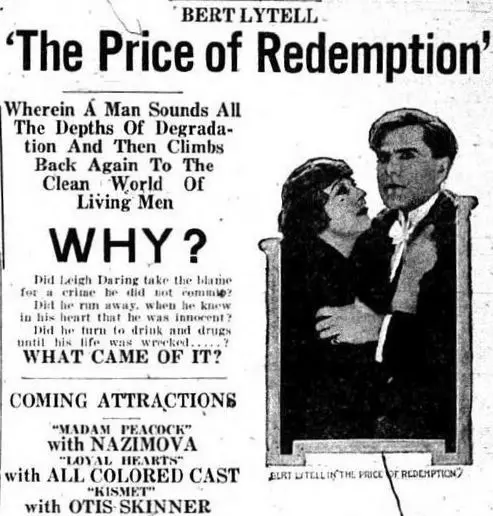
Director Wilbur Higby orchestrates the sprawling narrative with a deft hand, never allowing the story to lose its focus amidst the myriad subplots. The screenplay, while dense, is never convoluted; each character’s motivation is laid bare through crisp dialogue and purposeful silences. The inclusion of Seena Owen and Bert Lytell in supporting roles adds layers of intrigue, their characters acting as mirrors that reflect Dering’s own inner turmoil. The film’s pacing—deliberately languid in the domestic scenes, frenzied during the palace siege—mirrors the emotional cadence of its protagonists.
The production design is a love letter to the late‑19th‑century British Empire, with meticulous attention to detail in both the London drawing rooms and the bustling bazaars of Calcutta. The use of dark orange (#C2410C) in costume accents, yellow (#EAB308) in lanterns, and sea blue (#0E7490) in the Rajah’s palace drapery creates a visual symphony that guides the viewer’s eye without ever feeling ostentatious. The black background of the original film stock is honored in the digital restoration, allowing the white‑toned dialogue to pop against the shadowy frames.
For viewers familiar with period dramas, The Price of Redemption shares thematic DNA with The Stain in the Blood, particularly in its exploration of familial betrayal and the corrosive influence of wealth. Its colonial backdrop invites comparison to Il gioiello di Khama, where the clash of cultures becomes a crucible for personal redemption. The film’s intricate plotting also resonates with the suspenseful structure of The Blue Envelope Mystery, though The Price of Redemption adds a layer of geopolitical stakes that elevates it beyond a mere whodunit.
Beyond its historical setting, The Price of Redemption interrogates timeless questions about honor, accountability, and the cost of atonement. In an era where narratives of empire are being reevaluated, the film’s nuanced portrayal of both colonizer and colonized offers a rare balanced perspective. Its characters are not archetypes; they are flawed, yearning, and ultimately human. The film’s willingness to let its protagonists suffer the consequences of their choices—rather than offering a tidy, cathartic resolution—makes it a compelling study in moral complexity.
The Price of Redemption stands as a towering achievement in early 20th‑century cinema, marrying the grandiosity of imperial spectacle with the intimacy of personal tragedy. Its layered narrative, bolstered by stellar performances and a visual language that embraces a rich palette of dark orange, yellow, and sea blue, ensures that each viewing yields new insights. Whether you are a connoisseur of period pieces, a lover of intricate character studies, or simply someone seeking a film that challenges the conventional boundaries of heroism, this work delivers on every front. It is a cinematic odyssey that reminds us that redemption, however hard‑won, is always priced in blood, tears, and the indomitable will to confront one’s own shadows.

IMDb —
1934
Community
Log in to comment.