DbcultAccessing Vault...
5.5/10
Senior Film Conservator
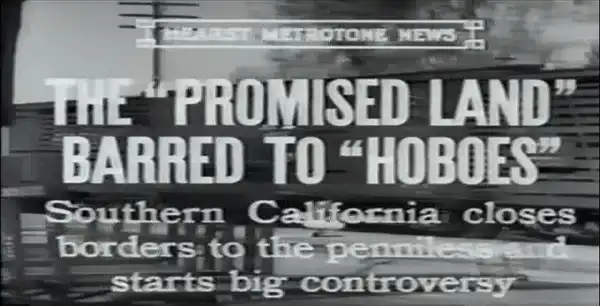
A definitive 5.5/10 rating for a film that redefined the boundaries of cult cinema. The Promised Land Barred to Hoboes remains a cornerstone of transgressive art.
Okay, so "The Promised Land Barred to Hoboes." What does that even *mean* for a movie title? Immediately, you're thinking early 20th century, probably Depression-era stuff. And yeah, it is.
If you're into those really specific, sort of forgotten social dramas, the ones that feel like a snapshot of a particular time and a very particular kind of desperation, then *maybe* this one is for you. Anyone expecting a slick narrative or big emotional arcs? Forget it. You'll probably be bored stiff, or just plain confused by its rhythms.
The film follows... well, a few different folks, really. No single main character, which is interesting but also makes it a bit disjointed. It's more a collection of vignettes, all circling around the idea of finding a foothold during hard times.
You see the wandering, the constant search for work, the tiny glimmers of hope that always seem to get snuffed out. It’s less a story and more a *feeling*.
There's this one scene, pretty early on, where a young guy, barely out of his teens, tries to sneak onto a freight train. The way the camera just *holds* on his face as he strains, hand outstretched, then misses the grab — it’s not dramatic, not in a big Hollywood way. It’s just this quiet, crushing moment. You feel the effort, then the total, immediate failure. And he just slumps there, watching the train disappear. No crying, no big speech. Just… gone. That was powerful for me. 😔
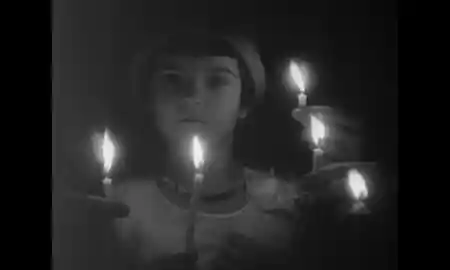
The black and white cinematography here, it's not "stunning." It's just *there*, doing its job. But it gives everything this really grainy, almost documentary feel.
Like you're watching actual footage from the time. The dirt, the worn-out clothes, the shadows under people's eyes — it all feels incredibly real, even if some of the acting is a little stagey.
And the sound design, if you can even call it that for a film from this era, is sparse. Mostly natural sounds, wind, the distant rumble of a train, the occasional cough. It really makes the silence heavy.
There's a scene in a bread line, everyone just shuffling forward, not talking much. You hear a baby cry for a second, then it’s shushed. The quiet makes you *listen* more closely.
Nobody in this film is a "star." It's full of character actors, folks with faces that tell stories all on their own.
There’s an older woman, I don't even remember her character's name, but she tries to sell a small, hand-carved bird for a few coins. She sits there, day after day, by the roadside.
The camera doesn't zoom in for a tearful close-up. It just shows her, *small*, in the frame, against a vast, empty landscape. It's a reminder of how many small tragedies were happening all at once.
One moment that stuck with me, oddly enough, was a kid — maybe eight years old — trying to shine shoes. He keeps getting ignored, and he’s got this little smudge of dirt on his cheek. He doesn't look sad, just… *tired*. That’s it.
No big dramatic arc for him. Just that one image. It’s easy to miss.
The title isn't subtle, and neither is the movie's message. There's no grand destination for these characters. They're always searching, always moving, but every "promised land" — whether it's a specific city, a job, or even just a warm meal — seems to be "barred" in some way.
It's a tough watch because it offers very little in the way of conventional hope. The film just lays out the stark reality. It feels like a document more than entertainment.
It also has this slightly rambling quality. Some scenes linger a bit too long on seemingly mundane actions. A character just walking down a dusty road for what feels like minutes.
You can almost feel the movie trying to make you *feel* the endlessness of it all. It gets its point across, for sure, but maybe a bit heavy-handedly at times.
Look, "The Promised Land Barred to Hoboes" isn't going to be anyone's favorite movie night pick. It's slow, it's bleak, and it doesn't give you easy answers or even easy emotions.
But if you’re a film student, or someone really interested in the history of social realism in cinema, or you just appreciate films that don't pull punches about hardship, then you might find something worthwhile here. It's a snapshot, a raw, grainy look at a forgotten struggle. It makes you think about all the invisible lives from that time. 💭
IMDb 6.7
1917
Community
Log in to comment.